Birdr

Marsh Warbler vs Common Reed Warbler

Acrocephalus palustris versus Acrocephalus scirpaceus

Play a quiz with Marsh Warbler and Common Reed Warbler
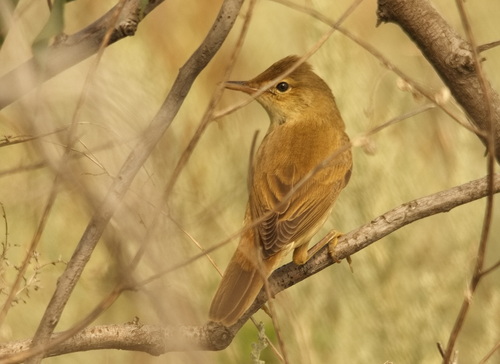
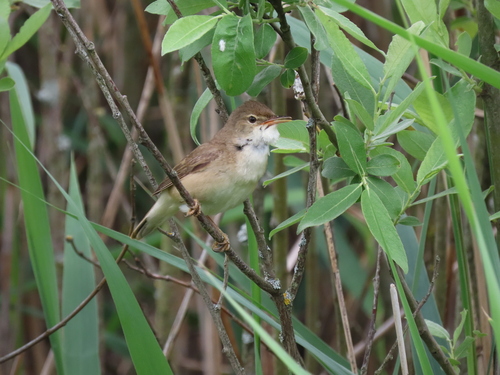
Marsh Warbler (Acrocephalus palustris) Marsh Warbler
Common Reed Warbler (Acrocephalus scirpaceus) Common Reed Warbler

Media

Loading…

In short

The most reliable way to separate Marsh Warbler from Common Reed Warbler is by song: Marsh Warbler males deliver a highly varied, imitative song packed with mimicry of many other birds, while Common Reed Warbler gives a more rhythmic, chattering song with only limited mimicry. Visually, both are medium-sized, plain brown warblers with similar structure and plumage, making field separation tricky, especially outside the breeding season or for silent birds. Juvenile and adult plumages are very close, with only subtle differences in tone and habitat preference offering clues. Structural and habitat cues can help, but beware overlap and individual variation.

Identification tips

  1. Song is key: If you hear a warbler with a wildly varied, imitative song that jumps between different bird calls and sounds, it's a Marsh Warbler male. If the song is more rhythmic, chattering, and steady, with only occasional mimicry, it's a Common Reed Warbler.
  2. Habitat in breeding season: Marsh Warbler prefers tall herbaceous vegetation (nettles, meadowsweet, willowherb) and low shrubs, often away from pure reedbeds. Common Reed Warbler is almost always in dense, pure reed stands. If you find a singing Acrocephalus in a nettle patch or urban brownfield, Marsh Warbler is more likely.
  3. Plumage tone: Marsh Warbler may appear slightly paler and less rufous above than Common Reed Warbler, but this is subtle and overlaps greatly. Do not rely solely on this mark.
  4. Juvenile underparts: Both species' juveniles are warmer buff below, but this does not separate them reliably.
  5. Facial structure: Common Reed Warbler can show a more flattened forehead and a strong, pointed bill, but these are minor and not always visible in the field.
  6. Wing and tail pattern: Neither species shows distinctive wing panels, contrasting edges, or tail shapes that are useful for separation at any age.
  7. Sex differences: Both species are sexually monomorphic; males and females look alike.
  8. Flight style: Both species have similar weak, undulating flight with no distinctive field marks.
  9. Context in migration: During migration, both species may occur together in varied habitats, and separation by habitat becomes unreliable.
  10. Song seasonality: Only Marsh Warbler males sing the full imitative song, and only on territory in the breeding season. Silent birds are very difficult to separate visually.
  11. Hybridization: Rare hybrids with each other and with Blyth's Reed Warbler have been recorded, so odd individuals may defy all field marks.
  12. Range overlap: Both species breed across much of temperate Europe and western Palearctic, so range is not a safe separator.
  13. Abundance: In western Europe, Common Reed Warbler is generally more abundant in reedbeds, while Marsh Warbler is scarcer and more localized.
  14. Calls: Calls are not reliably diagnostic between these two; focus on song for sound-based ID.
  15. When in doubt: If you cannot hear the song and the habitat is mixed or unclear, it may not be possible to separate these species with confidence.

Size

Both species are medium-sized Acrocephalus warblers and are very similar in size, with Common Reed Warbler averaging about 12 grams in body mass. No reliable size difference is noted in the available sources, and both sexes are alike in size and plumage. Length and wingspan are also closely matched, so size is not a useful field mark between these two.

Plumage

There are no strongly diagnostic age-specific upperwing or flight marks described for either species in the sources. Both Marsh and Common Reed Warbler have unstreaked brown upperparts and buff or pale underparts, with juveniles of both tending to be warmer or richer buff below. The Marsh Warbler is described as very similar to the Common Reed Warbler, with both lacking strong facial markings or obvious wing panels. The Reed Warbler may show a slightly more flattened forehead and a strong, pointed bill, but these are subtle. In the field, Marsh Warbler can sometimes appear slightly paler and less rufous above, but this is variable and unreliable. Sexes are identical in both species.

Behaviour

Both species are typically skulking, moving through dense vegetation, but Marsh Warbler is more likely to be found in tall herbaceous plants (like nettles and meadowsweet) or mixed low shrubs, while Common Reed Warbler is strongly tied to stands of pure reed. Both can be secretive, but Marsh Warbler may be bolder in non-reed habitats. In flight, neither species shows distinctive patterning, and both have a similar undulating, weak flight.

Habitat

Habitat preference is a useful, though not foolproof, clue. Marsh Warbler breeds in rank, damp vegetation with tall herbs and low shrubs, often away from pure reedbeds. It can be found in urban brownfields or arable crops with suitable cover, and in the east, even on dry hillsides or open woodland. Common Reed Warbler, by contrast, is strongly associated with dense, pure reedbeds and is rarely found far from them during breeding. Overlap occurs in migration and in mixed habitats, but in summer, a singing bird away from reeds is more likely Marsh Warbler.

Voice

Vocalization is the single best field mark. Marsh Warbler males produce a highly varied, fast-paced song full of mimicry, often imitating dozens of other bird species, especially African ones. This song is unique among Acrocephalus warblers. Females may give a simple, non-imitative song. Common Reed Warbler's song is a rhythmic, chattering 'jit-jit-jit', with some whistles and limited mimicry, but lacks the Marsh Warbler's wild variety and rapid switches. Calls of both species are less distinctive, but song is diagnostic in the breeding season.

Submit a better description

Use the same sections as the comparison. Your text is published immediately.

The most reliable way to separate Marsh Warbler from Common Reed Warbler is by song: Marsh Warbler males deliver a highly varied, imitative song packed with mimicry of many other birds, while Common Reed Warbler gives a more rhythmic, chattering song with only limited mimicry. Visually, both are medium-sized, plain brown warblers with similar structure and plumage, making field separation tricky, especially outside the breeding season or for silent birds. Juvenile and adult plumages are very close, with only subtle differences in tone and habitat preference offering clues. Structural and habitat cues can help, but beware overlap and individual variation.

  1. Song is key: If you hear a warbler with a wildly varied, imitative song that jumps between different bird calls and sounds, it's a Marsh Warbler male. If the song is more rhythmic, chattering, and steady, with only occasional mimicry, it's a Common Reed Warbler.
  2. Habitat in breeding season: Marsh Warbler prefers tall herbaceous vegetation (nettles, meadowsweet, willowherb) and low shrubs, often away from pure reedbeds. Common Reed Warbler is almost always in dense, pure reed stands. If you find a singing Acrocephalus in a nettle patch or urban brownfield, Marsh Warbler is more likely.
  3. Plumage tone: Marsh Warbler may appear slightly paler and less rufous above than Common Reed Warbler, but this is subtle and overlaps greatly. Do not rely solely on this mark.
  4. Juvenile underparts: Both species' juveniles are warmer buff below, but this does not separate them reliably.
  5. Facial structure: Common Reed Warbler can show a more flattened forehead and a strong, pointed bill, but these are minor and not always visible in the field.
  6. Wing and tail pattern: Neither species shows distinctive wing panels, contrasting edges, or tail shapes that are useful for separation at any age.
  7. Sex differences: Both species are sexually monomorphic; males and females look alike.
  8. Flight style: Both species have similar weak, undulating flight with no distinctive field marks.
  9. Context in migration: During migration, both species may occur together in varied habitats, and separation by habitat becomes unreliable.
  10. Song seasonality: Only Marsh Warbler males sing the full imitative song, and only on territory in the breeding season. Silent birds are very difficult to separate visually.
  11. Hybridization: Rare hybrids with each other and with Blyth's Reed Warbler have been recorded, so odd individuals may defy all field marks.
  12. Range overlap: Both species breed across much of temperate Europe and western Palearctic, so range is not a safe separator.
  13. Abundance: In western Europe, Common Reed Warbler is generally more abundant in reedbeds, while Marsh Warbler is scarcer and more localized.
  14. Calls: Calls are not reliably diagnostic between these two; focus on song for sound-based ID.
  15. When in doubt: If you cannot hear the song and the habitat is mixed or unclear, it may not be possible to separate these species with confidence.

Both species are medium-sized Acrocephalus warblers and are very similar in size, with Common Reed Warbler averaging about 12 grams in body mass. No reliable size difference is noted in the available sources, and both sexes are alike in size and plumage. Length and wingspan are also closely matched, so size is not a useful field mark between these two.

There are no strongly diagnostic age-specific upperwing or flight marks described for either species in the sources. Both Marsh and Common Reed Warbler have unstreaked brown upperparts and buff or pale underparts, with juveniles of both tending to be warmer or richer buff below. The Marsh Warbler is described as very similar to the Common Reed Warbler, with both lacking strong facial markings or obvious wing panels. The Reed Warbler may show a slightly more flattened forehead and a strong, pointed bill, but these are subtle. In the field, Marsh Warbler can sometimes appear slightly paler and less rufous above, but this is variable and unreliable. Sexes are identical in both species.

Both species are typically skulking, moving through dense vegetation, but Marsh Warbler is more likely to be found in tall herbaceous plants (like nettles and meadowsweet) or mixed low shrubs, while Common Reed Warbler is strongly tied to stands of pure reed. Both can be secretive, but Marsh Warbler may be bolder in non-reed habitats. In flight, neither species shows distinctive patterning, and both have a similar undulating, weak flight.

Habitat preference is a useful, though not foolproof, clue. Marsh Warbler breeds in rank, damp vegetation with tall herbs and low shrubs, often away from pure reedbeds. It can be found in urban brownfields or arable crops with suitable cover, and in the east, even on dry hillsides or open woodland. Common Reed Warbler, by contrast, is strongly associated with dense, pure reedbeds and is rarely found far from them during breeding. Overlap occurs in migration and in mixed habitats, but in summer, a singing bird away from reeds is more likely Marsh Warbler.

Vocalization is the single best field mark. Marsh Warbler males produce a highly varied, fast-paced song full of mimicry, often imitating dozens of other bird species, especially African ones. This song is unique among Acrocephalus warblers. Females may give a simple, non-imitative song. Common Reed Warbler's song is a rhythmic, chattering 'jit-jit-jit', with some whistles and limited mimicry, but lacks the Marsh Warbler's wild variety and rapid switches. Calls of both species are less distinctive, but song is diagnostic in the breeding season.

Discard your changes?

You have unsaved edits. If you leave now, those changes will be lost.

Marsh Warbler · Common Reed Warbler · My Tricky Birds