Birdr

Marsh Warbler vs Great Reed Warbler

Acrocephalus palustris versus Acrocephalus arundinaceus

Play a quiz with Marsh Warbler and Great Reed Warbler
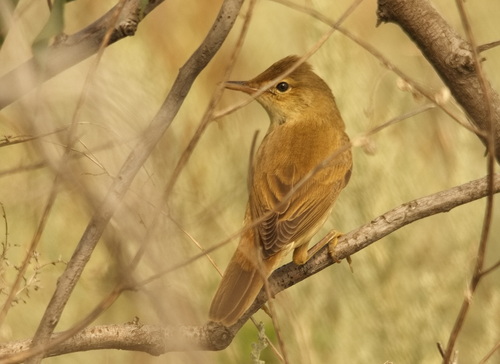
Marsh Warbler (Acrocephalus palustris) Marsh Warbler
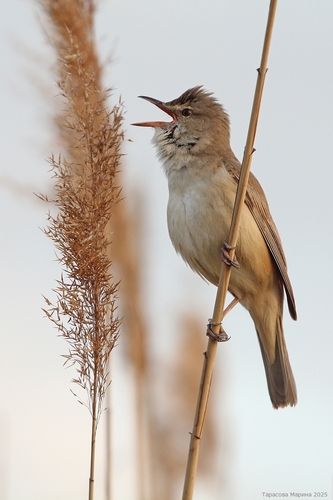
Great Reed Warbler (Acrocephalus arundinaceus) Great Reed Warbler

Media

Loading…

In short

The Great Reed Warbler is noticeably larger than the Marsh Warbler, with a more robust bill and longer tail. In terms of plumage, both species are similar, but the Great Reed Warbler often appears more rufous on the upperparts. Vocalizations are a key differentiator, with the Great Reed Warbler having a louder and more varied song.

Identification tips

  1. Size and Structure: Look for the larger size and longer tail of the Great Reed Warbler. 2. Bill: The Great Reed Warbler has a noticeably thicker bill. 3. Song: Listen for the louder, more varied song of the Great Reed Warbler. 4. Habitat: Consider the habitat; Great Reed Warblers are more often in reed beds. 5. Plumage: Note any rufous tones on the back for Great Reed Warbler.

Size

The Great Reed Warbler is significantly larger than the Marsh Warbler, with a bulkier body and longer tail.

Plumage

Both species have similar brownish upperparts, but the Great Reed Warbler tends to be more rufous, especially on the back. The underparts of both are pale, but differences in tone are subtle.

Behaviour

Both species are often seen skulking in dense vegetation, but the Great Reed Warbler is more likely to be seen singing from exposed perches.

Habitat

Both species prefer habitats with tall grasses and thickets, but the Great Reed Warbler is more commonly found in reed beds, while the Marsh Warbler can be found in a wider range of bushy areas.

Voice

The Great Reed Warbler has a loud, varied song that includes harsh notes and mimicry, while the Marsh Warbler's song is softer and more melodic, often incorporating imitations of other birds.

Submit a better description

Use the same sections as the comparison. Your text is published immediately.

The Great Reed Warbler is noticeably larger than the Marsh Warbler, with a more robust bill and longer tail. In terms of plumage, both species are similar, but the Great Reed Warbler often appears more rufous on the upperparts. Vocalizations are a key differentiator, with the Great Reed Warbler having a louder and more varied song.

  1. Size and Structure: Look for the larger size and longer tail of the Great Reed Warbler. 2. Bill: The Great Reed Warbler has a noticeably thicker bill. 3. Song: Listen for the louder, more varied song of the Great Reed Warbler. 4. Habitat: Consider the habitat; Great Reed Warblers are more often in reed beds. 5. Plumage: Note any rufous tones on the back for Great Reed Warbler.

The Great Reed Warbler is significantly larger than the Marsh Warbler, with a bulkier body and longer tail.

Both species have similar brownish upperparts, but the Great Reed Warbler tends to be more rufous, especially on the back. The underparts of both are pale, but differences in tone are subtle.

Both species are often seen skulking in dense vegetation, but the Great Reed Warbler is more likely to be seen singing from exposed perches.

Both species prefer habitats with tall grasses and thickets, but the Great Reed Warbler is more commonly found in reed beds, while the Marsh Warbler can be found in a wider range of bushy areas.

The Great Reed Warbler has a loud, varied song that includes harsh notes and mimicry, while the Marsh Warbler's song is softer and more melodic, often incorporating imitations of other birds.

Discard your changes?

You have unsaved edits. If you leave now, those changes will be lost.

Marsh Warbler · Great Reed Warbler · My Tricky Birds