Birdr

Mediterranean Short-toed Lark vs Woodlark

Alaudala rufescens versus Lullula arborea

Play a quiz with Mediterranean Short-toed Lark and Woodlark
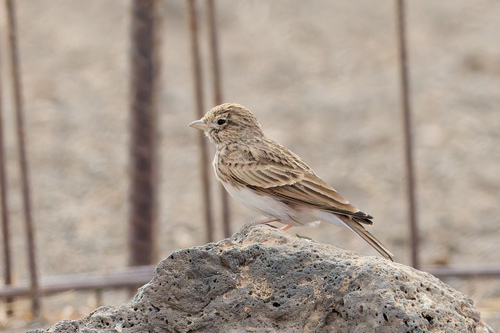
Mediterranean Short-toed Lark (Alaudala rufescens) Mediterranean Short-toed Lark
Woodlark (Lullula arborea) Woodlark

Media

Loading…

In short

The Mediterranean Short-toed Lark and the Woodlark can be distinguished by their structure and habitat preferences. The Woodlark has a distinctive short tail and a more prominent supercilium, while the Mediterranean Short-toed Lark is generally more uniform in appearance. Both species are larks, but they differ in their vocalizations and preferred environments.

Identification tips

  1. Tail length: Woodlark has a shorter tail. 2. Supercilium: Woodlark shows a more prominent white supercilium. 3. Habitat: Observe the surrounding environment; Woodlarks prefer wooded areas, while Mediterranean Short-toed Larks are found in open, dry habitats. 4. Song: Listen for the Woodlark's melodious song, especially in spring.

Size

Both species are small larks, but the Woodlark is slightly larger with a more robust build.

Plumage

The Mediterranean Short-toed Lark has a more uniform brownish plumage with less distinct markings, while the Woodlark features a prominent white supercilium and a streaked breast.

Behaviour

Both species exhibit typical lark behavior, such as ground foraging, but the Woodlark is more likely to be seen perched on bushes or low trees.

Habitat

The Mediterranean Short-toed Lark prefers open, arid habitats with sparse vegetation, whereas the Woodlark is often found in open woodlands and heathlands.

Voice

The Woodlark has a melodious, fluting song often delivered in flight, contrasting with the simpler, less musical calls of the Mediterranean Short-toed Lark.

Submit a better description

Use the same sections as the comparison. Your text is published immediately.

The Mediterranean Short-toed Lark and the Woodlark can be distinguished by their structure and habitat preferences. The Woodlark has a distinctive short tail and a more prominent supercilium, while the Mediterranean Short-toed Lark is generally more uniform in appearance. Both species are larks, but they differ in their vocalizations and preferred environments.

  1. Tail length: Woodlark has a shorter tail. 2. Supercilium: Woodlark shows a more prominent white supercilium. 3. Habitat: Observe the surrounding environment; Woodlarks prefer wooded areas, while Mediterranean Short-toed Larks are found in open, dry habitats. 4. Song: Listen for the Woodlark's melodious song, especially in spring.

Both species are small larks, but the Woodlark is slightly larger with a more robust build.

The Mediterranean Short-toed Lark has a more uniform brownish plumage with less distinct markings, while the Woodlark features a prominent white supercilium and a streaked breast.

Both species exhibit typical lark behavior, such as ground foraging, but the Woodlark is more likely to be seen perched on bushes or low trees.

The Mediterranean Short-toed Lark prefers open, arid habitats with sparse vegetation, whereas the Woodlark is often found in open woodlands and heathlands.

The Woodlark has a melodious, fluting song often delivered in flight, contrasting with the simpler, less musical calls of the Mediterranean Short-toed Lark.

Discard your changes?

You have unsaved edits. If you leave now, those changes will be lost.

Mediterranean Short-toed Lark · Woodlark · My Tricky Birds