Birdr

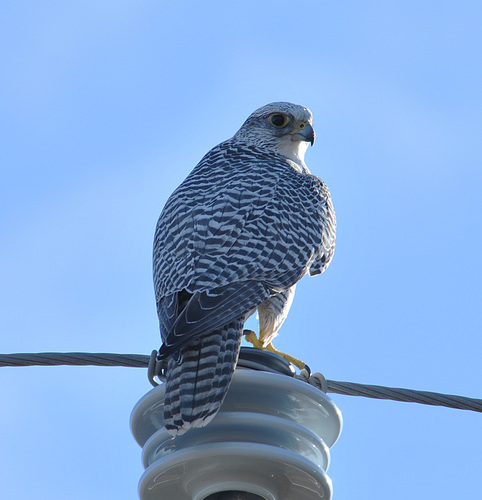
Merlin vs Gyr Falcon

Falco columbarius versus Falco rusticolus

Play a quiz with Merlin and Gyr Falcon
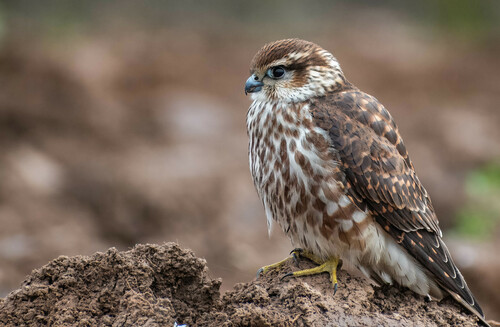
Merlin (Falco columbarius) Merlin
Gyr Falcon (Falco rusticolus) Gyr Falcon

Media

Loading…

In short

Merlins and Gyr Falcons are both small to large falcons, respectively, with Merlins being much smaller and more pigeon-like in flight. Gyr Falcons are larger, robust, and often appear bulkier with broad wings. Both species can show variable plumage, but size and structure are key differentiators.

Identification tips

1. Size and Structure: Merlins are much smaller and more slender than Gyr Falcons. 2. Habitat: Observe the habitat; Gyr Falcons are more likely in Arctic regions. 3. Plumage: Look for the more variable and often lighter plumage of Gyr Falcons. 4. Behavior: Note the hunting style; Merlins are agile and fast, while Gyr Falcons are powerful and robust. 5. Season: Consider the season and location, as Gyr Falcons are more likely seen in northern regions during winter.

Size

Merlins are significantly smaller than Gyr Falcons, roughly the size of a pigeon, while Gyr Falcons are the largest falcons, comparable to a large hawk.

Plumage

Merlins have a more uniform, darker plumage with less contrast, while Gyr Falcons can range from white to dark morphs, often showing more contrast and variability in plumage. Gyr Falcons have a more robust and heavier appearance.

Behaviour

Merlins are agile and quick in flight, often seen chasing small birds. Gyr Falcons are powerful fliers, often seen hunting in open tundra or mountainous regions.

Habitat

Merlins are found in a variety of habitats including open woodlands and urban areas, while Gyr Falcons are typically associated with Arctic and sub-Arctic regions, often nesting on cliffs.

Voice

Vocalizations are not the most reliable differentiator in the field; however, Merlins have a rapid, high-pitched call, while Gyr Falcons have a more varied and less frequent call.

Submit a better description

Use the same sections as the comparison. Your text is published immediately.

Merlins and Gyr Falcons are both small to large falcons, respectively, with Merlins being much smaller and more pigeon-like in flight. Gyr Falcons are larger, robust, and often appear bulkier with broad wings. Both species can show variable plumage, but size and structure are key differentiators.

1. Size and Structure: Merlins are much smaller and more slender than Gyr Falcons. 2. Habitat: Observe the habitat; Gyr Falcons are more likely in Arctic regions. 3. Plumage: Look for the more variable and often lighter plumage of Gyr Falcons. 4. Behavior: Note the hunting style; Merlins are agile and fast, while Gyr Falcons are powerful and robust. 5. Season: Consider the season and location, as Gyr Falcons are more likely seen in northern regions during winter.

Merlins are significantly smaller than Gyr Falcons, roughly the size of a pigeon, while Gyr Falcons are the largest falcons, comparable to a large hawk.

Merlins have a more uniform, darker plumage with less contrast, while Gyr Falcons can range from white to dark morphs, often showing more contrast and variability in plumage. Gyr Falcons have a more robust and heavier appearance.

Merlins are agile and quick in flight, often seen chasing small birds. Gyr Falcons are powerful fliers, often seen hunting in open tundra or mountainous regions.

Merlins are found in a variety of habitats including open woodlands and urban areas, while Gyr Falcons are typically associated with Arctic and sub-Arctic regions, often nesting on cliffs.

Vocalizations are not the most reliable differentiator in the field; however, Merlins have a rapid, high-pitched call, while Gyr Falcons have a more varied and less frequent call.

Discard your changes?

You have unsaved edits. If you leave now, those changes will be lost.

Merlin · Gyr Falcon · My Tricky Birds