
Birdr

Merlin vs Peregrine Falcon

Falco columbarius versus Falco peregrinus

Play a quiz with Merlin and Peregrine Falcon
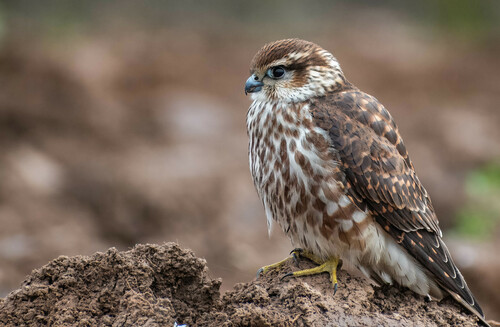
Merlin (Falco columbarius) Merlin
Peregrine Falcon (Falco peregrinus) Peregrine Falcon

Media

Loading…

In short

The most reliable field mark between Merlin and Peregrine Falcon is size: Peregrine is much larger and bulkier, with a crow-like presence, while Merlin is noticeably smaller and more compact. In flight, Merlin shows a proportionally shorter tail with distinct dark bands and a less patterned face, while Peregrine has a longer, broader tail and a bold black hood. Juvenile and female Merlins can be especially confusing, but Peregrine’s strong facial markings and heavier build are usually evident. Always consider context—Merlin’s rapid, direct flight and small size are distinctive compared to the powerful, stooping flight of a Peregrine.

Identification tips

  1. Size is the first check: Peregrine is much larger and heavier than Merlin. If you see both together, the difference is striking.
  2. Tail pattern: Merlin of all ages shows a distinctly banded tail with 3–4 broad dark bars and a black tip with a narrow white band. Peregrine’s tail is longer, broader, and less obviously banded.
  3. Facial pattern: Peregrine always has a strong black hood and bold malar stripe, even in juveniles. Merlin’s face is weakly marked, with only a faint supercilium and malar stripe.
  4. Underparts: Merlin is streaked below (especially in juveniles and females), while Peregrine is barred below (horizontal bars, not streaks).
  5. Back color: Adult male Merlin is blue-gray above (never as dark as Peregrine’s hood), while females and juveniles are brownish. Peregrine is blue-gray above in adults, with a striking black head.
  6. Flight shape: Merlin is compact, with short, pointed wings and a proportionally shorter tail. Peregrine is long-winged, with broader, more powerful wings and a longer tail.
  7. Flight style: Merlin flies with rapid, shallow wingbeats and quick, direct movements. Peregrine is more likely to soar or stoop from height, with slower, deeper wingbeats in level flight.
  8. Perched jizz: Perched Merlin looks small, slim, and upright; Peregrine appears large, broad-shouldered, and upright, with a more imposing stance.
  9. Bill and feet: Both have dark bills with yellow cere and yellow feet, but these are not reliable in the field for separation.
  10. Habitat context: In cities, Peregrine is more likely on tall buildings or bridges; Merlin prefers lower perches or open country. Over open fields, both can occur, but size and flight style are key.
  11. Sex and age confusion: Female Merlin can appear large for a Merlin, but is still much smaller than even a male Peregrine. Juvenile Peregrine may be browner above, but still shows the bold face pattern and larger size.
  12. Tail shape in flight: Merlin’s tail is relatively short and square-tipped with clear bands; Peregrine’s is longer, more tapered, and less distinctly banded.
  13. Plumage pitfalls: Light male Merlins may look blue-gray above, but never show the strong facial markings or heavy build of Peregrine. Juvenile Merlins are streaked below, not barred.
  14. Behavioral cues: Merlin often chases small birds in rapid, twisting flight close to the ground; Peregrine hunts with high-altitude stoops or by ambush from height.
  15. When in doubt: Focus on size, tail pattern, and facial markings—these are the most consistent field marks across all ages and sexes.

Size

Merlin is a small falcon, typically 24–33 cm in length with a wingspan of 50–73 cm and an average body mass around 187 g [wikidata]. Peregrine Falcon is much larger, described as crow-sized, and is considerably heavier and bulkier. While exact Peregrine measurements are not provided here, the difference is dramatic in the field: Peregrine appears robust and long-winged, whereas Merlin is compact and lightly built. Sexual dimorphism exists in both, but even a female Merlin is dwarfed by a male Peregrine.

Plumage

Juvenile and female Merlins are brownish-gray to dark brown above and pale with brown streaks below, with only a faint supercilium and weak malar stripe—overall, their face is much less marked than Peregrine. Adult male Merlins are blue-gray above and streaked below, but never show the strong facial pattern of Peregrine. The Merlin’s tail is distinctly banded (3–4 broad dark bands, black tip with a narrow white terminal band) and is a key mark in all ages. Peregrine Falcons, both adult and juvenile, have a bold black hood, strong malar stripe, and blue-gray back; underparts are barred, not streaked. In flight, Peregrine’s wings are longer and more pointed, and the tail is longer and less obviously banded. The face pattern is always much stronger in Peregrine, regardless of age.

Behaviour

Merlin is fast and agile, often hunting with rapid, low, direct flight and quick, shallow wingbeats. It can appear aggressive for its size, but lacks the powerful, high-speed stoop of the Peregrine. Peregrine Falcon is famous for its dramatic, high-altitude stoops and powerful, direct flight. Perched, Peregrine appears upright and broad-shouldered, while Merlin is more compact and less imposing. Both species may hunt in open areas, but Peregrine often soars or perches high, scanning for prey, while Merlin is more likely to hunt from lower perches or on the wing.

Habitat

Both species can be found in open habitats, but Merlin breeds in northern forests and tundra, and winters in open country, grasslands, and urban areas. Peregrine Falcon is more cosmopolitan, nesting on cliffs and tall buildings, and hunting over open water, marshes, fields, and cities. In migration and winter, both may overlap in open country, but Peregrine is more likely near large water bodies or urban landscapes with tall structures.

Submit a better description

Use the same sections as the comparison. Your text is published immediately.

The most reliable field mark between Merlin and Peregrine Falcon is size: Peregrine is much larger and bulkier, with a crow-like presence, while Merlin is noticeably smaller and more compact. In flight, Merlin shows a proportionally shorter tail with distinct dark bands and a less patterned face, while Peregrine has a longer, broader tail and a bold black hood. Juvenile and female Merlins can be especially confusing, but Peregrine’s strong facial markings and heavier build are usually evident. Always consider context—Merlin’s rapid, direct flight and small size are distinctive compared to the powerful, stooping flight of a Peregrine.

  1. Size is the first check: Peregrine is much larger and heavier than Merlin. If you see both together, the difference is striking.
  2. Tail pattern: Merlin of all ages shows a distinctly banded tail with 3–4 broad dark bars and a black tip with a narrow white band. Peregrine’s tail is longer, broader, and less obviously banded.
  3. Facial pattern: Peregrine always has a strong black hood and bold malar stripe, even in juveniles. Merlin’s face is weakly marked, with only a faint supercilium and malar stripe.
  4. Underparts: Merlin is streaked below (especially in juveniles and females), while Peregrine is barred below (horizontal bars, not streaks).
  5. Back color: Adult male Merlin is blue-gray above (never as dark as Peregrine’s hood), while females and juveniles are brownish. Peregrine is blue-gray above in adults, with a striking black head.
  6. Flight shape: Merlin is compact, with short, pointed wings and a proportionally shorter tail. Peregrine is long-winged, with broader, more powerful wings and a longer tail.
  7. Flight style: Merlin flies with rapid, shallow wingbeats and quick, direct movements. Peregrine is more likely to soar or stoop from height, with slower, deeper wingbeats in level flight.
  8. Perched jizz: Perched Merlin looks small, slim, and upright; Peregrine appears large, broad-shouldered, and upright, with a more imposing stance.
  9. Bill and feet: Both have dark bills with yellow cere and yellow feet, but these are not reliable in the field for separation.
  10. Habitat context: In cities, Peregrine is more likely on tall buildings or bridges; Merlin prefers lower perches or open country. Over open fields, both can occur, but size and flight style are key.
  11. Sex and age confusion: Female Merlin can appear large for a Merlin, but is still much smaller than even a male Peregrine. Juvenile Peregrine may be browner above, but still shows the bold face pattern and larger size.
  12. Tail shape in flight: Merlin’s tail is relatively short and square-tipped with clear bands; Peregrine’s is longer, more tapered, and less distinctly banded.
  13. Plumage pitfalls: Light male Merlins may look blue-gray above, but never show the strong facial markings or heavy build of Peregrine. Juvenile Merlins are streaked below, not barred.
  14. Behavioral cues: Merlin often chases small birds in rapid, twisting flight close to the ground; Peregrine hunts with high-altitude stoops or by ambush from height.
  15. When in doubt: Focus on size, tail pattern, and facial markings—these are the most consistent field marks across all ages and sexes.

Merlin is a small falcon, typically 24–33 cm in length with a wingspan of 50–73 cm and an average body mass around 187 g [wikidata]. Peregrine Falcon is much larger, described as crow-sized, and is considerably heavier and bulkier. While exact Peregrine measurements are not provided here, the difference is dramatic in the field: Peregrine appears robust and long-winged, whereas Merlin is compact and lightly built. Sexual dimorphism exists in both, but even a female Merlin is dwarfed by a male Peregrine.

Juvenile and female Merlins are brownish-gray to dark brown above and pale with brown streaks below, with only a faint supercilium and weak malar stripe—overall, their face is much less marked than Peregrine. Adult male Merlins are blue-gray above and streaked below, but never show the strong facial pattern of Peregrine. The Merlin’s tail is distinctly banded (3–4 broad dark bands, black tip with a narrow white terminal band) and is a key mark in all ages. Peregrine Falcons, both adult and juvenile, have a bold black hood, strong malar stripe, and blue-gray back; underparts are barred, not streaked. In flight, Peregrine’s wings are longer and more pointed, and the tail is longer and less obviously banded. The face pattern is always much stronger in Peregrine, regardless of age.

Merlin is fast and agile, often hunting with rapid, low, direct flight and quick, shallow wingbeats. It can appear aggressive for its size, but lacks the powerful, high-speed stoop of the Peregrine. Peregrine Falcon is famous for its dramatic, high-altitude stoops and powerful, direct flight. Perched, Peregrine appears upright and broad-shouldered, while Merlin is more compact and less imposing. Both species may hunt in open areas, but Peregrine often soars or perches high, scanning for prey, while Merlin is more likely to hunt from lower perches or on the wing.

Both species can be found in open habitats, but Merlin breeds in northern forests and tundra, and winters in open country, grasslands, and urban areas. Peregrine Falcon is more cosmopolitan, nesting on cliffs and tall buildings, and hunting over open water, marshes, fields, and cities. In migration and winter, both may overlap in open country, but Peregrine is more likely near large water bodies or urban landscapes with tall structures.

Discard your changes?

You have unsaved edits. If you leave now, those changes will be lost.

Merlin · Peregrine Falcon · My Tricky Birds