Birdr

Mistle Thrush vs Fieldfare

Turdus viscivorus versus Turdus pilaris

Play a quiz with Mistle Thrush and Fieldfare
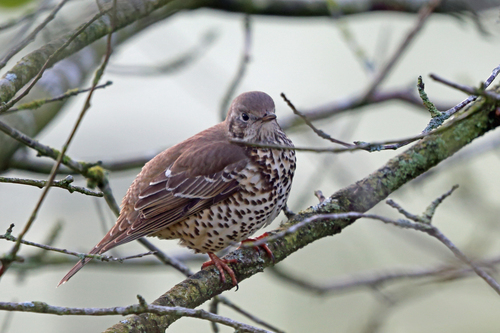
Mistle Thrush (Turdus viscivorus) Mistle Thrush
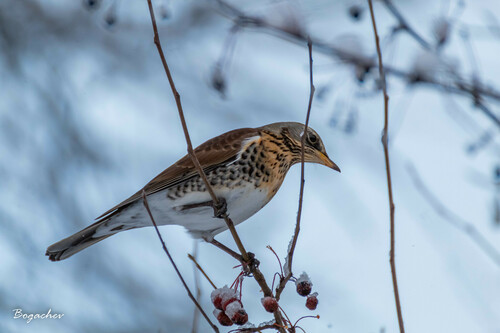
Fieldfare (Turdus pilaris) Fieldfare

Media

Loading…

In short

The Mistle Thrush and Fieldfare are both large thrushes, but the Mistle Thrush is generally larger and more upright. Key differences include the Mistle Thrush's paler underparts with round spots and the Fieldfare's distinctive grey head and rump. Vocalizations differ, with the Mistle Thrush having a more melodious song.

Identification tips

  1. Look for the Mistle Thrush's pale underparts with round spots compared to the Fieldfare's grey head and chestnut back. 2. Note the Mistle Thrush's larger size and more upright posture. 3. Listen for the Mistle Thrush's melodious song versus the Fieldfare's harsh calls. 4. Observe habitat: Mistle Thrushes are more often in wooded areas, Fieldfares in open fields.

Size

The Mistle Thrush is slightly larger and more robust than the Fieldfare.

Plumage

Mistle Thrushes have pale underparts with round, black spots, while Fieldfares have a grey head, nape, and rump with a chestnut back and more defined streaking on the chest.

Behaviour

Both species can be seen foraging on the ground, but the Mistle Thrush often appears more solitary compared to the more social Fieldfare.

Habitat

Both species can be found in open woodlands and fields, but the Mistle Thrush is more likely to be seen in forested areas, while Fieldfares prefer open fields and meadows.

Voice

The Mistle Thrush has a loud, melodious song, often delivered from a high perch, while the Fieldfare's call is a distinctive, harsh 'chack-chack'.

Submit a better description

Use the same sections as the comparison. Your text is published immediately.

The Mistle Thrush and Fieldfare are both large thrushes, but the Mistle Thrush is generally larger and more upright. Key differences include the Mistle Thrush's paler underparts with round spots and the Fieldfare's distinctive grey head and rump. Vocalizations differ, with the Mistle Thrush having a more melodious song.

  1. Look for the Mistle Thrush's pale underparts with round spots compared to the Fieldfare's grey head and chestnut back. 2. Note the Mistle Thrush's larger size and more upright posture. 3. Listen for the Mistle Thrush's melodious song versus the Fieldfare's harsh calls. 4. Observe habitat: Mistle Thrushes are more often in wooded areas, Fieldfares in open fields.

The Mistle Thrush is slightly larger and more robust than the Fieldfare.

Mistle Thrushes have pale underparts with round, black spots, while Fieldfares have a grey head, nape, and rump with a chestnut back and more defined streaking on the chest.

Both species can be seen foraging on the ground, but the Mistle Thrush often appears more solitary compared to the more social Fieldfare.

Both species can be found in open woodlands and fields, but the Mistle Thrush is more likely to be seen in forested areas, while Fieldfares prefer open fields and meadows.

The Mistle Thrush has a loud, melodious song, often delivered from a high perch, while the Fieldfare's call is a distinctive, harsh 'chack-chack'.

Discard your changes?

You have unsaved edits. If you leave now, those changes will be lost.

Mistle Thrush · Fieldfare · My Tricky Birds