Birdr

Mountain Scops Owl vs Oriental Scops Owl

Otus spilocephalus versus Otus sunia

Play a quiz with Mountain Scops Owl and Oriental Scops Owl
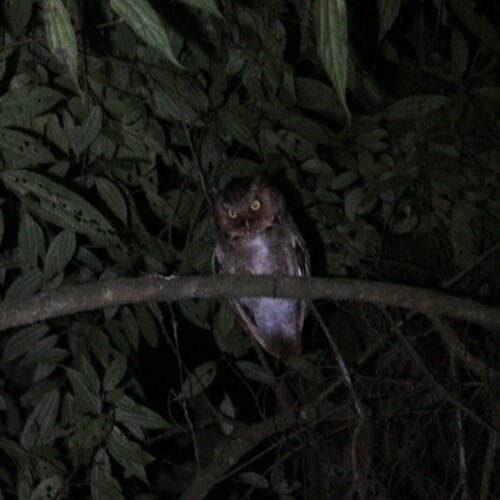
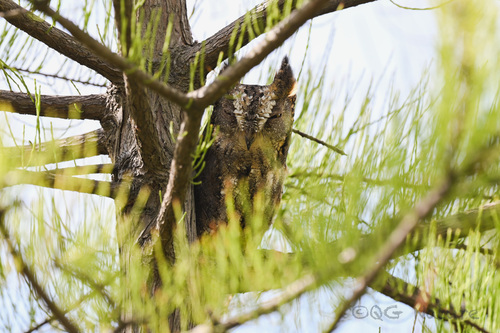
Mountain Scops Owl (Otus spilocephalus) Mountain Scops Owl
Oriental Scops Owl (Otus sunia) Oriental Scops Owl

Media

Loading…

In short

The Mountain Scops Owl and Oriental Scops Owl are both small, cryptic owls often found in forested habitats. The most reliable field mark is their vocalization, as their calls are distinct. Structurally, they are quite similar, but subtle differences in plumage and habitat preference can aid identification.

Identification tips

1. Listen for vocalizations: Mountain Scops Owl has a 'poo-poo' call, while Oriental Scops Owl has soft whistles. 2. Check habitat: Mountain Scops in montane forests, Oriental Scops in varied habitats. 3. Observe plumage: Mountain Scops is more mottled and streaked; Oriental Scops can be grayer or rufous. 4. Consider location: Geographic range may help, as they overlap in some areas but not others.

Size

Both species are similar in size, being small owls with compact bodies.

Plumage

The Mountain Scops Owl generally has a more mottled appearance with a richer brown tone and more prominent streaking on the underparts. The Oriental Scops Owl may appear grayer or more rufous depending on the morph, with less distinct streaking.

Behaviour

Both species are nocturnal and roost during the day, often in dense foliage. They are elusive and can be difficult to spot.

Habitat

Mountain Scops Owls are typically found in montane forests, while Oriental Scops Owls prefer a wider range of habitats, including lowland forests and open woodlands.

Voice

The Mountain Scops Owl has a distinctive, repetitive 'poo-poo' call, while the Oriental Scops Owl's call is a series of soft, whistled notes. Listening for these vocal differences is often the best way to distinguish them.

Submit a better description

Use the same sections as the comparison. Your text is published immediately.

The Mountain Scops Owl and Oriental Scops Owl are both small, cryptic owls often found in forested habitats. The most reliable field mark is their vocalization, as their calls are distinct. Structurally, they are quite similar, but subtle differences in plumage and habitat preference can aid identification.

1. Listen for vocalizations: Mountain Scops Owl has a 'poo-poo' call, while Oriental Scops Owl has soft whistles. 2. Check habitat: Mountain Scops in montane forests, Oriental Scops in varied habitats. 3. Observe plumage: Mountain Scops is more mottled and streaked; Oriental Scops can be grayer or rufous. 4. Consider location: Geographic range may help, as they overlap in some areas but not others.

Both species are similar in size, being small owls with compact bodies.

The Mountain Scops Owl generally has a more mottled appearance with a richer brown tone and more prominent streaking on the underparts. The Oriental Scops Owl may appear grayer or more rufous depending on the morph, with less distinct streaking.

Both species are nocturnal and roost during the day, often in dense foliage. They are elusive and can be difficult to spot.

Mountain Scops Owls are typically found in montane forests, while Oriental Scops Owls prefer a wider range of habitats, including lowland forests and open woodlands.

The Mountain Scops Owl has a distinctive, repetitive 'poo-poo' call, while the Oriental Scops Owl's call is a series of soft, whistled notes. Listening for these vocal differences is often the best way to distinguish them.

Discard your changes?

You have unsaved edits. If you leave now, those changes will be lost.

Mountain Scops Owl · Oriental Scops Owl · My Tricky Birds