Birdr

Mugimaki Flycatcher vs Slaty-blue Flycatcher

Ficedula mugimaki versus Ficedula tricolor

Play a quiz with Mugimaki Flycatcher and Slaty-blue Flycatcher
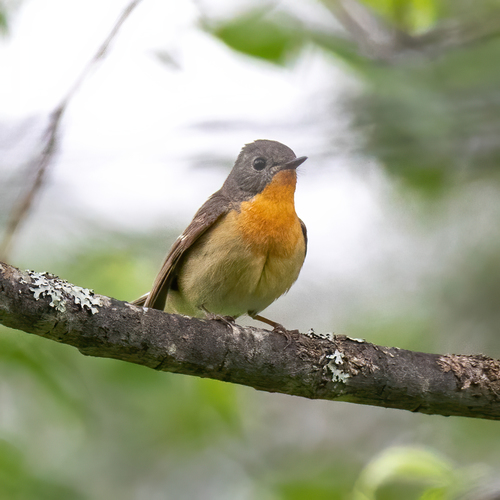
Mugimaki Flycatcher (Ficedula mugimaki) Mugimaki Flycatcher
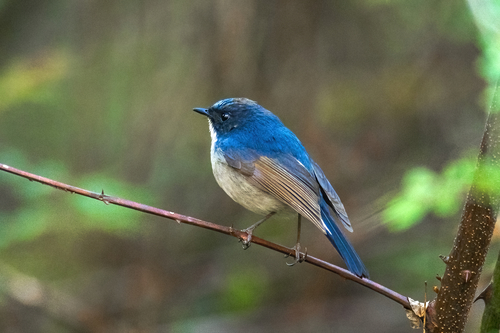
Slaty-blue Flycatcher (Ficedula tricolor) Slaty-blue Flycatcher

Media

Loading…

In short

The Mugimaki Flycatcher and the Slaty-blue Flycatcher can be distinguished by their plumage and habitat preferences. The Mugimaki Flycatcher typically shows a striking orange breast and throat, while the Slaty-blue Flycatcher has a more subdued blue-gray coloration. Both species are small, but their preferred habitats differ, with the Mugimaki often found in open woodlands and the Slaty-blue in dense undergrowth.

Identification tips

Look for the orange breast and throat of the Mugimaki Flycatcher, especially in males, and the blue-gray plumage of the Slaty-blue Flycatcher. Check habitat: open areas for Mugimaki, dense undergrowth for Slaty-blue. Use binoculars to confirm the presence of white wing patches on the Mugimaki.

Size

Both species are small flycatchers with similar overall size.

Plumage

The Mugimaki Flycatcher has a distinctive orange breast and throat with a contrasting black head and white wing patches. In contrast, the Slaty-blue Flycatcher is more uniformly blue-gray, lacking the bright orange of the Mugimaki.

Behaviour

Both species exhibit typical flycatcher behavior, often seen sallying from perches to catch insects. The Mugimaki may be more conspicuous due to its brighter plumage.

Habitat

The Mugimaki Flycatcher is usually found in open woodlands and forest edges, whereas the Slaty-blue Flycatcher prefers dense undergrowth and forest interiors.

Voice

Vocalizations are not the primary distinguishing feature, but the Slaty-blue Flycatcher may have a softer, more subdued song compared to the Mugimaki.

Submit a better description

Use the same sections as the comparison. Your text is published immediately.

The Mugimaki Flycatcher and the Slaty-blue Flycatcher can be distinguished by their plumage and habitat preferences. The Mugimaki Flycatcher typically shows a striking orange breast and throat, while the Slaty-blue Flycatcher has a more subdued blue-gray coloration. Both species are small, but their preferred habitats differ, with the Mugimaki often found in open woodlands and the Slaty-blue in dense undergrowth.

Look for the orange breast and throat of the Mugimaki Flycatcher, especially in males, and the blue-gray plumage of the Slaty-blue Flycatcher. Check habitat: open areas for Mugimaki, dense undergrowth for Slaty-blue. Use binoculars to confirm the presence of white wing patches on the Mugimaki.

Both species are small flycatchers with similar overall size.

The Mugimaki Flycatcher has a distinctive orange breast and throat with a contrasting black head and white wing patches. In contrast, the Slaty-blue Flycatcher is more uniformly blue-gray, lacking the bright orange of the Mugimaki.

Both species exhibit typical flycatcher behavior, often seen sallying from perches to catch insects. The Mugimaki may be more conspicuous due to its brighter plumage.

The Mugimaki Flycatcher is usually found in open woodlands and forest edges, whereas the Slaty-blue Flycatcher prefers dense undergrowth and forest interiors.

Vocalizations are not the primary distinguishing feature, but the Slaty-blue Flycatcher may have a softer, more subdued song compared to the Mugimaki.

Discard your changes?

You have unsaved edits. If you leave now, those changes will be lost.

Mugimaki Flycatcher · Slaty-blue Flycatcher · My Tricky Birds