Birdr

Northern Boobook vs Red-naped Trogon

Ninox japonica versus Harpactes kasumba

Play a quiz with Northern Boobook and Red-naped Trogon
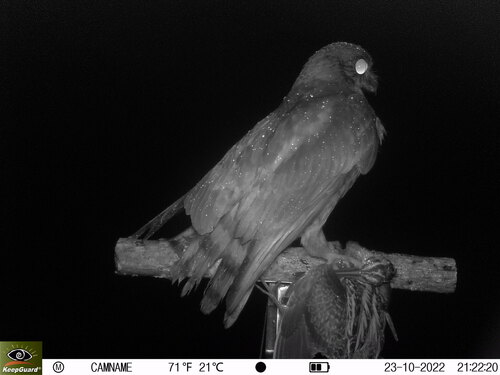
Northern Boobook (Ninox japonica) Northern Boobook
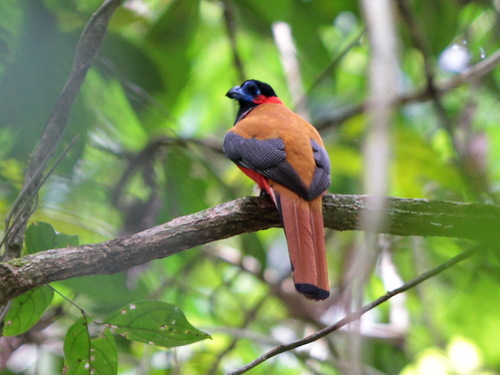
Red-naped Trogon (Harpactes kasumba) Red-naped Trogon

Media

Loading…

In short

The Northern Boobook (Ninox japonica) and the Red-naped Trogon (Harpactes kasumba) are distinct in both appearance and behavior. The boobook is a small owl with a rounded head and lacks the bright colors of the trogon, which is known for its striking red and green plumage. Habitat preferences also differ, with the boobook favoring wooded areas and the trogon inhabiting dense tropical forests.

Identification tips

  1. Check the time of day: Boobooks are active at night, trogons during the day. 2. Look for color: Boobooks are brown and white; trogons have bright red and green. 3. Observe behavior: Boobooks perch quietly; trogons move slowly in the canopy. 4. Listen for calls: Boobooks hoot; trogons have soft, repetitive calls.

Size

The Northern Boobook is generally smaller and more compact compared to the larger and more elongated Red-naped Trogon.

Plumage

The Northern Boobook has a more subdued brown and white plumage, while the Red-naped Trogon displays vibrant red underparts and a green back with a distinctive red nape.

Behaviour

Northern Boobooks are nocturnal and often seen perched quietly in trees, whereas Red-naped Trogons are diurnal and can be observed moving slowly through the forest canopy.

Habitat

Northern Boobooks are found in a variety of wooded habitats, including forests and parks, while Red-naped Trogons are typically restricted to dense tropical forests.

Voice

The Northern Boobook has a series of hoots, while the Red-naped Trogon produces a series of soft, repetitive calls. These vocalizations are quite distinct and can aid in identification.

Submit a better description

Use the same sections as the comparison. Your text is published immediately.

The Northern Boobook (Ninox japonica) and the Red-naped Trogon (Harpactes kasumba) are distinct in both appearance and behavior. The boobook is a small owl with a rounded head and lacks the bright colors of the trogon, which is known for its striking red and green plumage. Habitat preferences also differ, with the boobook favoring wooded areas and the trogon inhabiting dense tropical forests.

  1. Check the time of day: Boobooks are active at night, trogons during the day. 2. Look for color: Boobooks are brown and white; trogons have bright red and green. 3. Observe behavior: Boobooks perch quietly; trogons move slowly in the canopy. 4. Listen for calls: Boobooks hoot; trogons have soft, repetitive calls.

The Northern Boobook is generally smaller and more compact compared to the larger and more elongated Red-naped Trogon.

The Northern Boobook has a more subdued brown and white plumage, while the Red-naped Trogon displays vibrant red underparts and a green back with a distinctive red nape.

Northern Boobooks are nocturnal and often seen perched quietly in trees, whereas Red-naped Trogons are diurnal and can be observed moving slowly through the forest canopy.

Northern Boobooks are found in a variety of wooded habitats, including forests and parks, while Red-naped Trogons are typically restricted to dense tropical forests.

The Northern Boobook has a series of hoots, while the Red-naped Trogon produces a series of soft, repetitive calls. These vocalizations are quite distinct and can aid in identification.

Discard your changes?

You have unsaved edits. If you leave now, those changes will be lost.

Northern Boobook · Red-naped Trogon · My Tricky Birds