
Northern Cardinal vs Pyrrhuloxia
Cardinalis cardinalis versus Cardinalis sinuatus
Play a quiz with Northern Cardinal and Pyrrhuloxia
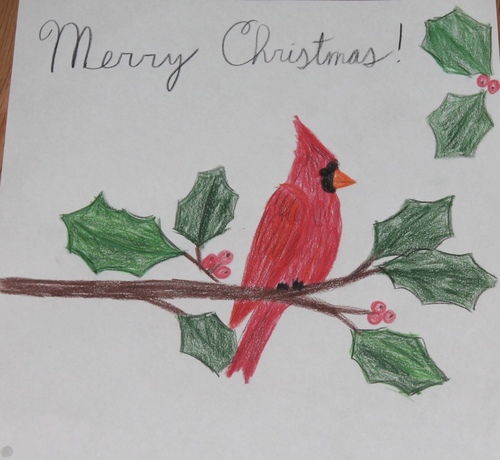 Northern Cardinal
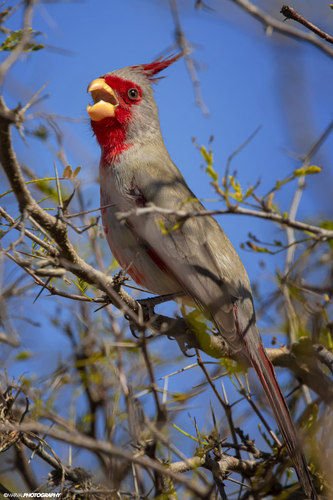 Pyrrhuloxia
In short
The most reliable field mark between Northern Cardinal and Pyrrhuloxia is the bill: Northern Cardinal always shows a large, bright coral-red, conical bill, while Pyrrhuloxia has a shorter, thicker, yellow, parrot-like bill with a strongly curved culmen. Adult male Northern Cardinals are vivid red with a black face mask, whereas male Pyrrhuloxia are mostly grayish with red highlights and a smaller, red mask. Females of both species are more similar, but bill color and shape remain diagnostic. Both species have prominent crests and similar size, but their structure and facial patterns differ in detail. Immature birds can be tricky, but bill color and shape are still the best clues.
Identification tips
- Bill color and shape: Northern Cardinal always has a large, coral-red, conical bill; Pyrrhuloxia has a short, thick, yellow, parrot-like bill with a strongly curved upper edge. This is diagnostic at all ages and sexes.
- Adult male plumage: Northern Cardinal males are solid, vivid red with a sharply defined black mask covering the face and throat. Pyrrhuloxia males are mostly grayish with red on the crest, mask, breast, wings, and tail, but the base color is always grayish, and the mask is smaller and less extensive.
- Adult female plumage: Both are brownish with reddish tinges, but the Northern Cardinal female has a coral-red bill and a grayish, less distinct mask; Pyrrhuloxia female has a yellow, parrot-like bill and a red crest, with a red but less extensive mask.
- Juvenile/immature birds: Both are brownish, but bill color is key: Northern Cardinal juveniles have a dusky bill that turns coral-red as they mature, while Pyrrhuloxia juveniles have a yellow bill from the start. Look for any hint of bill color in fledglings.
- Crest: Both species have a prominent, pointed crest, but this is not a separator.
- Facial mask: Northern Cardinal (especially males) has a bold black mask extending well below the bill and around the eyes; Pyrrhuloxia's mask is red, smaller, and less sharply defined.
- Overall color: Northern Cardinal males are all red; Pyrrhuloxia males are gray with red highlights. Females of both are brownish, but Pyrrhuloxia is grayer overall.
- Wing and tail color: Northern Cardinal's wings and tail are red in males, reddish-tinged in females; Pyrrhuloxia shows red highlights but always with a gray base.
- Leg and eye color: Both have dark legs and brown eyes; not useful for separation.
- Habitat: In the eastern US, any cardinal is a Northern Cardinal. In the desert Southwest, check for bill color and overall grayness for Pyrrhuloxia, especially in arid, open habitats.
- Behavior: Both species visit feeders and forage on the ground; Pyrrhuloxia may be seen in large flocks in winter, while Northern Cardinal is more often in pairs or small groups.
- Song: Songs are nearly identical; do not rely on vocalizations for separation.
- Flight: No distinctive wing or tail pattern separates these species in flight; focus on bill color and overall color impression.
- Season: Both species retain similar plumage year-round, so season is not a major factor.
- Pitfalls: Females and juveniles are the most commonly confused; always check bill color and shape first, then look for gray vs brown tones and extent of red highlights.
Size
Both species are very similar in size, with typical lengths around 21–23 cm (8.3–9.1 in) and weights overlapping (Northern Cardinal: not specified here; Pyrrhuloxia: 24–43 g). In the field, neither species is notably larger or smaller than the other, so size alone is not a reliable separator.
Plumage
- Juvenile/Immature: Both species' young are brownish above and paler below, but Northern Cardinal juveniles have a dusky bill that turns orange-red as they mature, while Pyrrhuloxia juveniles have a yellow bill from the start. Immature cardinals may show brick-red highlights on crest, wings, and tail, while Pyrrhuloxia young are more uniformly gray-brown with less red.
- Adult Male: Northern Cardinal males are brilliant crimson overall with a sharply defined black mask around the face and throat. Pyrrhuloxia males are mostly brownish-gray with a red crest, red mask (smaller and less extensive than cardinal), red breast, and red highlights on wings and tail, but the base color remains grayish.
- Adult Female: Both are mostly brownish or fawn with reddish tinges, but Northern Cardinal females have a coral-red bill and a grayish, less distinct mask, while Pyrrhuloxia females have a yellow, parrot-like bill and a red crest; their mask is also red but less extensive than the cardinal's.
- Bill color and shape: Northern Cardinal: coral-red, long, conical; Pyrrhuloxia: yellow, short, thick, parrot-like with a curved culmen. This is the most consistent field mark at all ages.
Behaviour
Both species are perching songbirds with prominent crests and similar feeding behaviors, often seen foraging for seeds, insects, and fruit. Both can visit feeders. Northern Cardinals are more likely to be seen in pairs or small groups, while Pyrrhuloxia may form large winter flocks. Both defend territories during breeding season, but Pyrrhuloxia is noted for forming huge flocks in winter.
Habitat
Northern Cardinal is widespread in eastern and central North America, favoring woodlands, gardens, shrublands, and wetlands, and is common in suburban areas. Pyrrhuloxia is restricted to the American Southwest and northern Mexico, preferring arid, desert, and scrubby habitats. In areas of overlap (southern Texas, New Mexico, Arizona), both can occur, but Pyrrhuloxia is more likely in drier, more open country, while Northern Cardinal prefers denser vegetation.
Voice
The songs of both species are very similar and can be nearly indistinguishable in the field, though Pyrrhuloxia's song is described as less loud. Vocalizations are not a reliable separator for most birders.