Birdr

Northern Gannet vs Great Cormorant

Morus bassanus versus Phalacrocorax carbo

Play a quiz with Northern Gannet and Great Cormorant

Northern Gannet (Morus bassanus) Northern Gannet
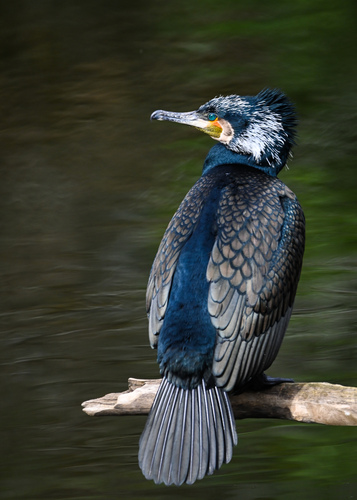
Great Cormorant (Phalacrocorax carbo) Great Cormorant

Media

Loading…

In short

The Northern Gannet and Great Cormorant are both large seabirds, but they differ in plumage and foraging behavior. The Northern Gannet is primarily white with black wingtips, while the Great Cormorant is mostly dark with a distinctive white patch on the throat during breeding season. Gannets are plunge-divers, whereas cormorants dive from the surface.

Identification tips

1. Plumage: Look for the predominantly white body with black wingtips of the Northern Gannet versus the dark body and white throat patch of the Great Cormorant. 2. Behavior: Note the plunge-diving of gannets compared to the surface-diving of cormorants. 3. Habitat: Consider the location; gannets are more oceanic, while cormorants are often seen in more varied aquatic environments.

Size

Both species are large, but the Northern Gannet is typically larger and more robust than the Great Cormorant.

Plumage

Northern Gannets are mostly white with black wingtips, while Great Cormorants are predominantly dark with a white throat patch during breeding. Juvenile gannets are darker and mottled, which can cause confusion.

Behaviour

Northern Gannets are known for their dramatic plunge-diving to catch fish, often from great heights. In contrast, Great Cormorants dive from the surface and can forage at notable depths.

Habitat

Northern Gannets are typically found in open ocean environments and breed on steep cliffs. Great Cormorants are more versatile, found in both coastal and inland waters, often seen perched on rocks or trees.

Voice

Vocalizations are not a primary distinguishing feature in the field; both species are relatively silent away from breeding colonies.

Submit a better description

Use the same sections as the comparison. Your text is published immediately.

The Northern Gannet and Great Cormorant are both large seabirds, but they differ in plumage and foraging behavior. The Northern Gannet is primarily white with black wingtips, while the Great Cormorant is mostly dark with a distinctive white patch on the throat during breeding season. Gannets are plunge-divers, whereas cormorants dive from the surface.

1. Plumage: Look for the predominantly white body with black wingtips of the Northern Gannet versus the dark body and white throat patch of the Great Cormorant. 2. Behavior: Note the plunge-diving of gannets compared to the surface-diving of cormorants. 3. Habitat: Consider the location; gannets are more oceanic, while cormorants are often seen in more varied aquatic environments.

Both species are large, but the Northern Gannet is typically larger and more robust than the Great Cormorant.

Northern Gannets are mostly white with black wingtips, while Great Cormorants are predominantly dark with a white throat patch during breeding. Juvenile gannets are darker and mottled, which can cause confusion.

Northern Gannets are known for their dramatic plunge-diving to catch fish, often from great heights. In contrast, Great Cormorants dive from the surface and can forage at notable depths.

Northern Gannets are typically found in open ocean environments and breed on steep cliffs. Great Cormorants are more versatile, found in both coastal and inland waters, often seen perched on rocks or trees.

Vocalizations are not a primary distinguishing feature in the field; both species are relatively silent away from breeding colonies.

Discard your changes?

You have unsaved edits. If you leave now, those changes will be lost.

Northern Gannet · Great Cormorant · My Tricky Birds