
Northern Harrier vs Cooper's Hawk
Circus hudsonius versus Astur cooperii
Play a quiz with Northern Harrier and Cooper's Hawk
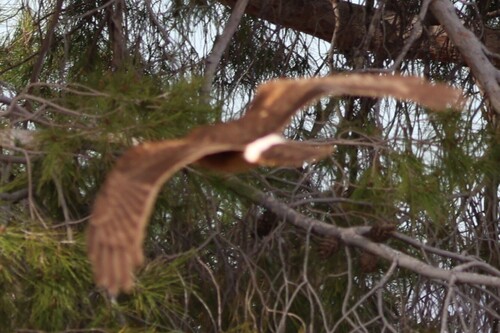 Northern Harrier
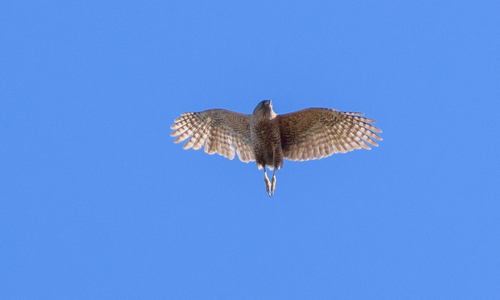 Cooper's Hawk
In short
The most reliable field mark for separating Northern Harrier from Cooper's Hawk in the field is the harrier's distinctive flight profile: long, slim wings held in a shallow V and a long tail, often seen gliding low over open ground. Juvenile and female harriers (the 'ringtails') can be confused with immature Cooper's Hawks, but harriers show a unique combination of structure and behavior that Cooper's never match. Cooper's Hawk has shorter, more rounded wings, a proportionally shorter tail (though still long for a hawk), and a more powerful, direct flight style. Perched, harriers look lankier and longer-winged, while Cooper's Hawks appear compact and broad-chested. Plumage differences exist but can be subtle, especially in immature birds, so structure and flight style are your best first checks.
Identification tips
- White rump patch (all ages, all sexes): Northern Harrier always shows a bright white patch at the base of the tail in flight—never present on Cooper's Hawk. This is the single best field mark, especially on brown juveniles.
- Flight style: Harrier glides low over open ground with wings held in a shallow V, often tilting and banking; Cooper's Hawk flies with rapid wingbeats and short glides, usually in or near trees.
- Wing shape: Harrier's wings are long, slim, and more pointed, giving a lanky look; Cooper's Hawk has shorter, rounded wings, making it look more compact in flight.
- Tail shape: Harrier's tail is long and straight-edged, often fanned; Cooper's Hawk's tail is also long but more rounded or wedge-shaped, with a conspicuous white tip and 3–4 dark bands.
- Facial disc: Harrier has a subtle owl-like facial disc, sometimes visible at close range; Cooper's Hawk lacks this feature, having a more typical hawk face.
- Perched posture: Harrier looks slim, long-winged, and upright when perched, often in open areas; Cooper's Hawk looks broad-chested, hunched, and compact, usually perching in trees.
- Adult male harrier ('Grey Ghost'): Adult male harrier is pale gray above with black wingtips and white rump; adult Cooper's Hawk is blue-gray above with a dark crown and rufous-barred underparts.
- Juvenile plumage: Juvenile harriers are brown above, streaked below, with a white rump and plain face; juvenile Cooper's Hawks are brown above, heavily streaked below, with a hooded look and a more patterned tail.
- Habitat: Harrier is almost always in open country; Cooper's Hawk is usually in or near woods.
- Size: Female harriers are much larger than Cooper's Hawks; males are closer in size but still longer-winged and longer-tailed.
- Voice: Harrier gives 'kek' notes and loud female screams in breeding season; Cooper's Hawk is generally quiet, especially outside breeding.
- Head shape: Harrier's head is small and rounded; Cooper's Hawk's head is large, squarish, and projects forward when alert.
- Hunting behavior: Harrier hunts by coursing low over fields; Cooper's Hawk hunts by surprise attacks through trees.
- Tail bands: Cooper's Hawk tail always shows 3–4 bold dark bands and a white tip; harrier's tail is more evenly colored, with less obvious banding and always the white rump.
- Plumage pitfalls: Immature harriers and Cooper's Hawks can both be brown and streaky, but structure, flight style, and the white rump are decisive. Always check multiple features, especially on distant or backlit birds.
Size
Northern Harrier is generally larger and longer-winged than Cooper's Hawk. Adult harriers are 41–52 cm (16–20 in) long with a wingspan of 97–122 cm (38–48 in), while Cooper's Hawk is smaller overall (exact measurements not given here, but it is notably shorter-winged and more compact in build). Female harriers are especially large, often much bigger than even female Cooper's Hawks. In the field, harriers look slimmer and more stretched out, with longer wings and tail relative to body size, while Cooper's Hawks look stockier, with a broad chest and shorter, rounded wings.
Plumage
-
Juvenile/immature birds: Northern Harrier juveniles and females (the so-called 'ringtails') are brown above and streaky below, but in flight, they show a distinctive white rump patch at the base of the tail—this is absent in Cooper's Hawk at all ages. Harriers also have longer, more evenly colored wings and tail, lacking the bold tail barring of Cooper's. Juvenile Cooper's Hawks are brown above with pale underparts heavily streaked with brown, and their tails show 3–4 dark bands with a white tip. Their underparts are more streaked than barred, and the face can show a pale supercilium and a hooded look, unlike the harrier's more plain face.
-
Adults: Adult male harriers are pale gray above with black wingtips and a white rump; females are brown above and streaked below. Cooper's Hawk adults are blue-gray above with a dark crown, pale nape, and heavily rufous-barred underparts; their tail is blue-gray above, pale below, and always shows 3 bold dark bands and a white tip. The harrier's facial disc is often visible at close range, giving an 'owl-like' look, which Cooper's lacks.
-
In flight: The harrier's wings are longer and held in a shallow V, with a long tail and obvious white rump. Cooper's Hawk has shorter, rounded wings, a long but less elongated tail, and no white rump patch.
Behaviour
Northern Harrier hunts by gliding low over open fields and marshes, wings held in a shallow V, often tilting and banking as it listens and looks for prey. It is rarely seen in dense woods or perched in the canopy. Cooper's Hawk, by contrast, is a woodland predator, often seen darting through trees or perching within the canopy. Its flight is more direct, with rapid wingbeats and short glides, especially when hunting. When perched, harriers look slim and upright, while Cooper's Hawks appear more hunched and broad-shouldered.
Habitat
Northern Harrier is a bird of open country—marshes, grasslands, and fields—rarely venturing into forests. Cooper's Hawk prefers woodlands, forest edges, and sometimes suburban areas with trees. If you see a hawk gliding low over a marsh or open field, it's likely a harrier; if it's darting through trees or perched in a dense canopy, it's more likely a Cooper's Hawk.
Voice
Northern Harrier is mostly silent, but both sexes give fast 'kek' notes, especially when alarmed or during breeding. The female's scream is loud and can be heard during courtship. Cooper's Hawk vocalizations are not detailed in the notes, but in general, they are also quiet outside of the breeding season and do not give the harrier's distinctive 'kek' calls.