Birdr

Northern House Wren vs Grass Wren

Troglodytes aedon versus Cistothorus platensis

Play a quiz with Northern House Wren and Grass Wren
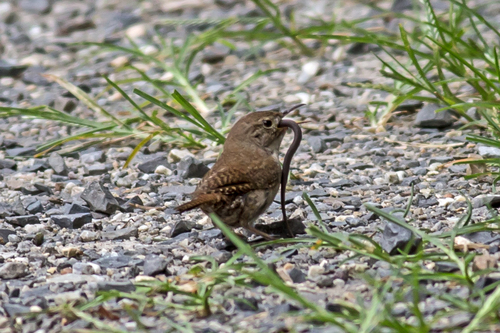
Northern House Wren (Troglodytes aedon) Northern House Wren
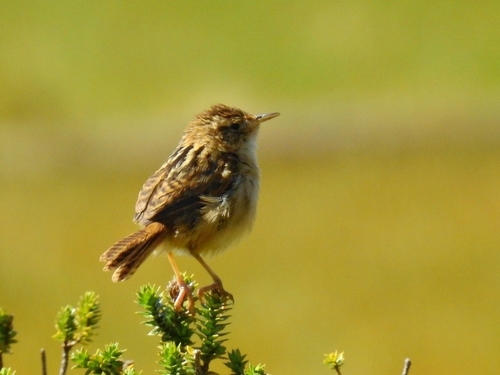
Grass Wren (Cistothorus platensis) Grass Wren

Media

Loading…

In short

The Northern House Wren and Grass Wren can be distinguished by habitat and vocalizations. The Northern House Wren is more likely found in wooded or suburban areas, while the Grass Wren prefers open grasslands. Listen for the Grass Wren's complex song repertoire, which is more varied than the simpler calls of the Northern House Wren.

Identification tips

  1. Habitat: Look for Northern House Wrens in wooded or suburban areas and Grass Wrens in open grasslands. 2. Vocalizations: Listen for the Grass Wren's complex and varied song compared to the simpler calls of the Northern House Wren. 3. Size and Structure: Note the Grass Wren's slightly more compact build and shorter tail.

Size

Both species are small wrens, but the Grass Wren is slightly more compact with a shorter tail.

Plumage

Both species have brown plumage with subtle streaking, but the Northern House Wren may appear slightly more uniform in color. Neither species has prominent markings that are easily visible from a distance.

Behaviour

The Northern House Wren is often seen in more wooded or suburban settings, while the Grass Wren is typically found in open grasslands. Both species are active and often seen flitting through low vegetation.

Habitat

Northern House Wrens are found in wooded or suburban areas across a wide range, while Grass Wrens inhabit open grasslands from central Mexico to the southern tip of South America.

Voice

The Grass Wren has a complex song repertoire with hundreds of variations, while the Northern House Wren has a simpler, more repetitive song.

Submit a better description

Use the same sections as the comparison. Your text is published immediately.

The Northern House Wren and Grass Wren can be distinguished by habitat and vocalizations. The Northern House Wren is more likely found in wooded or suburban areas, while the Grass Wren prefers open grasslands. Listen for the Grass Wren's complex song repertoire, which is more varied than the simpler calls of the Northern House Wren.

  1. Habitat: Look for Northern House Wrens in wooded or suburban areas and Grass Wrens in open grasslands. 2. Vocalizations: Listen for the Grass Wren's complex and varied song compared to the simpler calls of the Northern House Wren. 3. Size and Structure: Note the Grass Wren's slightly more compact build and shorter tail.

Both species are small wrens, but the Grass Wren is slightly more compact with a shorter tail.

Both species have brown plumage with subtle streaking, but the Northern House Wren may appear slightly more uniform in color. Neither species has prominent markings that are easily visible from a distance.

The Northern House Wren is often seen in more wooded or suburban settings, while the Grass Wren is typically found in open grasslands. Both species are active and often seen flitting through low vegetation.

Northern House Wrens are found in wooded or suburban areas across a wide range, while Grass Wrens inhabit open grasslands from central Mexico to the southern tip of South America.

The Grass Wren has a complex song repertoire with hundreds of variations, while the Northern House Wren has a simpler, more repetitive song.

Discard your changes?

You have unsaved edits. If you leave now, those changes will be lost.

Northern House Wren · Grass Wren · My Tricky Birds