Northern Parula vs Bay-breasted Warbler
Setophaga americana versus Setophaga castanea
Play a quiz with Northern Parula and Bay-breasted Warbler
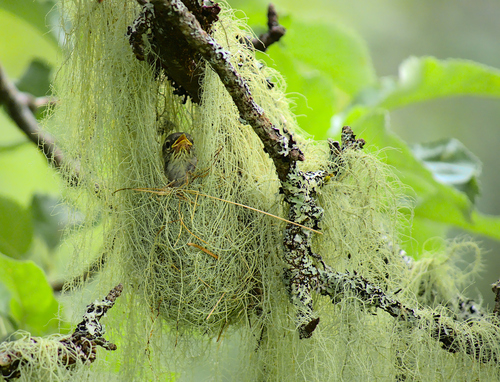
Northern Parula
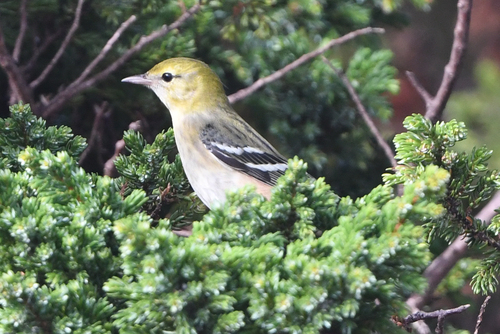
Bay-breasted Warbler
In short
Northern Parula and Bay-breasted Warbler are both small, colorful warblers, but they can be distinguished by their plumage and habitat preferences. Northern Parula is often seen in mixed forests, while Bay-breasted Warbler prefers boreal coniferous forests. Look for the Northern Parula's distinctive yellow throat and chest band, contrasting with the Bay-breasted Warbler's chestnut crown and flanks during breeding season.
Identification tips
- Check the throat and chest: Northern Parula has a yellow throat with a dark chest band; Bay-breasted Warbler has a chestnut throat in breeding males. 2. Look at the back and wings: Northern Parula has a bluish back with a greenish patch; Bay-breasted Warbler has a more uniform back. 3. Consider the habitat: Northern Parula is more likely in mixed forests, while Bay-breasted Warbler prefers boreal coniferous forests.
Size
Both species are small warblers, but Northern Parula is slightly smaller and more compact than Bay-breasted Warbler.
Plumage
Northern Parula has a blue-gray back, yellow throat, and a distinctive white eye ring, with a greenish patch on the back. In contrast, breeding male Bay-breasted Warblers have a chestnut crown, throat, and flanks, with a buffy underbelly. Nonbreeding and female Bay-breasted Warblers are more subdued, with less distinct markings.
Behaviour
Northern Parula is often seen foraging actively in the canopy of mixed forests, while Bay-breasted Warbler tends to forage in the dense foliage of conifers.
Habitat
Northern Parula prefers mixed forests with a presence of water, often near streams or swamps. Bay-breasted Warbler is more closely associated with boreal coniferous forests, particularly during spruce budworm outbreaks.
Voice
Northern Parula's song is a buzzy trill that rises in pitch, while Bay-breasted Warbler's song is a series of high-pitched notes that can be difficult to distinguish from other warblers.