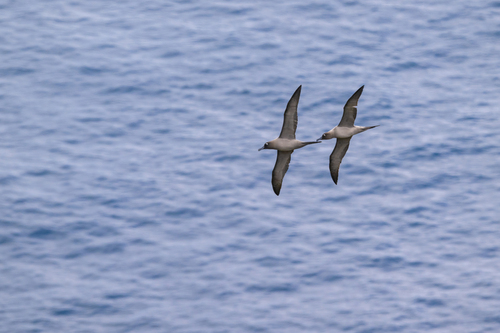
Northern Royal Albatross vs Light-mantled Albatross
Diomedea sanfordi versus Phoebetria palpebrata
Play a quiz with Northern Royal Albatross and Light-mantled Albatross
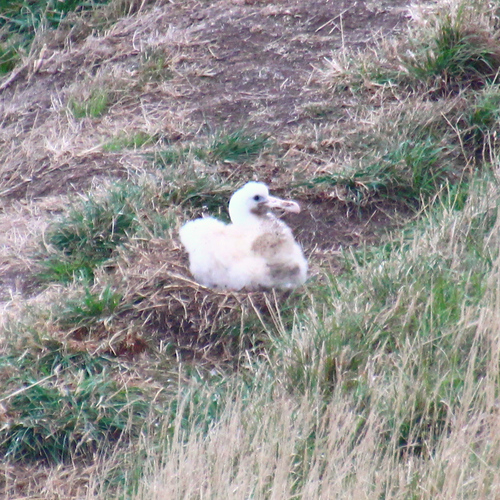
Northern Royal Albatross
Light-mantled Albatross
In short
The Northern Royal Albatross and the Light-mantled Albatross can be distinguished primarily by their plumage and structure. The Northern Royal Albatross is larger with a predominantly white body, while the Light-mantled Albatross has a distinctive dark mantle and a sleeker appearance.
Identification tips
- Size and Structure: Look for the larger size and broader wings of the Northern Royal Albatross. 2. Plumage: Note the predominantly white plumage of the Northern Royal Albatross versus the dark mantle of the Light-mantled Albatross. 3. Flight Style: Observe the flight; the Northern Royal Albatross has a more direct, powerful flight compared to the Light-mantled Albatross's more agile and graceful gliding.
Size
The Northern Royal Albatross is significantly larger, with a wingspan reaching up to 3.5 meters, compared to the more compact Light-mantled Albatross.
Plumage
Northern Royal Albatross has a mostly white body with black upper wings and a white head. In contrast, the Light-mantled Albatross features a unique dark mantle, with a greyish-brown body and a striking pale face.
Behaviour
Both species are pelagic and spend most of their time at sea, but the Northern Royal Albatross is more often seen soaring with stiff wings, while the Light-mantled Albatross is known for its graceful, gliding flight.
Habitat
Both species are found in the Southern Ocean, but the Northern Royal Albatross breeds on New Zealand's subantarctic islands, whereas the Light-mantled Albatross breeds on various subantarctic islands across the Southern Ocean.
Voice
Vocalizations are not a primary distinguishing feature in the field; both species are generally silent at sea.
Northern Royal Albatross · Light-mantled Albatross · My Tricky Birds