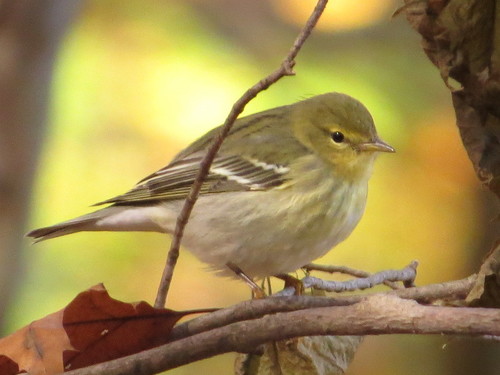
Northern Waterthrush vs Blackpoll Warbler
Parkesia noveboracensis versus Setophaga striata
Play a quiz with Northern Waterthrush and Blackpoll Warbler
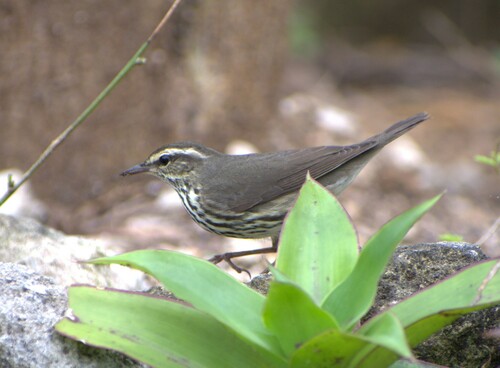
Northern Waterthrush
Blackpoll Warbler
In short
The Northern Waterthrush and Blackpoll Warbler are both small, migratory warblers, but they differ significantly in habitat preference and plumage details. The Northern Waterthrush is more often found near water, while the Blackpoll Warbler prefers coniferous forests. Key differences include the Northern Waterthrush's streaked underparts and the Blackpoll Warbler's distinctive black cap during breeding season.
Identification tips
- Habitat: Check the surrounding environment; Northern Waterthrushes are near water, Blackpoll Warblers in coniferous forests. 2. Plumage: Look for the Northern Waterthrush's streaked underparts and white supercilium versus the Blackpoll Warbler's black cap and white cheeks. 3. Behavior: Note the Northern Waterthrush's tail bobbing. 4. Vocalization: Listen for the Northern Waterthrush's loud, ringing song versus the Blackpoll Warbler's high-pitched, thin song.
Size
Both species are similar in size, but the Northern Waterthrush has a slightly more robust build compared to the slender Blackpoll Warbler.
Plumage
The Northern Waterthrush has a brownish back with heavily streaked underparts and a bold, white supercilium. In contrast, the Blackpoll Warbler in breeding plumage has a striking black cap, white cheeks, and streaked sides, with a more overall grayish appearance.
Behaviour
The Northern Waterthrush is often seen bobbing its tail and foraging near water, while the Blackpoll Warbler is more arboreal, often seen in the canopy of coniferous forests.
Habitat
Northern Waterthrushes are typically found in wet, wooded areas near streams and ponds, while Blackpoll Warblers breed in northern coniferous forests and migrate over vast distances, including over the Atlantic Ocean.
Voice
The Northern Waterthrush's song is a loud, ringing series of notes, while the Blackpoll Warbler's song is a high-pitched, thin series of notes, often described as insect-like.