Birdr

Northern Waterthrush vs Yellow-rumped Warbler

Parkesia noveboracensis versus Setophaga coronata

Play a quiz with Northern Waterthrush and Yellow-rumped Warbler
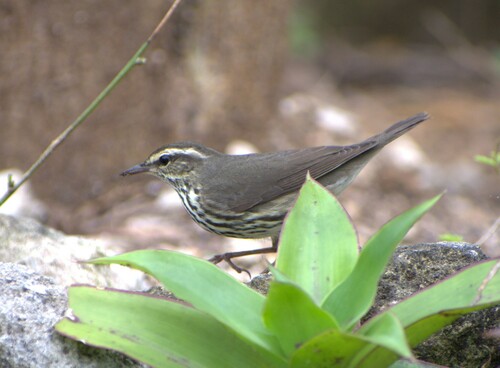
Northern Waterthrush (Parkesia noveboracensis) Northern Waterthrush
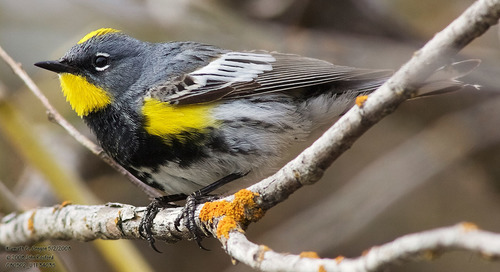
Yellow-rumped Warbler (Setophaga coronata) Yellow-rumped Warbler

Media

Loading…

In short

The Northern Waterthrush and Yellow-rumped Warbler can be distinguished by their structure and habitat preferences. The Northern Waterthrush is more thrush-like with a longer tail and prefers wet, wooded habitats, while the Yellow-rumped Warbler is more versatile in habitat and has a distinctive yellow rump patch.

Identification tips

Size

The Northern Waterthrush is slightly larger and more robust than the Yellow-rumped Warbler, with a longer tail and a more thrush-like appearance.

Plumage

The Northern Waterthrush has a brown back with a heavily streaked breast and a prominent white supercilium. The Yellow-rumped Warbler, in contrast, has a grayish back with a distinctive yellow rump patch and often shows yellow on the sides and crown.

Behaviour

Northern Waterthrushes are often seen walking along the ground or low branches near water, while Yellow-rumped Warblers are more versatile, foraging in a variety of habitats and often seen fly-catching.

Habitat

Northern Waterthrushes are typically found in wet, wooded areas such as swamps and streams. Yellow-rumped Warblers are more adaptable, found in a wide range of habitats including forests, gardens, and coastal areas.

Voice

The Northern Waterthrush has a loud, ringing song that is often heard near water. The Yellow-rumped Warbler's song is a softer, more musical trill. Calls also differ, with the Northern Waterthrush having a sharp 'chink' call, while the Yellow-rumped Warbler has a 'check' or 'chip' call.

Submit a better description

Use the same sections as the comparison. Your text is published immediately.

The Northern Waterthrush and Yellow-rumped Warbler can be distinguished by their structure and habitat preferences. The Northern Waterthrush is more thrush-like with a longer tail and prefers wet, wooded habitats, while the Yellow-rumped Warbler is more versatile in habitat and has a distinctive yellow rump patch.

  • Look for the yellow rump patch on the Yellow-rumped Warbler, absent in the Northern Waterthrush.
  • Check the habitat: Northern Waterthrushes are more likely near water.
  • Listen for vocalizations: Northern Waterthrushes have a louder, more ringing song.
  • Observe behavior: Northern Waterthrushes walk along the ground, while Yellow-rumped Warblers may be seen fly-catching.

The Northern Waterthrush is slightly larger and more robust than the Yellow-rumped Warbler, with a longer tail and a more thrush-like appearance.

The Northern Waterthrush has a brown back with a heavily streaked breast and a prominent white supercilium. The Yellow-rumped Warbler, in contrast, has a grayish back with a distinctive yellow rump patch and often shows yellow on the sides and crown.

Northern Waterthrushes are often seen walking along the ground or low branches near water, while Yellow-rumped Warblers are more versatile, foraging in a variety of habitats and often seen fly-catching.

Northern Waterthrushes are typically found in wet, wooded areas such as swamps and streams. Yellow-rumped Warblers are more adaptable, found in a wide range of habitats including forests, gardens, and coastal areas.

The Northern Waterthrush has a loud, ringing song that is often heard near water. The Yellow-rumped Warbler's song is a softer, more musical trill. Calls also differ, with the Northern Waterthrush having a sharp 'chink' call, while the Yellow-rumped Warbler has a 'check' or 'chip' call.

Discard your changes?

You have unsaved edits. If you leave now, those changes will be lost.

Northern Waterthrush · Yellow-rumped Warbler · My Tricky Birds