Birdr

Nubian Nightjar vs Fiery-necked Nightjar

Caprimulgus nubicus versus Caprimulgus pectoralis

Play a quiz with Nubian Nightjar and Fiery-necked Nightjar
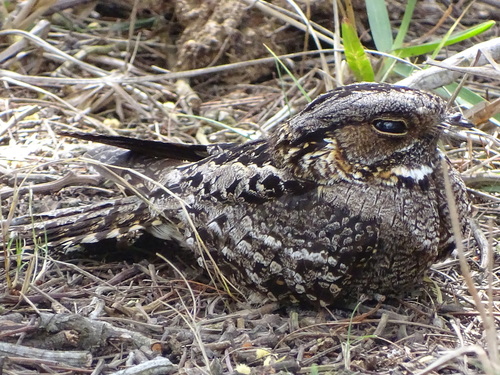
Nubian Nightjar (Caprimulgus nubicus) Nubian Nightjar
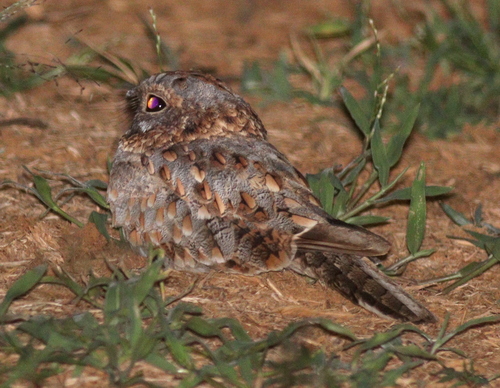
Fiery-necked Nightjar (Caprimulgus pectoralis) Fiery-necked Nightjar

Media

Loading…

In short

The Nubian Nightjar and Fiery-necked Nightjar are both nocturnal insectivores from the Caprimulgidae family, but they can be distinguished by their habitat preferences and vocalizations. The Nubian Nightjar is typically found in arid regions, while the Fiery-necked Nightjar prefers more wooded environments. Their calls also differ, providing a useful identification clue.

Identification tips

Size

Both species are similar in size, typical of nightjars, with no significant size difference to aid identification.

Plumage

The Nubian Nightjar generally has a paler, more sandy plumage suited to its arid habitat, while the Fiery-necked Nightjar displays more contrasting patterns with a fiery orange-buff collar, especially noticeable in good light.

Behaviour

Both species exhibit typical nightjar behavior, being nocturnal and feeding on flying insects. The Nubian Nightjar's use of torpor on cold nights is noted but not a field mark.

Habitat

The Nubian Nightjar is found in arid, open areas, often near water bodies in desert regions. In contrast, the Fiery-necked Nightjar prefers wooded habitats, including farmbush and open woodlands, avoiding dense forests.

Voice

The Fiery-necked Nightjar is known for its distinctive 'good lord deliver us' call, which is not shared by the Nubian Nightjar, making vocalizations a reliable field mark.

Submit a better description

Use the same sections as the comparison. Your text is published immediately.

The Nubian Nightjar and Fiery-necked Nightjar are both nocturnal insectivores from the Caprimulgidae family, but they can be distinguished by their habitat preferences and vocalizations. The Nubian Nightjar is typically found in arid regions, while the Fiery-necked Nightjar prefers more wooded environments. Their calls also differ, providing a useful identification clue.

  • Habitat: Check the environment; Nubian prefers arid, Fiery-necked prefers wooded.
  • Vocalizations: Listen for the Fiery-necked's distinctive call.
  • Plumage: Look for the Fiery-necked's fiery collar in good light.
  • Behavior: Both are nocturnal, so observe at dusk or dawn.

Both species are similar in size, typical of nightjars, with no significant size difference to aid identification.

The Nubian Nightjar generally has a paler, more sandy plumage suited to its arid habitat, while the Fiery-necked Nightjar displays more contrasting patterns with a fiery orange-buff collar, especially noticeable in good light.

Both species exhibit typical nightjar behavior, being nocturnal and feeding on flying insects. The Nubian Nightjar's use of torpor on cold nights is noted but not a field mark.

The Nubian Nightjar is found in arid, open areas, often near water bodies in desert regions. In contrast, the Fiery-necked Nightjar prefers wooded habitats, including farmbush and open woodlands, avoiding dense forests.

The Fiery-necked Nightjar is known for its distinctive 'good lord deliver us' call, which is not shared by the Nubian Nightjar, making vocalizations a reliable field mark.

Discard your changes?

You have unsaved edits. If you leave now, those changes will be lost.

Nubian Nightjar · Fiery-necked Nightjar · My Tricky Birds