Birdr

Oahu Amakihi vs Akekee

Chlorodrepanis flava versus Loxops caeruleirostris

Play a quiz with Oahu Amakihi and Akekee
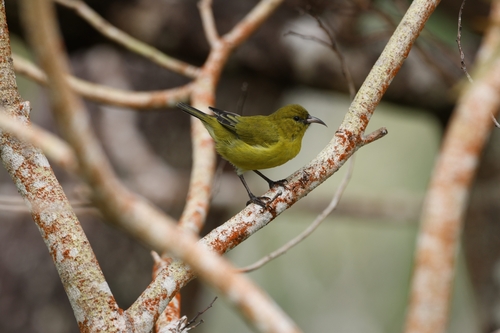
Oahu Amakihi (Chlorodrepanis flava) Oahu Amakihi
Akekee (Loxops caeruleirostris) Akekee

Media

Loading…

In short

The Oahu Amakihi and Akekee can be distinguished primarily by their bill shape and plumage coloration. The Oahu Amakihi has a short, decurved bill and is generally olive green, while the Akekee has a more conical bill and a yellow-green body with a distinctive bluish crown.

Identification tips

  1. Bill Shape: Look for the decurved bill of the Oahu Amakihi versus the conical bill of the Akekee. 2. Plumage: Note the olive green color of the Oahu Amakihi compared to the yellow-green body and bluish crown of the Akekee. 3. Location: Consider the island and habitat; the Akekee is restricted to Kaua'i, while the Oahu Amakihi is more widespread.

Size

Both species are small Hawaiian honeycreepers, but the Akekee may appear slightly more robust due to its conical bill.

Plumage

The Oahu Amakihi is predominantly olive green with black lores. In contrast, the Akekee has a yellow-green body with a bluish crown, making it more colorful and distinctive.

Behaviour

Both species are active foragers, but the Oahu Amakihi is more adaptable and can be found in a wider range of habitats. The Akekee is more specialized and may be overlooked by inexperienced observers.

Habitat

The Oahu Amakihi is found primarily in native forests across various Hawaiian islands, thriving in both xeric and mesic forests. The Akekee is more restricted to the forests of Kaua'i.

Voice

Vocalizations are not well-documented for these species in the provided notes, but the Akekee is noted to be overlooked by inexperienced observers when relying on vocalizations.

Submit a better description

Use the same sections as the comparison. Your text is published immediately.

The Oahu Amakihi and Akekee can be distinguished primarily by their bill shape and plumage coloration. The Oahu Amakihi has a short, decurved bill and is generally olive green, while the Akekee has a more conical bill and a yellow-green body with a distinctive bluish crown.

  1. Bill Shape: Look for the decurved bill of the Oahu Amakihi versus the conical bill of the Akekee. 2. Plumage: Note the olive green color of the Oahu Amakihi compared to the yellow-green body and bluish crown of the Akekee. 3. Location: Consider the island and habitat; the Akekee is restricted to Kaua'i, while the Oahu Amakihi is more widespread.

Both species are small Hawaiian honeycreepers, but the Akekee may appear slightly more robust due to its conical bill.

The Oahu Amakihi is predominantly olive green with black lores. In contrast, the Akekee has a yellow-green body with a bluish crown, making it more colorful and distinctive.

Both species are active foragers, but the Oahu Amakihi is more adaptable and can be found in a wider range of habitats. The Akekee is more specialized and may be overlooked by inexperienced observers.

The Oahu Amakihi is found primarily in native forests across various Hawaiian islands, thriving in both xeric and mesic forests. The Akekee is more restricted to the forests of Kaua'i.

Vocalizations are not well-documented for these species in the provided notes, but the Akekee is noted to be overlooked by inexperienced observers when relying on vocalizations.

Discard your changes?

You have unsaved edits. If you leave now, those changes will be lost.

Oahu Amakihi · Akekee · My Tricky Birds