Birdr

Ocellated Crake vs Chestnut-headed Crake

Rufirallus schomburgkii versus Anurolimnas castaneiceps

Play a quiz with Ocellated Crake and Chestnut-headed Crake
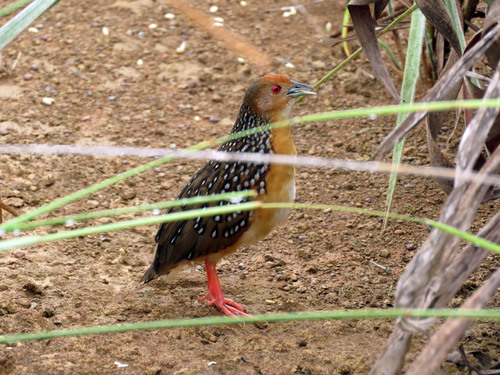
Ocellated Crake (Rufirallus schomburgkii) Ocellated Crake
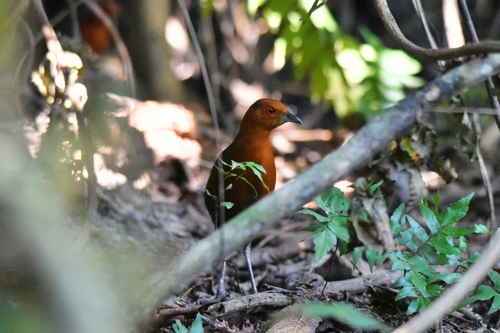
Chestnut-headed Crake (Anurolimnas castaneiceps) Chestnut-headed Crake

Media

Loading…

In short

The Ocellated Crake and Chestnut-headed Crake are both secretive rails, but they can be distinguished by head coloration and habitat preference. The Ocellated Crake has a more distinctive eye pattern, while the Chestnut-headed Crake features a uniform chestnut head.

Identification tips

  1. Look for the distinctive eye pattern on the Ocellated Crake. 2. Note the uniform chestnut head of the Chestnut-headed Crake. 3. Consider habitat: Ocellated Crake in cerrado and grasslands, Chestnut-headed Crake in humid forests.

Size

Both species are similar in size, typical of small rails.

Plumage

The Ocellated Crake has a distinctive pattern around the eyes, often with a more contrasting appearance, while the Chestnut-headed Crake has a uniform chestnut coloration on the head and lacks the eye pattern.

Behaviour

Both species are secretive and often remain hidden in dense vegetation, making them difficult to observe.

Habitat

The Ocellated Crake is found in high-quality native cerrado and dense grasslands, while the Chestnut-headed Crake prefers humid lowland forests and edges.

Voice

Vocalizations are not well-documented for either species, making this an unreliable field mark.

Submit a better description

Use the same sections as the comparison. Your text is published immediately.

The Ocellated Crake and Chestnut-headed Crake are both secretive rails, but they can be distinguished by head coloration and habitat preference. The Ocellated Crake has a more distinctive eye pattern, while the Chestnut-headed Crake features a uniform chestnut head.

  1. Look for the distinctive eye pattern on the Ocellated Crake. 2. Note the uniform chestnut head of the Chestnut-headed Crake. 3. Consider habitat: Ocellated Crake in cerrado and grasslands, Chestnut-headed Crake in humid forests.

Both species are similar in size, typical of small rails.

The Ocellated Crake has a distinctive pattern around the eyes, often with a more contrasting appearance, while the Chestnut-headed Crake has a uniform chestnut coloration on the head and lacks the eye pattern.

Both species are secretive and often remain hidden in dense vegetation, making them difficult to observe.

The Ocellated Crake is found in high-quality native cerrado and dense grasslands, while the Chestnut-headed Crake prefers humid lowland forests and edges.

Vocalizations are not well-documented for either species, making this an unreliable field mark.

Discard your changes?

You have unsaved edits. If you leave now, those changes will be lost.

Ocellated Crake · Chestnut-headed Crake · My Tricky Birds