Birdr

Ocellated Poorwill vs Silky-tailed Nightjar

Nyctiphrynus ocellatus versus Antrostomus sericocaudatus

Play a quiz with Ocellated Poorwill and Silky-tailed Nightjar
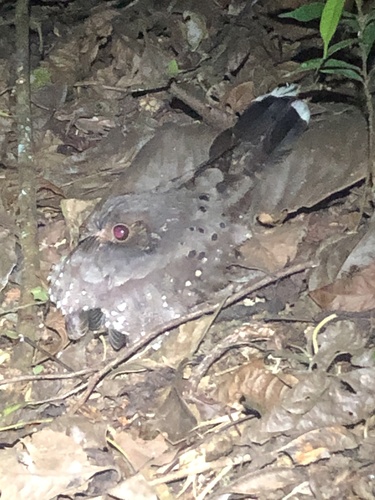
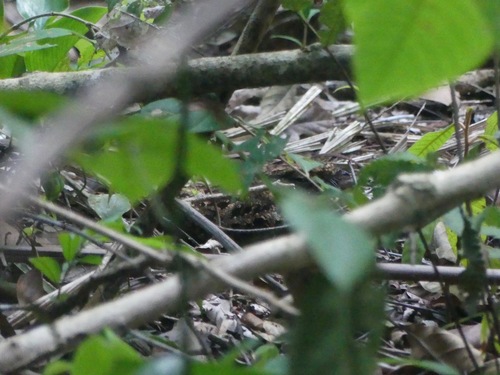
Ocellated Poorwill (Nyctiphrynus ocellatus) Ocellated Poorwill
Silky-tailed Nightjar (Antrostomus sericocaudatus) Silky-tailed Nightjar

Media

Loading…

In short

The Ocellated Poorwill and Silky-tailed Nightjar can be distinguished by their tail and wing patterns. The Ocellated Poorwill has a distinctive pattern of white spots on its tail, while the Silky-tailed Nightjar has a more uniform tail with silky feathering. Both species belong to the nightjar family but differ in subtle structural and plumage details.

Identification tips

  1. Look for the white spots on the tail of the Ocellated Poorwill. 2. Note the silky feathering of the Silky-tailed Nightjar's tail. 3. Observe habitat: Ocellated Poorwill in denser forests, Silky-tailed Nightjar in open woodlands. 4. Listen for vocal differences if familiar with their calls.

Size

Both species are similar in size, typical of small to medium-sized nightjars.

Plumage

The Ocellated Poorwill features white spots on its tail and a more cryptic overall plumage with ocellated patterns. In contrast, the Silky-tailed Nightjar has a more uniform tail with silky feathering and less pronounced patterning on the body.

Behaviour

Both species exhibit typical nightjar behavior, being nocturnal and often seen perched on the ground or low branches. Specific behavioral differences are not well-documented.

Habitat

The Ocellated Poorwill is typically found in forested areas, while the Silky-tailed Nightjar prefers more open woodland and forest edges. Both species may overlap in certain habitats, but their preferences can help in identification.

Voice

Vocalizations differ, but specific descriptions are not detailed in the sources. Listening for differences in calls can be helpful if known.

Submit a better description

Use the same sections as the comparison. Your text is published immediately.

The Ocellated Poorwill and Silky-tailed Nightjar can be distinguished by their tail and wing patterns. The Ocellated Poorwill has a distinctive pattern of white spots on its tail, while the Silky-tailed Nightjar has a more uniform tail with silky feathering. Both species belong to the nightjar family but differ in subtle structural and plumage details.

  1. Look for the white spots on the tail of the Ocellated Poorwill. 2. Note the silky feathering of the Silky-tailed Nightjar's tail. 3. Observe habitat: Ocellated Poorwill in denser forests, Silky-tailed Nightjar in open woodlands. 4. Listen for vocal differences if familiar with their calls.

Both species are similar in size, typical of small to medium-sized nightjars.

The Ocellated Poorwill features white spots on its tail and a more cryptic overall plumage with ocellated patterns. In contrast, the Silky-tailed Nightjar has a more uniform tail with silky feathering and less pronounced patterning on the body.

Both species exhibit typical nightjar behavior, being nocturnal and often seen perched on the ground or low branches. Specific behavioral differences are not well-documented.

The Ocellated Poorwill is typically found in forested areas, while the Silky-tailed Nightjar prefers more open woodland and forest edges. Both species may overlap in certain habitats, but their preferences can help in identification.

Vocalizations differ, but specific descriptions are not detailed in the sources. Listening for differences in calls can be helpful if known.

Discard your changes?

You have unsaved edits. If you leave now, those changes will be lost.

Ocellated Poorwill · Silky-tailed Nightjar · My Tricky Birds