Birdr

Ocellated Thrasher vs Long-billed Thrasher

Toxostoma ocellatum versus Toxostoma longirostre

Play a quiz with Ocellated Thrasher and Long-billed Thrasher
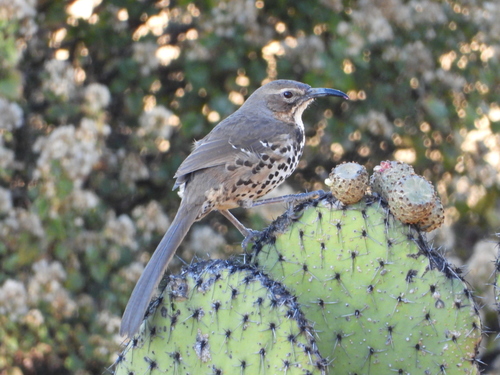
Ocellated Thrasher (Toxostoma ocellatum) Ocellated Thrasher
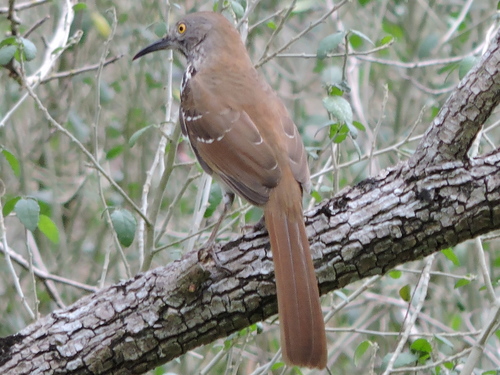
Long-billed Thrasher (Toxostoma longirostre) Long-billed Thrasher

Media

Loading…

In short

The Ocellated Thrasher and Long-billed Thrasher are both members of the Mimidae family, but they can be distinguished by their habitat preferences and plumage details. The Ocellated Thrasher is found in higher elevations in central Mexico, while the Long-billed Thrasher resides in dense brushy habitats of southern Texas and eastern Mexico. Key differences in plumage include the Ocellated Thrasher's distinctive ocellated spots on the underparts.

Identification tips

Size

Both species are similar in size, typical of thrashers, with no significant size difference noted.

Plumage

The Ocellated Thrasher has unique ocellated spots on its underparts, which are absent in the Long-billed Thrasher. The Long-billed Thrasher typically has a more uniform brown coloration with streaked underparts.

Behaviour

Both species forage on the ground and ascend into shrubs and trees to eat berries. The Long-billed Thrasher is noted for its short flights near the ground.

Habitat

The Ocellated Thrasher is a resident of the central plateau in Mexico at higher elevations, while the Long-billed Thrasher is found in dense brushy habitats of southern Texas and eastern Mexico.

Voice

The Long-billed Thrasher is known for its songs from conspicuous perches during the breeding season, while specific vocalization details for the Ocellated Thrasher are less documented.

Submit a better description

Use the same sections as the comparison. Your text is published immediately.

The Ocellated Thrasher and Long-billed Thrasher are both members of the Mimidae family, but they can be distinguished by their habitat preferences and plumage details. The Ocellated Thrasher is found in higher elevations in central Mexico, while the Long-billed Thrasher resides in dense brushy habitats of southern Texas and eastern Mexico. Key differences in plumage include the Ocellated Thrasher's distinctive ocellated spots on the underparts.

  • Look for ocellated spots on the underparts to identify the Ocellated Thrasher.
  • Note the habitat: higher elevations in Mexico suggest Ocellated Thrasher, while dense brush in Texas or eastern Mexico suggests Long-billed Thrasher.
  • Listen for singing behavior during the breeding season, more prominent in Long-billed Thrasher.

Both species are similar in size, typical of thrashers, with no significant size difference noted.

The Ocellated Thrasher has unique ocellated spots on its underparts, which are absent in the Long-billed Thrasher. The Long-billed Thrasher typically has a more uniform brown coloration with streaked underparts.

Both species forage on the ground and ascend into shrubs and trees to eat berries. The Long-billed Thrasher is noted for its short flights near the ground.

The Ocellated Thrasher is a resident of the central plateau in Mexico at higher elevations, while the Long-billed Thrasher is found in dense brushy habitats of southern Texas and eastern Mexico.

The Long-billed Thrasher is known for its songs from conspicuous perches during the breeding season, while specific vocalization details for the Ocellated Thrasher are less documented.

Discard your changes?

You have unsaved edits. If you leave now, those changes will be lost.

Ocellated Thrasher · Long-billed Thrasher · My Tricky Birds