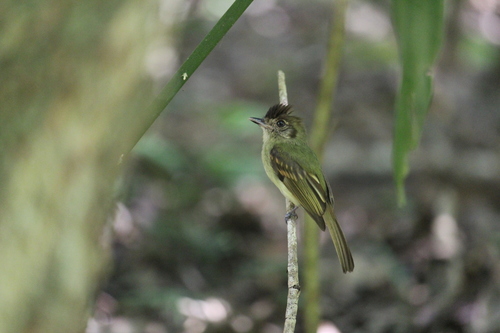
Ochre-bellied Flycatcher vs Sepia-capped Flycatcher
Mionectes oleagineus versus Leptopogon amaurocephalus
Play a quiz with Ochre-bellied Flycatcher and Sepia-capped Flycatcher
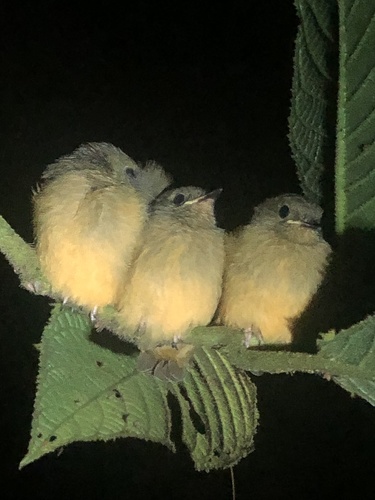
Ochre-bellied Flycatcher
Sepia-capped Flycatcher
In short
The Ochre-bellied Flycatcher and Sepia-capped Flycatcher can be distinguished by their head coloration and behavior. The Ochre-bellied has a more uniform olive coloration, while the Sepia-capped features a distinctive sepia-toned cap. Both species are small flycatchers, but their behaviors and habitats offer additional clues.
Identification tips
1. Head Coloration: Look for the sepia-toned cap on the Sepia-capped Flycatcher.
2. Behavior: Note the wing-lifting behavior of the Sepia-capped.
3. Habitat: Consider the habitat; Ochre-bellied is more likely in gardens and second growth.
4. Vocalization: Listen for the explosive calls of the Sepia-capped.
Size
Both species are small flycatchers, with similar overall size.
Plumage
The Ochre-bellied Flycatcher has a more uniform olive coloration across its body, including the belly. In contrast, the Sepia-capped Flycatcher has a noticeable sepia-toned cap and a pale 'tear-drop' marking below the eye.
Behaviour
The Ochre-bellied Flycatcher often participates in an 'exploded lek' system, while the Sepia-capped Flycatcher is known for its peculiar habit of lifting one wing over its back while perched.
Habitat
Ochre-bellied Flycatchers are found in forests, tall second growth, and large gardens up to 1800 m. Sepia-capped Flycatchers range from Mexico to northern Argentina, often associating with mixed flocks.
Voice
The Sepia-capped Flycatcher has explosive vocalizations that seem large for its size, whereas specific vocal details for the Ochre-bellied Flycatcher are not provided.
Ochre-bellied Flycatcher · Sepia-capped Flycatcher · My Tricky Birds