Birdr

Ochre-lored Flatbill vs Cliff Flycatcher

Tolmomyias flaviventris versus Hirundinea ferruginea

Play a quiz with Ochre-lored Flatbill and Cliff Flycatcher
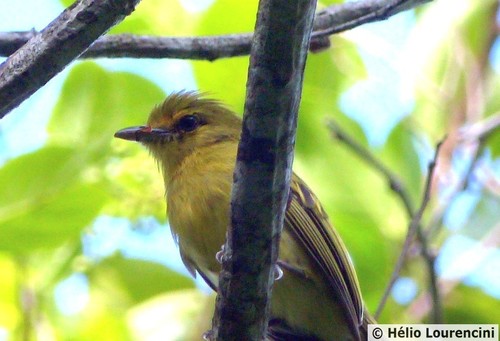
Ochre-lored Flatbill (Tolmomyias flaviventris) Ochre-lored Flatbill
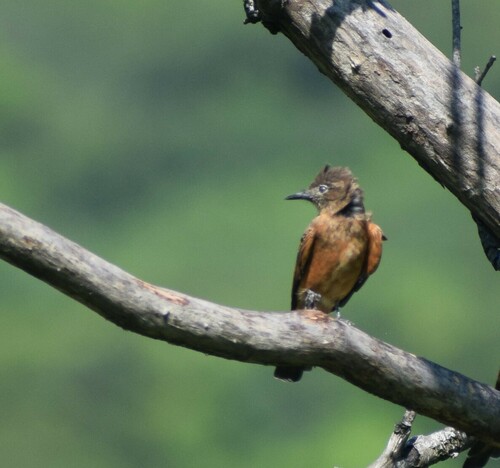
Cliff Flycatcher (Hirundinea ferruginea) Cliff Flycatcher

Media

Loading…

In short

The Ochre-lored Flatbill and the Cliff Flycatcher are both small flycatchers, but they can be distinguished by their face and wing markings. The Ochre-lored Flatbill has a distinctive ochre lore and a more uniform olive face, while the Cliff Flycatcher exhibits a more pronounced rufous coloration on its wings and tail.

Identification tips

  1. Look for the ochre lores on the Ochre-lored Flatbill. 2. Note the rufous wings and tail of the Cliff Flycatcher. 3. Observe behavior: Cliff Flycatchers are more likely to be seen on cliffs or open perches. 4. Consider habitat: Ochre-lored Flatbills prefer forested areas. 5. Listen for vocal differences if possible, as calls can be distinctive.

Size

Both species are small flycatchers, but the Cliff Flycatcher generally appears slightly larger and more robust.

Plumage

The Ochre-lored Flatbill has an olive face with ochre lores and a more uniform greenish-olive plumage. In contrast, the Cliff Flycatcher shows a more rufous coloration, particularly on the wings and tail, and has a more contrasting facial pattern.

Behaviour

The Cliff Flycatcher often perches conspicuously on cliffs or open areas, sallying out for insects, while the Ochre-lored Flatbill tends to be more secretive, foraging in the mid-levels of forest interiors.

Habitat

Ochre-lored Flatbills are typically found in forested areas, while Cliff Flycatchers are more associated with open rocky areas or cliffs.

Voice

Vocalizations differ, but specific calls are not well-documented here. Generally, flycatchers have distinctive calls, so listening for differences can be helpful.

Submit a better description

Use the same sections as the comparison. Your text is published immediately.

The Ochre-lored Flatbill and the Cliff Flycatcher are both small flycatchers, but they can be distinguished by their face and wing markings. The Ochre-lored Flatbill has a distinctive ochre lore and a more uniform olive face, while the Cliff Flycatcher exhibits a more pronounced rufous coloration on its wings and tail.

  1. Look for the ochre lores on the Ochre-lored Flatbill. 2. Note the rufous wings and tail of the Cliff Flycatcher. 3. Observe behavior: Cliff Flycatchers are more likely to be seen on cliffs or open perches. 4. Consider habitat: Ochre-lored Flatbills prefer forested areas. 5. Listen for vocal differences if possible, as calls can be distinctive.

Both species are small flycatchers, but the Cliff Flycatcher generally appears slightly larger and more robust.

The Ochre-lored Flatbill has an olive face with ochre lores and a more uniform greenish-olive plumage. In contrast, the Cliff Flycatcher shows a more rufous coloration, particularly on the wings and tail, and has a more contrasting facial pattern.

The Cliff Flycatcher often perches conspicuously on cliffs or open areas, sallying out for insects, while the Ochre-lored Flatbill tends to be more secretive, foraging in the mid-levels of forest interiors.

Ochre-lored Flatbills are typically found in forested areas, while Cliff Flycatchers are more associated with open rocky areas or cliffs.

Vocalizations differ, but specific calls are not well-documented here. Generally, flycatchers have distinctive calls, so listening for differences can be helpful.

Discard your changes?

You have unsaved edits. If you leave now, those changes will be lost.

Ochre-lored Flatbill · Cliff Flycatcher · My Tricky Birds