Birdr

Olivaceous Woodcreeper vs Ruddy Woodcreeper

Sittasomus griseicapillus versus Dendrocincla homochroa

Play a quiz with Olivaceous Woodcreeper and Ruddy Woodcreeper
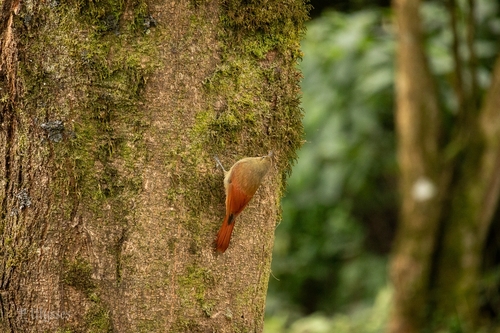
Olivaceous Woodcreeper (Sittasomus griseicapillus) Olivaceous Woodcreeper
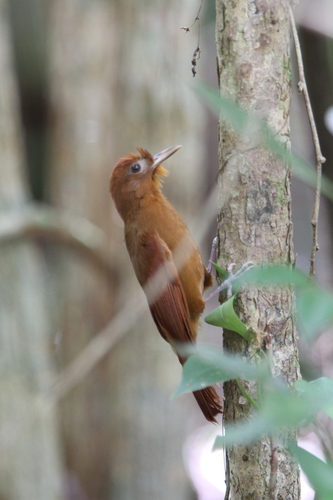
Ruddy Woodcreeper (Dendrocincla homochroa) Ruddy Woodcreeper

Media

Loading…

In short

The Olivaceous Woodcreeper (Sittasomus griseicapillus) and the Ruddy Woodcreeper (Dendrocincla homochroa) can be distinguished by their bill shape and plumage. The Olivaceous has a slender, slightly decurved bill, while the Ruddy has a short, stout, and fairly straight bill. Plumage differences include the Olivaceous' more uniform olive-brown coloration compared to the Ruddy's rufous tones.

Identification tips

1. Bill Shape: Look for the slender, slightly decurved bill of the Olivaceous versus the short, stout, straight bill of the Ruddy. 2. Plumage Tone: Note the olive-brown of the Olivaceous compared to the rufous tones of the Ruddy. 3. Behavior: Observe if the bird is following an army ant swarm, which suggests Ruddy. 4. Vocalization: Listen for the Olivaceous' trilled or whistled song, which varies by region.

Size

Both species are similar in size, but the Ruddy Woodcreeper may appear slightly bulkier due to its stout bill.

Plumage

The Olivaceous Woodcreeper has a more uniform olive-brown plumage, whereas the Ruddy Woodcreeper displays rufous tones with grayish lores.

Behaviour

The Ruddy Woodcreeper is often seen following army ant swarms, while the Olivaceous Woodcreeper is more solitary or in pairs.

Habitat

Both species inhabit tropical forests, but the Ruddy Woodcreeper is more closely associated with areas where army ants are present.

Voice

The Olivaceous Woodcreeper's song varies geographically, with a trilled song in some regions and an antwren-like series of whistles in others. The Ruddy Woodcreeper's vocalizations are less documented but are generally not as varied.

Submit a better description

Use the same sections as the comparison. Your text is published immediately.

The Olivaceous Woodcreeper (Sittasomus griseicapillus) and the Ruddy Woodcreeper (Dendrocincla homochroa) can be distinguished by their bill shape and plumage. The Olivaceous has a slender, slightly decurved bill, while the Ruddy has a short, stout, and fairly straight bill. Plumage differences include the Olivaceous' more uniform olive-brown coloration compared to the Ruddy's rufous tones.

1. Bill Shape: Look for the slender, slightly decurved bill of the Olivaceous versus the short, stout, straight bill of the Ruddy. 2. Plumage Tone: Note the olive-brown of the Olivaceous compared to the rufous tones of the Ruddy. 3. Behavior: Observe if the bird is following an army ant swarm, which suggests Ruddy. 4. Vocalization: Listen for the Olivaceous' trilled or whistled song, which varies by region.

Both species are similar in size, but the Ruddy Woodcreeper may appear slightly bulkier due to its stout bill.

The Olivaceous Woodcreeper has a more uniform olive-brown plumage, whereas the Ruddy Woodcreeper displays rufous tones with grayish lores.

The Ruddy Woodcreeper is often seen following army ant swarms, while the Olivaceous Woodcreeper is more solitary or in pairs.

Both species inhabit tropical forests, but the Ruddy Woodcreeper is more closely associated with areas where army ants are present.

The Olivaceous Woodcreeper's song varies geographically, with a trilled song in some regions and an antwren-like series of whistles in others. The Ruddy Woodcreeper's vocalizations are less documented but are generally not as varied.

Discard your changes?

You have unsaved edits. If you leave now, those changes will be lost.

Olivaceous Woodcreeper · Ruddy Woodcreeper · My Tricky Birds