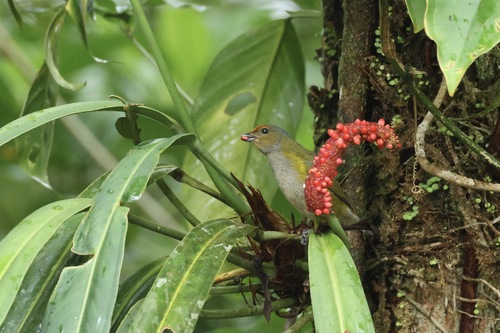
Olive-backed Euphonia vs Tawny-capped Euphonia
Euphonia gouldi versus Euphonia anneae
Play a quiz with Olive-backed Euphonia and Tawny-capped Euphonia
Olive-backed Euphonia
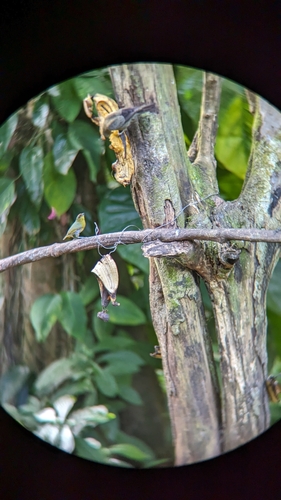
Tawny-capped Euphonia
In short
The Olive-backed Euphonia and Tawny-capped Euphonia can be distinguished by their head markings and overall coloration. The Olive-backed Euphonia has a deep green back with males showing a small yellow forecrown, while the Tawny-capped Euphonia features a distinctive dull brown to pale rufous cap. Both species are found in similar habitats but have subtle differences in their preferred environments.
Identification tips
Check the head markings: Olive-backed has a yellow forecrown in males, while Tawny-capped has a rufous cap. Observe overall coloration: Olive-backed is deep green, whereas Tawny-capped is grayish below. Consider habitat and range: Both are found in similar regions, but Olive-backed is more specific to Caribbean slopes.
Size
Both species are small euphonias with similar size and structure.
Plumage
The Olive-backed Euphonia is largely deep green with rufous over the posterior underparts and a small yellow forecrown in males, replaced by rufous in females. The Tawny-capped Euphonia is overall grayish below with a dull brown to pale rufous cap, which is a key distinguishing feature.
Behaviour
Both species are typically found in pairs or small groups and forage at middle to upper levels in the forest.
Habitat
The Olive-backed Euphonia is confined to the Caribbean slope of Middle America, from southeast Mexico to western Panama, primarily in forest interiors below 600 m. The Tawny-capped Euphonia occupies similar regions but specific habitat preferences are less detailed.
Voice
Vocalizations are not detailed in the sources, so differences are uncertain.
Olive-backed Euphonia · Tawny-capped Euphonia · My Tricky Birds