Birdr

Olive-backed Pipit vs Rock Pipit

Anthus hodgsoni versus Anthus petrosus

Play a quiz with Olive-backed Pipit and Rock Pipit

Olive-backed Pipit (Anthus hodgsoni) Olive-backed Pipit
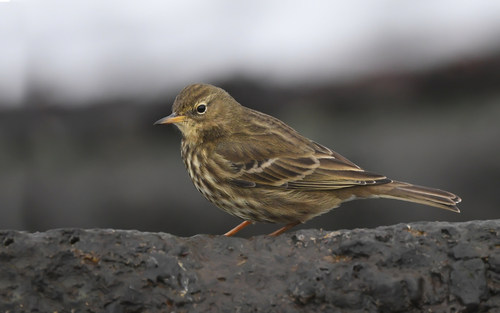
Rock Pipit (Anthus petrosus) Rock Pipit

Media

Loading…

In short

The Olive-backed Pipit and Rock Pipit can be distinguished by habitat preference and subtle plumage differences. Olive-backed Pipits are typically found in wooded areas, while Rock Pipits favor rocky coastlines. Pay attention to the supercilium and overall coloration for more precise identification.

Identification tips

  1. Habitat: Check the surrounding environment; Olive-backed Pipits are in forests, Rock Pipits on rocky coasts. 2. Supercilium: Olive-backed Pipits have a more pronounced supercilium. 3. Plumage: Look for the olive tone in Olive-backed Pipits versus the grey-brown of Rock Pipits. 4. Vocalization: Listen for the Rock Pipit's distinctive sharp notes and terminal trill. 5. Behavior: Observe foraging behavior; Rock Pipits are often on rocky shores, Olive-backed in wooded areas.

Size

Both species are similar in size, with the Rock Pipit being slightly heavier.

Plumage

Olive-backed Pipits have a more distinct and continuous supercilium and a generally more olive-toned plumage. Rock Pipits show a broken whitish eyering and can appear greyer or more olive-brown, with less distinct streaking.

Behaviour

Olive-backed Pipits are more arboreal, often seen in trees or on the ground in forested areas. Rock Pipits are more likely to be seen foraging on rocky shores and cliff tops.

Habitat

Olive-backed Pipits prefer wooded and forested habitats, while Rock Pipits are typically found in coastal areas with rocky shorelines.

Voice

The Olive-backed Pipit's song is a series of high-pitched notes, while the Rock Pipit's song includes a sequence of sharp notes with a terminal trill. Rock Pipit's calls are lower-pitched and more metallic.

Submit a better description

Use the same sections as the comparison. Your text is published immediately.

The Olive-backed Pipit and Rock Pipit can be distinguished by habitat preference and subtle plumage differences. Olive-backed Pipits are typically found in wooded areas, while Rock Pipits favor rocky coastlines. Pay attention to the supercilium and overall coloration for more precise identification.

  1. Habitat: Check the surrounding environment; Olive-backed Pipits are in forests, Rock Pipits on rocky coasts. 2. Supercilium: Olive-backed Pipits have a more pronounced supercilium. 3. Plumage: Look for the olive tone in Olive-backed Pipits versus the grey-brown of Rock Pipits. 4. Vocalization: Listen for the Rock Pipit's distinctive sharp notes and terminal trill. 5. Behavior: Observe foraging behavior; Rock Pipits are often on rocky shores, Olive-backed in wooded areas.

Both species are similar in size, with the Rock Pipit being slightly heavier.

Olive-backed Pipits have a more distinct and continuous supercilium and a generally more olive-toned plumage. Rock Pipits show a broken whitish eyering and can appear greyer or more olive-brown, with less distinct streaking.

Olive-backed Pipits are more arboreal, often seen in trees or on the ground in forested areas. Rock Pipits are more likely to be seen foraging on rocky shores and cliff tops.

Olive-backed Pipits prefer wooded and forested habitats, while Rock Pipits are typically found in coastal areas with rocky shorelines.

The Olive-backed Pipit's song is a series of high-pitched notes, while the Rock Pipit's song includes a sequence of sharp notes with a terminal trill. Rock Pipit's calls are lower-pitched and more metallic.

Discard your changes?

You have unsaved edits. If you leave now, those changes will be lost.

Olive-backed Pipit · Rock Pipit · My Tricky Birds