Birdr

Olive-backed Quail-Dove vs Grey-chested Dove

Leptotrygon veraguensis versus Leptotila cassinii

Play a quiz with Olive-backed Quail-Dove and Grey-chested Dove
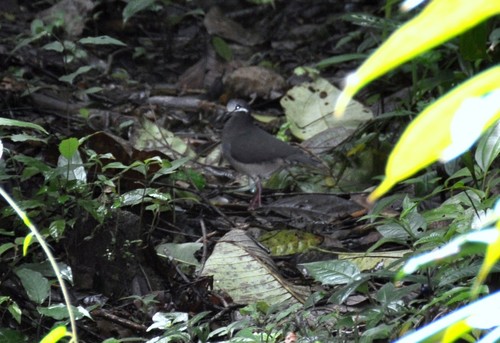
Olive-backed Quail-Dove (Leptotrygon veraguensis) Olive-backed Quail-Dove
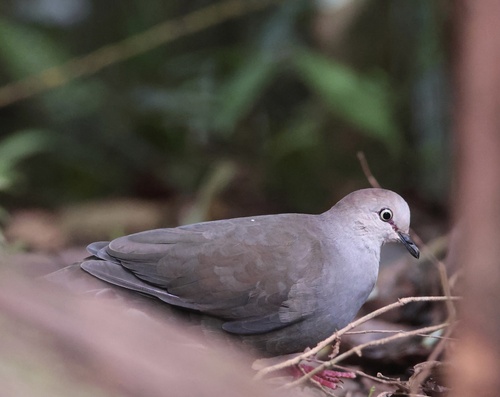
Grey-chested Dove (Leptotila cassinii) Grey-chested Dove

Media

Loading…

In short

The Olive-backed Quail-Dove and Grey-chested Dove can be distinguished by their overall coloration and subtle structural differences. The Olive-backed Quail-Dove has a more olive-toned back and a distinct facial pattern, while the Grey-chested Dove has a grayer chest and lacks the olive tone. Both species are ground-dwelling doves, but their vocalizations and habitats can also aid in identification.

Identification tips

Size

Both species are medium-sized doves, but the Olive-backed Quail-Dove may appear slightly bulkier due to its more robust build.

Plumage

The Olive-backed Quail-Dove has an olive-toned back and a distinctive facial pattern with a white stripe below the eye. In contrast, the Grey-chested Dove has a gray chest and lacks the olive tone, with a more uniform appearance.

Behaviour

Both species are ground-dwelling and can be seen foraging on the forest floor. They are generally shy and may flush quickly when disturbed.

Habitat

The Olive-backed Quail-Dove is typically found in dense, humid forests, while the Grey-chested Dove can be found in a variety of forested habitats, including drier areas.

Voice

The vocalizations of the Grey-chested Dove are slightly shorter and higher-pitched compared to other doves, but specific vocal differences between these two species are not well-documented.

Submit a better description

Use the same sections as the comparison. Your text is published immediately.

The Olive-backed Quail-Dove and Grey-chested Dove can be distinguished by their overall coloration and subtle structural differences. The Olive-backed Quail-Dove has a more olive-toned back and a distinct facial pattern, while the Grey-chested Dove has a grayer chest and lacks the olive tone. Both species are ground-dwelling doves, but their vocalizations and habitats can also aid in identification.

  • Look for the olive back: Olive-backed Quail-Dove has a distinct olive tone on its back.
  • Facial pattern: Olive-backed has a white stripe below the eye, which the Grey-chested lacks.
  • Chest color: Grey-chested Dove has a more uniform gray chest.
  • Habitat preference: Note the habitat; Olive-backed prefers denser, humid forests.
  • Listen for vocalizations: While not always distinct, Grey-chested may have a higher-pitched call.

Both species are medium-sized doves, but the Olive-backed Quail-Dove may appear slightly bulkier due to its more robust build.

The Olive-backed Quail-Dove has an olive-toned back and a distinctive facial pattern with a white stripe below the eye. In contrast, the Grey-chested Dove has a gray chest and lacks the olive tone, with a more uniform appearance.

Both species are ground-dwelling and can be seen foraging on the forest floor. They are generally shy and may flush quickly when disturbed.

The Olive-backed Quail-Dove is typically found in dense, humid forests, while the Grey-chested Dove can be found in a variety of forested habitats, including drier areas.

The vocalizations of the Grey-chested Dove are slightly shorter and higher-pitched compared to other doves, but specific vocal differences between these two species are not well-documented.

Discard your changes?

You have unsaved edits. If you leave now, those changes will be lost.

Olive-backed Quail-Dove · Grey-chested Dove · My Tricky Birds