
Birdr

Olive-streaked Flycatcher vs Ochre-bellied Flycatcher

Mionectes olivaceus versus Mionectes oleagineus

Play a quiz with Olive-streaked Flycatcher and Ochre-bellied Flycatcher
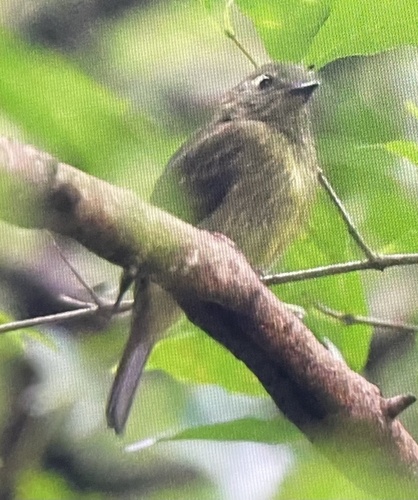
Olive-streaked Flycatcher (Mionectes olivaceus) Olive-streaked Flycatcher
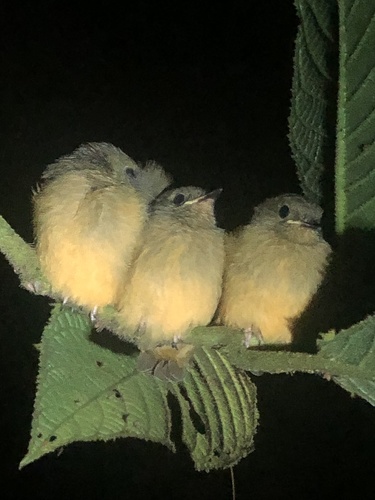
Ochre-bellied Flycatcher (Mionectes oleagineus) Ochre-bellied Flycatcher

Media

Loading…

In short

The Olive-streaked Flycatcher and Ochre-bellied Flycatcher are both small, similar-looking birds within the Mionectes genus. Key differences include plumage details and habitat preferences. Observing their behavior and listening to their vocalizations can also aid in identification.

Identification tips

  1. Look for the olive streaking on the throat and breast of the Olive-streaked Flycatcher. 2. Note the uniform ochre belly of the Ochre-bellied Flycatcher. 3. Observe behavior: the Ochre-bellied Flycatcher's territorial displays are distinctive. 4. Consider habitat: the Ochre-bellied Flycatcher is more likely in gardens and second growth areas.

Size

Both species are similar in size, typical of small flycatchers.

Plumage

The Olive-streaked Flycatcher has a more pronounced olive streaking on its throat and breast, while the Ochre-bellied Flycatcher features a more uniform ochre belly and less distinct streaking.

Behaviour

The Ochre-bellied Flycatcher is known for its 'exploded lek' system, where males display in specific territories. Such behavior is less documented for the Olive-streaked Flycatcher.

Habitat

The Ochre-bellied Flycatcher is often found in tall second growth and large gardens, ranging from lowlands to 1800 m. The Olive-streaked Flycatcher may occupy similar habitats but specific preferences are less documented.

Voice

Vocalizations are not well-documented in the provided notes, but listening for differences in calls can be helpful when observed.

Submit a better description

Use the same sections as the comparison. Your text is published immediately.

The Olive-streaked Flycatcher and Ochre-bellied Flycatcher are both small, similar-looking birds within the Mionectes genus. Key differences include plumage details and habitat preferences. Observing their behavior and listening to their vocalizations can also aid in identification.

  1. Look for the olive streaking on the throat and breast of the Olive-streaked Flycatcher. 2. Note the uniform ochre belly of the Ochre-bellied Flycatcher. 3. Observe behavior: the Ochre-bellied Flycatcher's territorial displays are distinctive. 4. Consider habitat: the Ochre-bellied Flycatcher is more likely in gardens and second growth areas.

Both species are similar in size, typical of small flycatchers.

The Olive-streaked Flycatcher has a more pronounced olive streaking on its throat and breast, while the Ochre-bellied Flycatcher features a more uniform ochre belly and less distinct streaking.

The Ochre-bellied Flycatcher is known for its 'exploded lek' system, where males display in specific territories. Such behavior is less documented for the Olive-streaked Flycatcher.

The Ochre-bellied Flycatcher is often found in tall second growth and large gardens, ranging from lowlands to 1800 m. The Olive-streaked Flycatcher may occupy similar habitats but specific preferences are less documented.

Vocalizations are not well-documented in the provided notes, but listening for differences in calls can be helpful when observed.

Discard your changes?

You have unsaved edits. If you leave now, those changes will be lost.

Olive-streaked Flycatcher · Ochre-bellied Flycatcher · My Tricky Birds