Birdr

Olive Thrush vs Karoo Thrush

Turdus olivaceus versus Turdus smithi

Play a quiz with Olive Thrush and Karoo Thrush
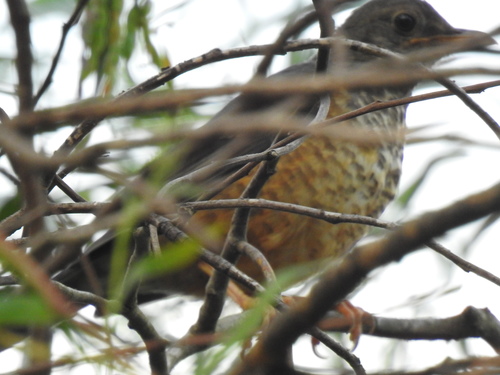
Olive Thrush (Turdus olivaceus) Olive Thrush
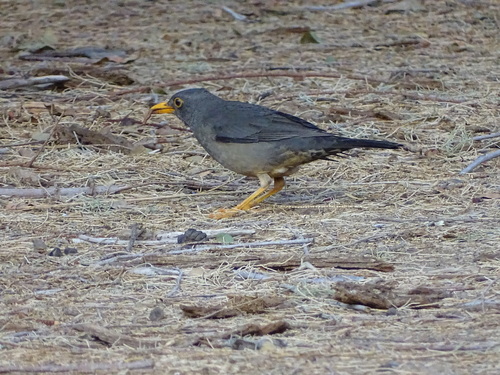
Karoo Thrush (Turdus smithi) Karoo Thrush

Media

Loading…

In short

The Olive Thrush (Turdus olivaceus) and Karoo Thrush (Turdus smithi) are similar in appearance, but can be distinguished by their bill color and habitat preferences. The Olive Thrush typically has a darker bill and prefers forested areas, while the Karoo Thrush has a paler, yellowish bill and is more often found in drier, open habitats.

Identification tips

  1. Bill Color: Look for a darker bill in the Olive Thrush compared to the paler, yellowish bill of the Karoo Thrush. 2. Habitat: Note the habitat; Olive Thrushes are more likely in forested areas, while Karoo Thrushes prefer open, drier environments. 3. Plumage Tone: In good light, Olive Thrushes may appear darker overall. 4. Vocalization: Listen for subtle differences in song variation, though this is less reliable.

Size

Both species are similar in size, typical of medium-sized thrushes, making size an unreliable distinguishing feature.

Plumage

Both species have similar overall plumage with olive-brown upperparts and paler underparts. However, the Olive Thrush may appear slightly darker overall, especially in more shaded habitats.

Behaviour

Both species exhibit typical thrush behavior, foraging on the ground for insects and fruit. Behavioral differences are subtle and not reliable for identification.

Habitat

The Olive Thrush is more commonly found in forested and densely vegetated areas, while the Karoo Thrush prefers drier, open habitats such as gardens and parks.

Voice

Vocalizations are similar, with both species having melodious songs. However, the Olive Thrush's song may be slightly more varied. Distinguishing them by call alone can be challenging.

Submit a better description

Use the same sections as the comparison. Your text is published immediately.

The Olive Thrush (Turdus olivaceus) and Karoo Thrush (Turdus smithi) are similar in appearance, but can be distinguished by their bill color and habitat preferences. The Olive Thrush typically has a darker bill and prefers forested areas, while the Karoo Thrush has a paler, yellowish bill and is more often found in drier, open habitats.

  1. Bill Color: Look for a darker bill in the Olive Thrush compared to the paler, yellowish bill of the Karoo Thrush. 2. Habitat: Note the habitat; Olive Thrushes are more likely in forested areas, while Karoo Thrushes prefer open, drier environments. 3. Plumage Tone: In good light, Olive Thrushes may appear darker overall. 4. Vocalization: Listen for subtle differences in song variation, though this is less reliable.

Both species are similar in size, typical of medium-sized thrushes, making size an unreliable distinguishing feature.

Both species have similar overall plumage with olive-brown upperparts and paler underparts. However, the Olive Thrush may appear slightly darker overall, especially in more shaded habitats.

Both species exhibit typical thrush behavior, foraging on the ground for insects and fruit. Behavioral differences are subtle and not reliable for identification.

The Olive Thrush is more commonly found in forested and densely vegetated areas, while the Karoo Thrush prefers drier, open habitats such as gardens and parks.

Vocalizations are similar, with both species having melodious songs. However, the Olive Thrush's song may be slightly more varied. Distinguishing them by call alone can be challenging.

Discard your changes?

You have unsaved edits. If you leave now, those changes will be lost.

Olive Thrush · Karoo Thrush · My Tricky Birds