
Olrog's Gull vs Kelp Gull
Larus atlanticus versus Larus dominicanus
Play a quiz with Olrog's Gull and Kelp Gull
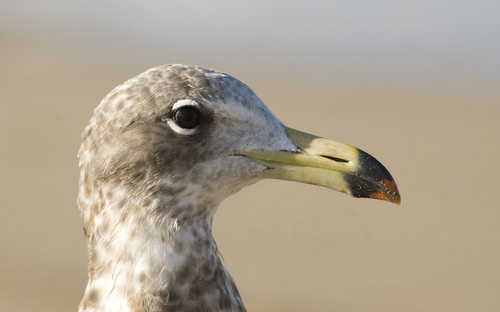 Olrog's Gull
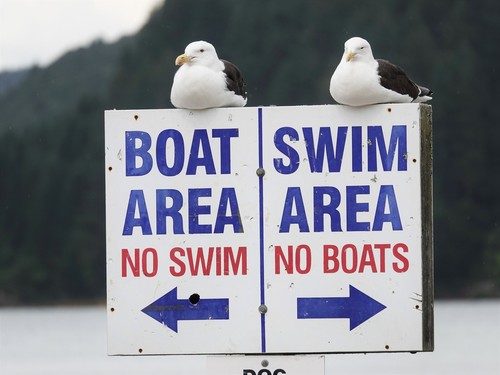 Kelp Gull
In short
The most reliable field mark between Olrog's Gull and Kelp Gull is the tail pattern: Olrog's Gull of all ages shows a broad black band across an otherwise white tail, while adult Kelp Gulls have an all-white tail (juveniles have a dark tail band, but it is less sharply defined). In flight, Olrog's Gull also shows a white trailing edge to the wing, contrasting with its black upperparts, while Kelp Gull's wing pattern is more typical for large gulls and lacks this sharp trailing edge. Bill pattern is another key: Olrog's Gull has a yellow bill with both a black band and a red tip, while Kelp Gull's bill is yellow with just a red spot. Leg color can help: Olrog's Gull has dull yellow legs, while Kelp Gull's are greenish-yellow (brighter in breeding season). Both species are large, black-backed gulls, but Kelp Gull is generally heavier and bulkier.
Identification tips
- Tail pattern is the most decisive mark: Olrog's Gull (all ages) shows a broad black band across the white tail; adult Kelp Gull has an all-white tail, while juveniles have a less sharply defined dark band.
- Wing trailing edge: In flight, Olrog's Gull shows a white trailing edge to the wing, contrasting with the black upperparts; Kelp Gull's wing pattern is more typical and lacks this sharp trailing edge.
- Bill pattern: Olrog's Gull has a yellow bill with both a black band and a red tip (visible at close range); Kelp Gull's bill is yellow with a single red spot near the tip, lacking a black band.
- Leg color: Olrog's Gull has dull yellow legs; Kelp Gull's are greenish-yellow, brighter and yellower in breeding season, duller and greener when not breeding. This can be subtle in poor light.
- Head color in juveniles: Juvenile Olrog's Gull has a black head, while Kelp Gull juveniles quickly develop a pale base to the bill and a largely white head and underparts as they mature.
- Adult head and underparts: Both species have white heads and underparts as adults, but Olrog's Gull nonbreeding adults may show a blackish head and a white eye ring, which can be a clue in winter.
- Eye color: Olrog's Gull has brown eyes with a red orbital ring; Kelp Gull (nominate, South America) usually has pale eyes, but this can be hard to judge at distance.
- Size and structure: Kelp Gull is heavier and bulkier, with a more powerful build; Olrog's Gull is slightly smaller and slimmer, but this is subtle unless both are side by side.
- Juvenile upperwing: No detailed contrast in upperwing pattern is provided, but focus on tail band and head color for immatures.
- Habitat and range: If you are outside southern Brazil, Uruguay, or northern Argentina, Olrog's Gull is very unlikely. Kelp Gull is widespread and common in coastal areas throughout the Southern Hemisphere.
- Behavior: Kelp Gull is often more aggressive and dominant in mixed flocks; Olrog's Gull is more localized and less numerous.
- Subspecies confusion: Ignore African 'Cape Gull' features (dark eye, larger bill) unless in Africa; in South America, nominate Kelp Gull applies.
- Plumage pitfalls: Both species are black-backed with white underparts as adults; rely on tail and bill pattern for certainty.
- Voice: Only Kelp Gull's call is described ('ki-och'); do not use voice to separate unless heard clearly and familiar with Kelp Gull's call.
- Sex and season: Males are slightly larger than females in both species, but this is not a reliable field mark. Nonbreeding Olrog's Gull may show a blackish head, which can help in winter.
Size
Kelp Gull is slightly larger and heavier than Olrog's Gull, with a typical body mass around 941 g (adult average) and a length of 54–65 cm, wingspan 128–142 cm. Olrog's Gull is a bit smaller, at 50–60 cm in length and 130–140 cm wingspan (mass not specified, but clearly less robust). In the field, Kelp Gull often appears bulkier and more powerful, especially in direct comparison.
Plumage
Juvenile and immature birds are the most challenging. Both species have brownish or grey-brown plumage with dark tails and dull legs, but Olrog's Gull juveniles have a black head, while Kelp Gull juveniles quickly develop a pale base to the bill and a largely white head and underparts as they age. The tail band is broader and more sharply defined in Olrog's Gull of all ages. Adult Olrog's Gull has a white head, underparts, and rump, with a black back and wings, a white trailing edge to the wing, and a white tail with a broad black band. Kelp Gull adults have black upperparts and wings, white head and underparts, and an all-white tail. The bill of Olrog's Gull is yellow with a black band and red tip; Kelp Gull's is yellow with a red spot only. Olrog's Gull has brown eyes with a red orbital ring, while Kelp Gull's eye color varies by subspecies but is usually pale in South America. Leg color: Olrog's is dull yellow; Kelp Gull's is greenish-yellow (brighter in breeding season).
Behaviour
Both species behave like typical large gulls, often seen loafing on beaches or feeding at shorelines. Kelp Gull is more likely to be seen in a wider range of coastal habitats and can be more aggressive and dominant in mixed gull flocks. Olrog's Gull has a more restricted range and is less likely to be seen far from its core breeding and feeding areas.
Habitat
Olrog's Gull is restricted to the Atlantic coast of southern Brazil, Uruguay, and northern Argentina, typically in more localized, nearshore habitats. Kelp Gull is much more widespread throughout the Southern Hemisphere and is common on coasts and islands, including the same region as Olrog's but also far beyond. If you are outside the limited range of Olrog's Gull, a large black-backed gull is almost certainly a Kelp Gull.
Voice
Kelp Gull gives a strident 'ki-och' call. No specific vocalization is described for Olrog's Gull in the notes, so voice is not a reliable separator.