
Birdr

Orange-backed Woodpecker vs Buff-necked Woodpecker

Chrysocolaptes validus versus Meiglyptes tukki

Play a quiz with Orange-backed Woodpecker and Buff-necked Woodpecker
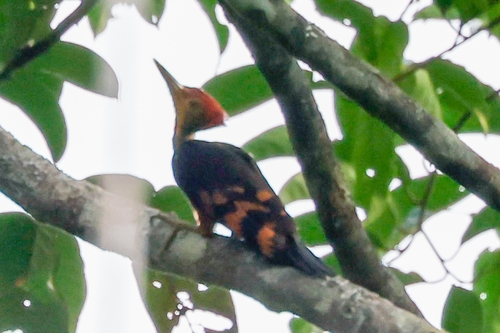
Orange-backed Woodpecker (Chrysocolaptes validus) Orange-backed Woodpecker
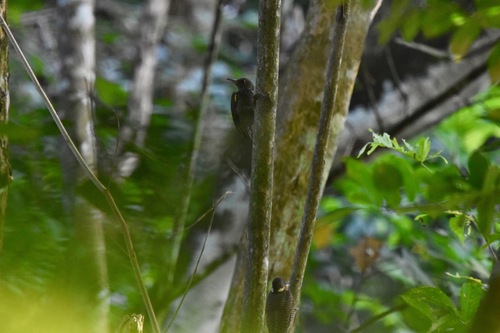
Buff-necked Woodpecker (Meiglyptes tukki) Buff-necked Woodpecker

Media

Loading…

In short

The Orange-backed Woodpecker and Buff-necked Woodpecker can be distinguished primarily by their plumage: the Orange-backed has a striking orange back, while the Buff-necked features a buff-colored neck and more subdued overall coloration. Both species are woodpeckers, but their differences in coloration and habitat preferences can aid in identification.

Identification tips

  1. Look for the bright orange back of the Orange-backed Woodpecker. 2. Note the buff-colored neck of the Buff-necked Woodpecker. 3. Consider habitat: Orange-backed prefers lowland forests, while Buff-necked can be found in various forest types. 4. Use binoculars to observe plumage details, as behavior and size are similar.

Size

Both species are similar in size, typical of medium-sized woodpeckers, making size an unreliable distinguishing feature.

Plumage

The Orange-backed Woodpecker has a distinctive bright orange back and a contrasting black head, while the Buff-necked Woodpecker has a buff-colored neck and a more muted brownish body. The Orange-backed's vivid coloration is a key differentiator.

Behaviour

Both species exhibit typical woodpecker behavior, such as drumming on trees and foraging for insects, making behavior a less reliable distinguishing factor.

Habitat

The Orange-backed Woodpecker is often found in lowland forests, while the Buff-necked Woodpecker prefers a variety of forest types, including secondary growth. Habitat overlap can occur, but preference differences can aid identification.

Voice

Vocalizations are not well-documented for these species in the sources, making them unreliable for field identification.

Submit a better description

Use the same sections as the comparison. Your text is published immediately.

The Orange-backed Woodpecker and Buff-necked Woodpecker can be distinguished primarily by their plumage: the Orange-backed has a striking orange back, while the Buff-necked features a buff-colored neck and more subdued overall coloration. Both species are woodpeckers, but their differences in coloration and habitat preferences can aid in identification.

  1. Look for the bright orange back of the Orange-backed Woodpecker. 2. Note the buff-colored neck of the Buff-necked Woodpecker. 3. Consider habitat: Orange-backed prefers lowland forests, while Buff-necked can be found in various forest types. 4. Use binoculars to observe plumage details, as behavior and size are similar.

Both species are similar in size, typical of medium-sized woodpeckers, making size an unreliable distinguishing feature.

The Orange-backed Woodpecker has a distinctive bright orange back and a contrasting black head, while the Buff-necked Woodpecker has a buff-colored neck and a more muted brownish body. The Orange-backed's vivid coloration is a key differentiator.

Both species exhibit typical woodpecker behavior, such as drumming on trees and foraging for insects, making behavior a less reliable distinguishing factor.

The Orange-backed Woodpecker is often found in lowland forests, while the Buff-necked Woodpecker prefers a variety of forest types, including secondary growth. Habitat overlap can occur, but preference differences can aid identification.

Vocalizations are not well-documented for these species in the sources, making them unreliable for field identification.

Discard your changes?

You have unsaved edits. If you leave now, those changes will be lost.

Orange-backed Woodpecker · Buff-necked Woodpecker · My Tricky Birds