Birdr

Orange-cheeked Waxbill vs Black-rumped Waxbill

Estrilda melpoda versus Estrilda troglodytes

Play a quiz with Orange-cheeked Waxbill and Black-rumped Waxbill
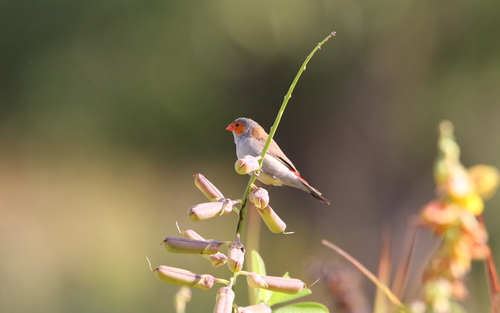
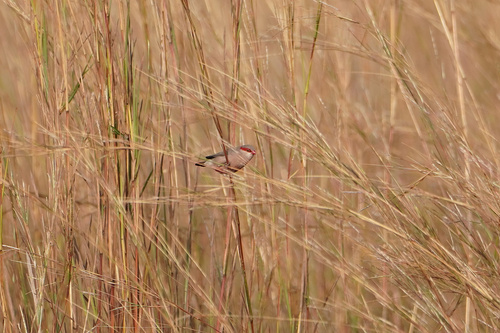
Orange-cheeked Waxbill (Estrilda melpoda) Orange-cheeked Waxbill
Black-rumped Waxbill (Estrilda troglodytes) Black-rumped Waxbill

Media

Loading…

In short

The Orange-cheeked Waxbill and Black-rumped Waxbill are small, colorful finches that can be tricky to differentiate. The most reliable field mark is the presence of an orange cheek patch on the Orange-cheeked Waxbill, which is absent in the Black-rumped Waxbill. Both species share a similar structure but differ in plumage details and habitat preferences.

Identification tips

  1. Look for the orange cheek patch on the Orange-cheeked Waxbill. 2. Check for the black rump on the Black-rumped Waxbill. 3. Consider habitat: open grasslands may favor Orange-cheeked, while shrubby areas may indicate Black-rumped. 4. Observe flocking behavior and feeding habits, which are similar for both species.

Size

Both species are similar in size, small and compact, typical of waxbills.

Plumage

The Orange-cheeked Waxbill has a distinctive orange cheek patch and a more uniform red rump. In contrast, the Black-rumped Waxbill lacks the orange cheek and has a black rump, which is a key differentiator.

Behaviour

Both species exhibit similar behaviors, often seen in flocks and feeding on grass seeds. No significant behavioral differences are noted.

Habitat

Orange-cheeked Waxbills are often found in open grasslands and savannas, while Black-rumped Waxbills prefer more shrubby and wooded areas. Overlapping habitats can occur, but these preferences can aid identification.

Voice

Vocalizations are similar and not a reliable differentiator in the field.

Submit a better description

Use the same sections as the comparison. Your text is published immediately.

The Orange-cheeked Waxbill and Black-rumped Waxbill are small, colorful finches that can be tricky to differentiate. The most reliable field mark is the presence of an orange cheek patch on the Orange-cheeked Waxbill, which is absent in the Black-rumped Waxbill. Both species share a similar structure but differ in plumage details and habitat preferences.

  1. Look for the orange cheek patch on the Orange-cheeked Waxbill. 2. Check for the black rump on the Black-rumped Waxbill. 3. Consider habitat: open grasslands may favor Orange-cheeked, while shrubby areas may indicate Black-rumped. 4. Observe flocking behavior and feeding habits, which are similar for both species.

Both species are similar in size, small and compact, typical of waxbills.

The Orange-cheeked Waxbill has a distinctive orange cheek patch and a more uniform red rump. In contrast, the Black-rumped Waxbill lacks the orange cheek and has a black rump, which is a key differentiator.

Both species exhibit similar behaviors, often seen in flocks and feeding on grass seeds. No significant behavioral differences are noted.

Orange-cheeked Waxbills are often found in open grasslands and savannas, while Black-rumped Waxbills prefer more shrubby and wooded areas. Overlapping habitats can occur, but these preferences can aid identification.

Vocalizations are similar and not a reliable differentiator in the field.

Discard your changes?

You have unsaved edits. If you leave now, those changes will be lost.

Orange-cheeked Waxbill · Black-rumped Waxbill · My Tricky Birds