Birdr

Orange-crowned Warbler vs Connecticut Warbler

Leiothlypis celata versus Oporornis agilis

Play a quiz with Orange-crowned Warbler and Connecticut Warbler
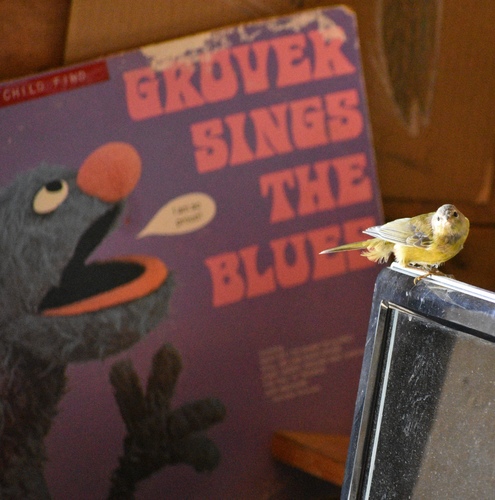
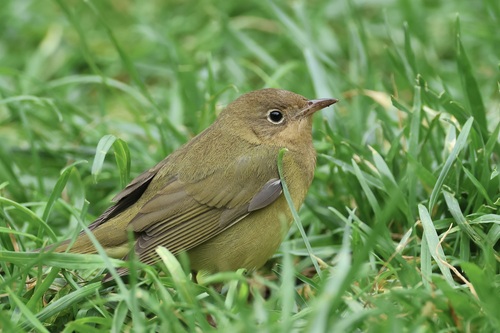
Orange-crowned Warbler (Leiothlypis celata) Orange-crowned Warbler
Connecticut Warbler (Oporornis agilis) Connecticut Warbler

Media

Loading…

In short

The Orange-crowned Warbler and Connecticut Warbler can be distinguished primarily by their eye-ring and undertail coverts. The Orange-crowned Warbler has a faint or absent eye-ring and yellow undertail coverts, while the Connecticut Warbler features a bold white eye-ring and gray undertail coverts. Both species are small, but the Connecticut Warbler is slightly larger and more robust.

Identification tips

Size

The Connecticut Warbler is slightly larger and more robust than the Orange-crowned Warbler.

Plumage

The Orange-crowned Warbler has a faint or absent eye-ring and yellow undertail coverts, while the Connecticut Warbler has a bold white eye-ring and gray undertail coverts. The Orange-crowned Warbler's plumage is generally more olive, whereas the Connecticut Warbler has a grayer head and back.

Behaviour

Orange-crowned Warblers are often seen foraging in shrubs and low vegetation, while Connecticut Warblers are more elusive, often staying hidden in dense cover.

Habitat

Orange-crowned Warblers prefer habitats with shrubs and low vegetation, often in patchy oak or aspen forests. Connecticut Warblers breed in boreal forests and are more likely to be found in remote areas.

Voice

The song of the Orange-crowned Warbler is highly variable, often a fast trill, while the Connecticut Warbler's song is a series of clear, ringing notes.

Submit a better description

Use the same sections as the comparison. Your text is published immediately.

The Orange-crowned Warbler and Connecticut Warbler can be distinguished primarily by their eye-ring and undertail coverts. The Orange-crowned Warbler has a faint or absent eye-ring and yellow undertail coverts, while the Connecticut Warbler features a bold white eye-ring and gray undertail coverts. Both species are small, but the Connecticut Warbler is slightly larger and more robust.

  • Eye-ring: Look for a bold white eye-ring on the Connecticut Warbler, absent or faint on the Orange-crowned.
  • Undertail Coverts: Yellow on Orange-crowned, gray on Connecticut.
  • Plumage Tone: Olive overall for Orange-crowned, grayer head and back for Connecticut.
  • Behavior: Orange-crowned often forages in the open; Connecticut is secretive and stays in dense cover.
  • Song: Listen for a fast trill from Orange-crowned and clear, ringing notes from Connecticut.

The Connecticut Warbler is slightly larger and more robust than the Orange-crowned Warbler.

The Orange-crowned Warbler has a faint or absent eye-ring and yellow undertail coverts, while the Connecticut Warbler has a bold white eye-ring and gray undertail coverts. The Orange-crowned Warbler's plumage is generally more olive, whereas the Connecticut Warbler has a grayer head and back.

Orange-crowned Warblers are often seen foraging in shrubs and low vegetation, while Connecticut Warblers are more elusive, often staying hidden in dense cover.

Orange-crowned Warblers prefer habitats with shrubs and low vegetation, often in patchy oak or aspen forests. Connecticut Warblers breed in boreal forests and are more likely to be found in remote areas.

The song of the Orange-crowned Warbler is highly variable, often a fast trill, while the Connecticut Warbler's song is a series of clear, ringing notes.

Discard your changes?

You have unsaved edits. If you leave now, those changes will be lost.

Orange-crowned Warbler · Connecticut Warbler · My Tricky Birds