Birdr

Orchard Oriole vs Hooded Oriole

Icterus spurius versus Icterus cucullatus

Play a quiz with Orchard Oriole and Hooded Oriole
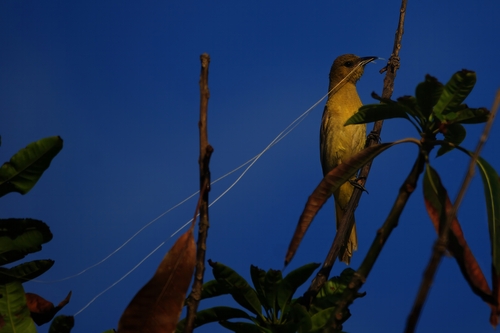
Orchard Oriole (Icterus spurius) Orchard Oriole
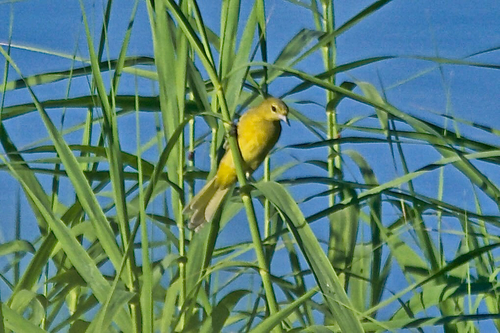
Hooded Oriole (Icterus cucullatus) Hooded Oriole

Media

Loading…

In short

The Orchard Oriole and Hooded Oriole can be distinguished by their plumage and habitat preferences. Orchard Orioles are smaller and have a more muted coloration compared to the brighter Hooded Orioles. Both species share similar behaviors but occupy different regions and habitats.

Identification tips

Check plumage: Adult males are distinct; look for chestnut versus bright orange/yellow. Consider size: Orchard Orioles are smaller. Observe habitat: Hooded Orioles are more likely in arid, palm-rich areas. Listen for song differences: Orchard Orioles have simpler songs compared to the more complex Hooded Oriole songs.

Size

Orchard Orioles are generally smaller than Hooded Orioles.

Plumage

Adult male Orchard Orioles have a chestnut body with black head and wings, while Hooded Orioles have a bright orange or yellow body with a black face and throat. Female and immature Orchard Orioles are olive-yellow, whereas female and immature Hooded Orioles are more uniformly yellow with less contrast.

Behaviour

Both species are known for their nectar-feeding behavior and can be seen foraging in trees. They are solitary breeders but may be found in loose groups during migration.

Habitat

Orchard Orioles prefer open woodlands and parklands, while Hooded Orioles are more often found in arid regions with palm trees and suburban areas.

Voice

The Orchard Oriole's song is a series of whistled notes, while the Hooded Oriole has a more varied and complex song. Calls of both species can be similar, consisting of chattering notes.

Submit a better description

Use the same sections as the comparison. Your text is published immediately.

The Orchard Oriole and Hooded Oriole can be distinguished by their plumage and habitat preferences. Orchard Orioles are smaller and have a more muted coloration compared to the brighter Hooded Orioles. Both species share similar behaviors but occupy different regions and habitats.

Check plumage: Adult males are distinct; look for chestnut versus bright orange/yellow. Consider size: Orchard Orioles are smaller. Observe habitat: Hooded Orioles are more likely in arid, palm-rich areas. Listen for song differences: Orchard Orioles have simpler songs compared to the more complex Hooded Oriole songs.

Orchard Orioles are generally smaller than Hooded Orioles.

Adult male Orchard Orioles have a chestnut body with black head and wings, while Hooded Orioles have a bright orange or yellow body with a black face and throat. Female and immature Orchard Orioles are olive-yellow, whereas female and immature Hooded Orioles are more uniformly yellow with less contrast.

Both species are known for their nectar-feeding behavior and can be seen foraging in trees. They are solitary breeders but may be found in loose groups during migration.

Orchard Orioles prefer open woodlands and parklands, while Hooded Orioles are more often found in arid regions with palm trees and suburban areas.

The Orchard Oriole's song is a series of whistled notes, while the Hooded Oriole has a more varied and complex song. Calls of both species can be similar, consisting of chattering notes.

Discard your changes?

You have unsaved edits. If you leave now, those changes will be lost.

Orchard Oriole · Hooded Oriole · My Tricky Birds