Oriental Cuckoo vs Eastern Phoebe
Cuculus optatus versus Sayornis phoebe
Play a quiz with Oriental Cuckoo and Eastern Phoebe
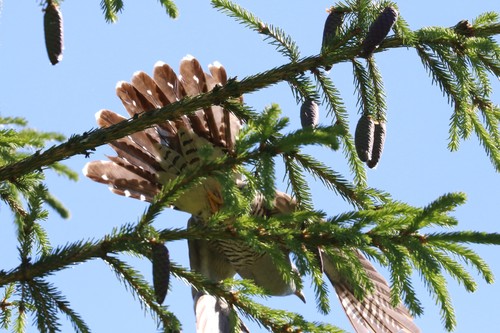
Oriental Cuckoo
Eastern Phoebe
In short
The Oriental Cuckoo and Eastern Phoebe are easily distinguished by their size, structure, and behavior. The Oriental Cuckoo is a larger, more robust bird with a distinctive cuckoo shape, while the Eastern Phoebe is a smaller, more delicate flycatcher with a characteristic tail-wagging behavior.
Identification tips
1. Size and Shape: Look for the larger size and robust shape of the Oriental Cuckoo compared to the smaller, slender Eastern Phoebe. 2. Tail Behavior: Observe the tail-wagging behavior of the Eastern Phoebe, which is absent in the Oriental Cuckoo. 3. Habitat: Note the habitat; Eastern Phoebes are often near human structures, while Oriental Cuckoos prefer more wooded and natural settings. 4. Vocalization: Listen for the calls; the Oriental Cuckoo's 'coo-coo' is quite different from the Eastern Phoebe's 'fee-bee'.
Size
The Oriental Cuckoo is significantly larger and more robust than the Eastern Phoebe.
Plumage
The Oriental Cuckoo has a barred underbelly and a more uniform grey or brown upperpart, while the Eastern Phoebe is drab grey-brown with a slightly darker head and no barring.
Behaviour
The Eastern Phoebe often wags its tail and is seen perched on low branches or structures, while the Oriental Cuckoo is more secretive and less likely to be seen in open areas.
Habitat
The Eastern Phoebe is commonly found near human structures like bridges and buildings, while the Oriental Cuckoo prefers wooded areas and is less associated with human habitation.
Voice
The Oriental Cuckoo has a distinctive, repetitive 'coo-coo' call, whereas the Eastern Phoebe has a simple, raspy 'fee-bee' song.