Birdr

Oriental Plover vs Kentish Plover

Anarhynchus veredus versus Anarhynchus alexandrinus

Play a quiz with Oriental Plover and Kentish Plover
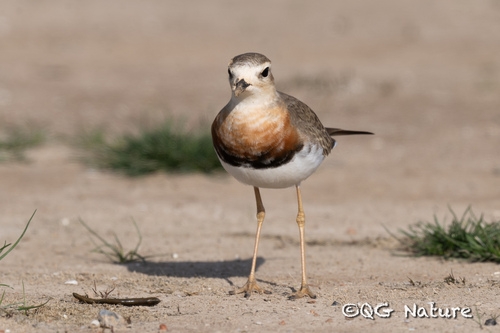
Oriental Plover (Anarhynchus veredus) Oriental Plover
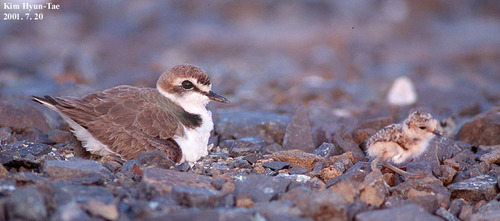
Kentish Plover (Anarhynchus alexandrinus) Kentish Plover

Media

Loading…

In short

The Oriental Plover and Kentish Plover can be distinguished by size and plumage details. The Oriental Plover is notably larger and lacks the distinct black patches and white collar found on the Kentish Plover. Both species inhabit similar environments, but their behaviors and vocalizations can also aid in identification.

Identification tips

  1. Size: Look for the larger size of the Oriental Plover. 2. Plumage: Check for the absence of a white collar and black patches in the Oriental Plover. 3. Habitat: Note habitat preference; Oriental Plovers may be found in drier areas. 4. Behavior: Observe social behavior; Kentish Plovers are often seen in groups.

Size

Oriental Plover is larger, typically around 21–24 cm, while the Kentish Plover is smaller at 15–17.5 cm.

Plumage

Oriental Plover lacks the Kentish Plover's white collar and black patches on the sides of the neck. The Kentish Plover often shows a black bar on its forehead and a variable rufous cap, which are absent in the Oriental Plover.

Behaviour

Both species exhibit similar foraging behaviors, but the Oriental Plover may be more solitary compared to the often more social Kentish Plover.

Habitat

Both species are found in open habitats such as coastal areas and inland wetlands, but the Oriental Plover may prefer drier, more open landscapes compared to the Kentish Plover.

Voice

Vocalizations are not a primary distinguishing feature, but the Kentish Plover has a soft, whistled call that may be more frequently heard.

Submit a better description

Use the same sections as the comparison. Your text is published immediately.

The Oriental Plover and Kentish Plover can be distinguished by size and plumage details. The Oriental Plover is notably larger and lacks the distinct black patches and white collar found on the Kentish Plover. Both species inhabit similar environments, but their behaviors and vocalizations can also aid in identification.

  1. Size: Look for the larger size of the Oriental Plover. 2. Plumage: Check for the absence of a white collar and black patches in the Oriental Plover. 3. Habitat: Note habitat preference; Oriental Plovers may be found in drier areas. 4. Behavior: Observe social behavior; Kentish Plovers are often seen in groups.

Oriental Plover is larger, typically around 21–24 cm, while the Kentish Plover is smaller at 15–17.5 cm.

Oriental Plover lacks the Kentish Plover's white collar and black patches on the sides of the neck. The Kentish Plover often shows a black bar on its forehead and a variable rufous cap, which are absent in the Oriental Plover.

Both species exhibit similar foraging behaviors, but the Oriental Plover may be more solitary compared to the often more social Kentish Plover.

Both species are found in open habitats such as coastal areas and inland wetlands, but the Oriental Plover may prefer drier, more open landscapes compared to the Kentish Plover.

Vocalizations are not a primary distinguishing feature, but the Kentish Plover has a soft, whistled call that may be more frequently heard.

Discard your changes?

You have unsaved edits. If you leave now, those changes will be lost.

Oriental Plover · Kentish Plover · My Tricky Birds