
Birdr

Ortolan Bunting vs Common Reed Bunting

Emberiza hortulana versus Emberiza schoeniclus

Play a quiz with Ortolan Bunting and Common Reed Bunting
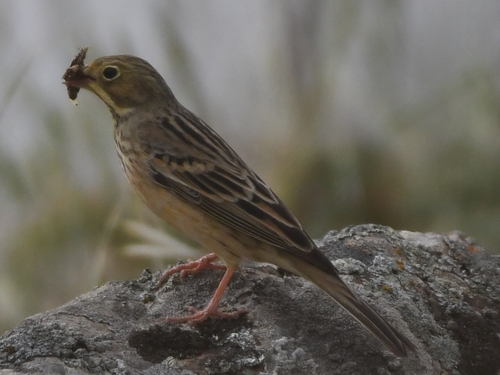
Ortolan Bunting (Emberiza hortulana) Ortolan Bunting
Common Reed Bunting (Emberiza schoeniclus) Common Reed Bunting

Media

Loading…

In short

The Ortolan Bunting and Common Reed Bunting can be distinguished primarily by their habitat preferences and plumage details. The Ortolan Bunting prefers open, dry areas, while the Common Reed Bunting is typically found in wetter, reedbed environments. In terms of appearance, the Ortolan has a more uniform, olive-brown plumage with a distinctive yellowish throat, whereas the Common Reed Bunting features a more contrasting black head (in males) and white collar.

Identification tips

  1. Habitat: Check if the bird is in a dry, open area (Ortolan) or a wet, reedy environment (Reed Bunting). 2. Head pattern: Look for the black head and white collar in male Reed Buntings. 3. Throat color: Note the yellowish throat of the Ortolan. 4. Behavior: Observe if the bird is foraging on the ground (Ortolan) or perched on reeds (Reed Bunting).

Size

Both species are similar in size, typical of small buntings, but the Common Reed Bunting may appear slightly bulkier.

Plumage

The Ortolan Bunting has a more uniform olive-brown plumage with a yellowish throat and a less distinct head pattern. In contrast, the male Common Reed Bunting has a striking black head with a white collar and a more streaked back, while females and non-breeding males are more subdued but still show a more contrasting pattern than Ortolans.

Behaviour

Ortolan Buntings are often seen foraging on the ground in open areas, while Common Reed Buntings are more likely to be observed perched on reeds or low shrubs in wetland areas.

Habitat

Ortolan Buntings prefer open, dry habitats such as farmland and scrubby areas. Common Reed Buntings are typically found in wetter environments, especially reedbeds and marshes.

Voice

The Ortolan Bunting's song is a simple, repetitive series of notes, while the Common Reed Bunting's song is a more varied, scratchy sequence. Calls may be similar but are not the most reliable distinguishing feature.

Submit a better description

Use the same sections as the comparison. Your text is published immediately.

The Ortolan Bunting and Common Reed Bunting can be distinguished primarily by their habitat preferences and plumage details. The Ortolan Bunting prefers open, dry areas, while the Common Reed Bunting is typically found in wetter, reedbed environments. In terms of appearance, the Ortolan has a more uniform, olive-brown plumage with a distinctive yellowish throat, whereas the Common Reed Bunting features a more contrasting black head (in males) and white collar.

  1. Habitat: Check if the bird is in a dry, open area (Ortolan) or a wet, reedy environment (Reed Bunting). 2. Head pattern: Look for the black head and white collar in male Reed Buntings. 3. Throat color: Note the yellowish throat of the Ortolan. 4. Behavior: Observe if the bird is foraging on the ground (Ortolan) or perched on reeds (Reed Bunting).

Both species are similar in size, typical of small buntings, but the Common Reed Bunting may appear slightly bulkier.

The Ortolan Bunting has a more uniform olive-brown plumage with a yellowish throat and a less distinct head pattern. In contrast, the male Common Reed Bunting has a striking black head with a white collar and a more streaked back, while females and non-breeding males are more subdued but still show a more contrasting pattern than Ortolans.

Ortolan Buntings are often seen foraging on the ground in open areas, while Common Reed Buntings are more likely to be observed perched on reeds or low shrubs in wetland areas.

Ortolan Buntings prefer open, dry habitats such as farmland and scrubby areas. Common Reed Buntings are typically found in wetter environments, especially reedbeds and marshes.

The Ortolan Bunting's song is a simple, repetitive series of notes, while the Common Reed Bunting's song is a more varied, scratchy sequence. Calls may be similar but are not the most reliable distinguishing feature.

Discard your changes?

You have unsaved edits. If you leave now, those changes will be lost.

Ortolan Bunting · Common Reed Bunting · My Tricky Birds