Pacific Imperial-Pigeon vs Pacific Swallow
Ducula pacifica versus Hirundo javanica
Play a quiz with Pacific Imperial-Pigeon and Pacific Swallow
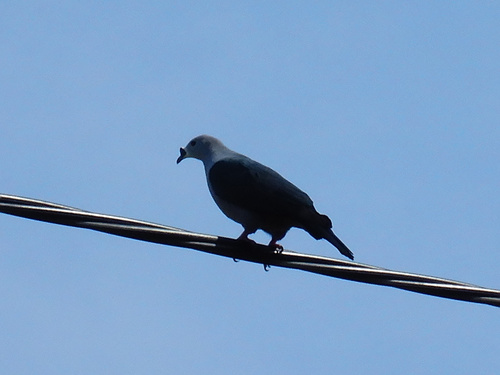
Pacific Imperial-Pigeon
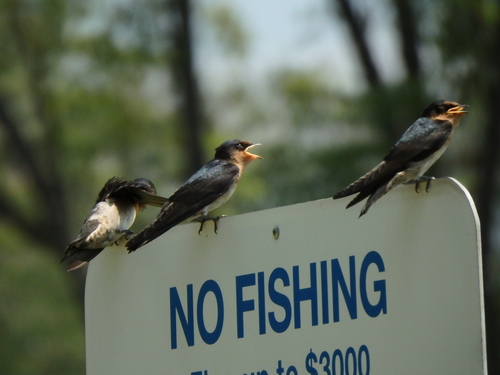
Pacific Swallow
In short
The Pacific Imperial-Pigeon and the Pacific Swallow are distinct in both size and structure. The pigeon is a large, robust bird, while the swallow is small and streamlined. Key differences include the pigeon's bulky body and the swallow's slender form with long wings and tail.
Identification tips
- Size and Shape: Look for the large, bulky size of the pigeon versus the small, slender swallow. 2. Plumage: Note the pigeon's uniform coloration compared to the swallow's contrasting rufous and blue-black. 3. Behavior: Observe flight patterns; pigeons have slow wingbeats, swallows are agile and fast. 4. Habitat: Consider the environment; pigeons prefer forests, swallows are often in open areas. 5. Vocalizations: Listen for the pigeon's deep cooing versus the swallow's twittering.
Size
The Pacific Imperial-Pigeon is significantly larger, with a robust body, compared to the much smaller and slender Pacific Swallow.
Plumage
The Pacific Imperial-Pigeon has a generally uniform grayish or greenish plumage, while the Pacific Swallow features a glossy blue-black upperparts with a rufous forehead and throat.
Behaviour
The Pacific Imperial-Pigeon is often seen perched in trees or flying with slow, deliberate wingbeats. In contrast, the Pacific Swallow is agile, often seen darting and swooping in the air as it catches insects.
Habitat
The Pacific Imperial-Pigeon typically inhabits forested areas and islands, whereas the Pacific Swallow is commonly found in open areas, often near water or human habitation.
Voice
The Pacific Imperial-Pigeon has a deep, resonant cooing call, unlike the Pacific Swallow, which produces a series of twittering notes.