Birdr

Pacific Wren vs Marsh Wren

Troglodytes pacificus versus Cistothorus palustris

Play a quiz with Pacific Wren and Marsh Wren
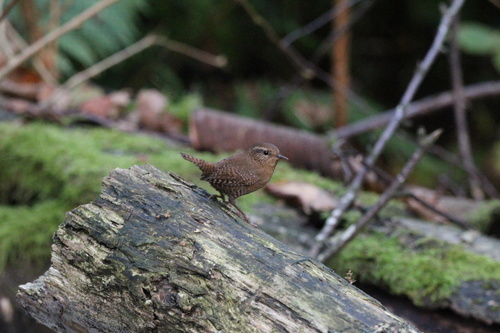
Pacific Wren (Troglodytes pacificus) Pacific Wren
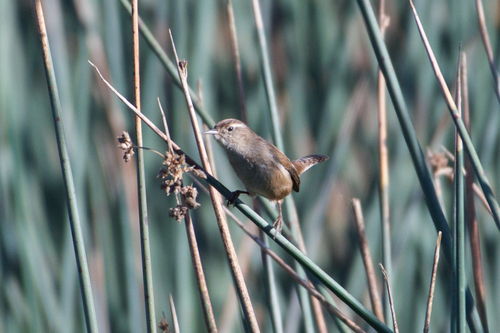
Marsh Wren (Cistothorus palustris) Marsh Wren

Media

Loading…

In short

The Pacific Wren and Marsh Wren are both small, brown wrens, but they can be distinguished by habitat preference and vocalizations. The Pacific Wren is typically found in dense, moist coniferous forests, while the Marsh Wren inhabits wetlands and marshes. Their songs are also distinct, with the Pacific Wren having a more complex and varied song compared to the Marsh Wren's repetitive, mechanical trills.

Identification tips

  1. Habitat: Look for Pacific Wrens in dense, moist forests and Marsh Wrens in wetlands. 2. Vocalization: Listen for the Pacific Wren's complex song versus the Marsh Wren's repetitive trills. 3. Plumage: Note the Marsh Wren's white eyebrow stripe, which is less pronounced in the Pacific Wren. 4. Behavior: Observe the Marsh Wren's tendency to perch visibly on reeds, unlike the more secretive Pacific Wren.

Size

Both species are small wrens, but the Marsh Wren may appear slightly larger due to its longer tail and more upright posture.

Plumage

Both species are brown and cryptically colored, but the Pacific Wren generally has a more uniform brown plumage, while the Marsh Wren often shows a more contrasting pattern with a distinct white eyebrow stripe.

Behaviour

Pacific Wrens are often seen flitting low in dense forest undergrowth, whereas Marsh Wrens are more visible, often seen clinging to reeds and cattails in open wetlands.

Habitat

Pacific Wrens prefer old-growth coniferous forests, often near streams, while Marsh Wrens are found in marshes and wetlands, often among cattails and reeds.

Voice

The Pacific Wren's song is a complex, melodious series of trills and notes, while the Marsh Wren's song is more mechanical and repetitive, consisting of a series of harsh, buzzy trills.

Submit a better description

Use the same sections as the comparison. Your text is published immediately.

The Pacific Wren and Marsh Wren are both small, brown wrens, but they can be distinguished by habitat preference and vocalizations. The Pacific Wren is typically found in dense, moist coniferous forests, while the Marsh Wren inhabits wetlands and marshes. Their songs are also distinct, with the Pacific Wren having a more complex and varied song compared to the Marsh Wren's repetitive, mechanical trills.

  1. Habitat: Look for Pacific Wrens in dense, moist forests and Marsh Wrens in wetlands. 2. Vocalization: Listen for the Pacific Wren's complex song versus the Marsh Wren's repetitive trills. 3. Plumage: Note the Marsh Wren's white eyebrow stripe, which is less pronounced in the Pacific Wren. 4. Behavior: Observe the Marsh Wren's tendency to perch visibly on reeds, unlike the more secretive Pacific Wren.

Both species are small wrens, but the Marsh Wren may appear slightly larger due to its longer tail and more upright posture.

Both species are brown and cryptically colored, but the Pacific Wren generally has a more uniform brown plumage, while the Marsh Wren often shows a more contrasting pattern with a distinct white eyebrow stripe.

Pacific Wrens are often seen flitting low in dense forest undergrowth, whereas Marsh Wrens are more visible, often seen clinging to reeds and cattails in open wetlands.

Pacific Wrens prefer old-growth coniferous forests, often near streams, while Marsh Wrens are found in marshes and wetlands, often among cattails and reeds.

The Pacific Wren's song is a complex, melodious series of trills and notes, while the Marsh Wren's song is more mechanical and repetitive, consisting of a series of harsh, buzzy trills.

Discard your changes?

You have unsaved edits. If you leave now, those changes will be lost.

Pacific Wren · Marsh Wren · My Tricky Birds