Birdr

Paddyfield Warbler vs Common Reed Warbler

Acrocephalus agricola versus Acrocephalus scirpaceus

Play a quiz with Paddyfield Warbler and Common Reed Warbler
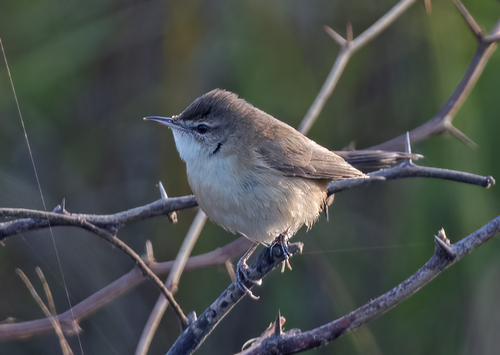
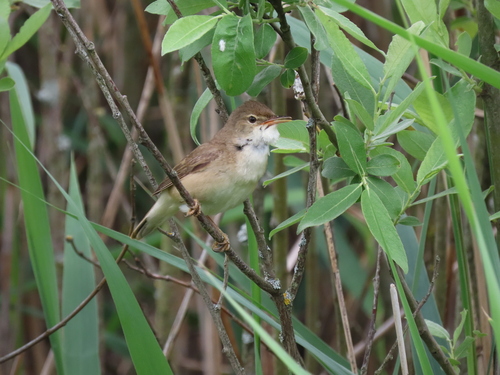
Paddyfield Warbler (Acrocephalus agricola) Paddyfield Warbler
Common Reed Warbler (Acrocephalus scirpaceus) Common Reed Warbler

Media

Loading…

In short

The Paddyfield Warbler and Common Reed Warbler are similar in appearance but can be distinguished by subtle differences in structure and habitat preference. Paddyfield Warbler typically has a more pronounced supercilium and shorter primary projection, while Common Reed Warbler often inhabits denser reed beds.

Identification tips

  1. Look for a more pronounced supercilium on the Paddyfield Warbler. 2. Check the primary projection: Paddyfield Warbler has a shorter one. 3. Observe habitat: Paddyfield Warbler in bushier areas, Common Reed Warbler in dense reeds. 4. Listen for song differences: Paddyfield Warbler includes mimicry, Common Reed Warbler is more rhythmic.

Size

Both species are similar in size, typical of Acrocephalus warblers, making size an unreliable field mark.

Plumage

Paddyfield Warbler generally shows a more distinct and broader supercilium compared to the Common Reed Warbler. The latter may appear slightly more uniform in plumage with less contrast between the back and underparts.

Behaviour

Both species exhibit similar behaviors, often seen skulking in dense vegetation. Paddyfield Warbler may be more likely to forage in lower, bushier areas compared to the Common Reed Warbler.

Habitat

Paddyfield Warbler is often found in drier, bushier habitats, whereas Common Reed Warbler prefers dense reed beds and marshy areas.

Voice

Vocalizations can be challenging to differentiate; however, Paddyfield Warbler's song is often more varied and includes mimicry, while Common Reed Warbler's song is more rhythmic and repetitive.

Submit a better description

Use the same sections as the comparison. Your text is published immediately.

The Paddyfield Warbler and Common Reed Warbler are similar in appearance but can be distinguished by subtle differences in structure and habitat preference. Paddyfield Warbler typically has a more pronounced supercilium and shorter primary projection, while Common Reed Warbler often inhabits denser reed beds.

  1. Look for a more pronounced supercilium on the Paddyfield Warbler. 2. Check the primary projection: Paddyfield Warbler has a shorter one. 3. Observe habitat: Paddyfield Warbler in bushier areas, Common Reed Warbler in dense reeds. 4. Listen for song differences: Paddyfield Warbler includes mimicry, Common Reed Warbler is more rhythmic.

Both species are similar in size, typical of Acrocephalus warblers, making size an unreliable field mark.

Paddyfield Warbler generally shows a more distinct and broader supercilium compared to the Common Reed Warbler. The latter may appear slightly more uniform in plumage with less contrast between the back and underparts.

Both species exhibit similar behaviors, often seen skulking in dense vegetation. Paddyfield Warbler may be more likely to forage in lower, bushier areas compared to the Common Reed Warbler.

Paddyfield Warbler is often found in drier, bushier habitats, whereas Common Reed Warbler prefers dense reed beds and marshy areas.

Vocalizations can be challenging to differentiate; however, Paddyfield Warbler's song is often more varied and includes mimicry, while Common Reed Warbler's song is more rhythmic and repetitive.

Discard your changes?

You have unsaved edits. If you leave now, those changes will be lost.

Paddyfield Warbler · Common Reed Warbler · My Tricky Birds