Birdr

Pale-footed Bush Warbler vs Grey-bellied Tesia

Hemitesia pallidipes versus Tesia cyaniventer

Play a quiz with Pale-footed Bush Warbler and Grey-bellied Tesia
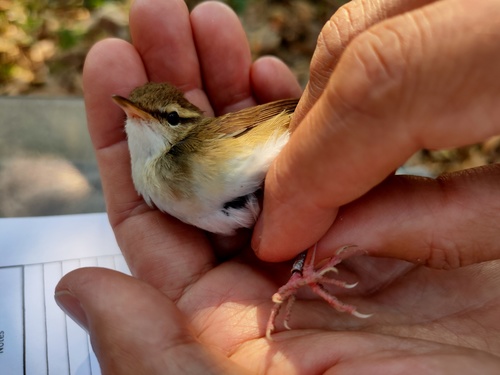
Pale-footed Bush Warbler (Hemitesia pallidipes) Pale-footed Bush Warbler
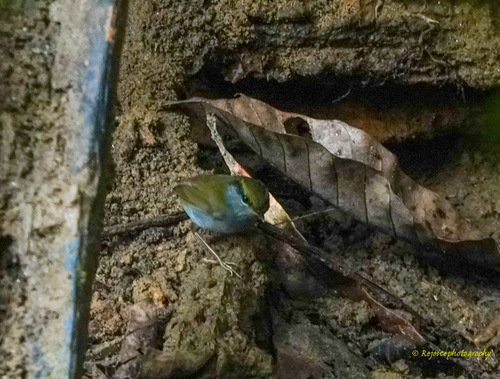
Grey-bellied Tesia (Tesia cyaniventer) Grey-bellied Tesia

Media

Loading…

In short

The Pale-footed Bush Warbler and the Grey-bellied Tesia are both small, elusive birds found in dense undergrowth, but they can be distinguished by their structure and plumage. The Bush Warbler has a longer tail and a more pronounced supercilium, while the Tesia is tailless with a distinctive grey belly.

Identification tips

1. Tail: Look for the presence of a tail in the Bush Warbler. 2. Supercilium: Check for a pronounced supercilium in the Bush Warbler. 3. Belly color: Note the grey belly of the Tesia. 4. Behavior: Observe tail flicking in the Bush Warbler, absent in the Tesia. 5. Habitat: Consider the specific undergrowth type if known locally.

Size

Both species are small, but the Pale-footed Bush Warbler has a longer tail, making it appear slightly larger overall.

Plumage

The Pale-footed Bush Warbler has a more pronounced supercilium and generally paler underparts, while the Grey-bellied Tesia is notable for its grey belly and lack of a tail.

Behaviour

Both species are secretive and often remain hidden in dense vegetation. The Bush Warbler tends to flick its tail, whereas the Tesia's tailless appearance is distinctive.

Habitat

Both species inhabit dense undergrowth, often in forested areas, but specific habitat preferences may vary locally.

Voice

Vocalizations differ, but specifics are not well-documented here. Observers should note any distinct calls or songs when possible.

Submit a better description

Use the same sections as the comparison. Your text is published immediately.

The Pale-footed Bush Warbler and the Grey-bellied Tesia are both small, elusive birds found in dense undergrowth, but they can be distinguished by their structure and plumage. The Bush Warbler has a longer tail and a more pronounced supercilium, while the Tesia is tailless with a distinctive grey belly.

1. Tail: Look for the presence of a tail in the Bush Warbler. 2. Supercilium: Check for a pronounced supercilium in the Bush Warbler. 3. Belly color: Note the grey belly of the Tesia. 4. Behavior: Observe tail flicking in the Bush Warbler, absent in the Tesia. 5. Habitat: Consider the specific undergrowth type if known locally.

Both species are small, but the Pale-footed Bush Warbler has a longer tail, making it appear slightly larger overall.

The Pale-footed Bush Warbler has a more pronounced supercilium and generally paler underparts, while the Grey-bellied Tesia is notable for its grey belly and lack of a tail.

Both species are secretive and often remain hidden in dense vegetation. The Bush Warbler tends to flick its tail, whereas the Tesia's tailless appearance is distinctive.

Both species inhabit dense undergrowth, often in forested areas, but specific habitat preferences may vary locally.

Vocalizations differ, but specifics are not well-documented here. Observers should note any distinct calls or songs when possible.

Discard your changes?

You have unsaved edits. If you leave now, those changes will be lost.

Pale-footed Bush Warbler · Grey-bellied Tesia · My Tricky Birds