Birdr

Pallas's Gull vs Mediterranean Gull

Ichthyaetus ichthyaetus versus Ichthyaetus melanocephalus

Play a quiz with Pallas's Gull and Mediterranean Gull

Pallas's Gull (Ichthyaetus ichthyaetus) Pallas's Gull
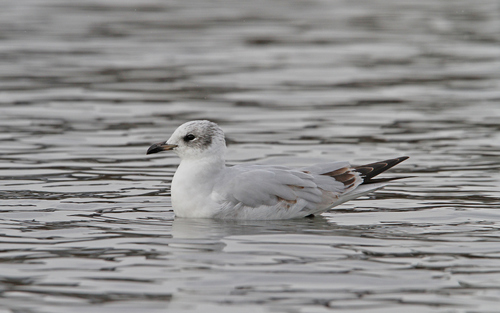
Mediterranean Gull (Ichthyaetus melanocephalus) Mediterranean Gull

Media

Loading…

In short

Pallas's Gull (Ichthyaetus ichthyaetus) and Mediterranean Gull (Ichthyaetus melanocephalus) can be distinguished primarily by their size, plumage coloration, and habitat preferences. Pallas's Gull is generally larger with a more robust build and distinct coloration, while the Mediterranean Gull is smaller with a more slender body and a striking black head during the breeding season.

Identification tips

  1. Birds of the World Similar-Species Diagnostics:
  2. Pallas's Gull: “Larger, with a pale gray back and a more extensive black wingtip; white head in non-breeding plumage and dark mantle in breeding plumage.” (Source: Birds of the World)
  3. Mediterranean Gull: “Smaller, with a distinctive black head in breeding plumage, contrasting with a white body and gray wings. Less pronounced black head in non-breeding plumage.” (Source: Birds of the World)

  4. AI Field Diagnostics:

  5. Size: Always note the relative size; Pallas's Gull is significantly larger than Mediterranean Gull.
  6. Plumage Patterns: Look for the black cap on the Mediterranean Gull during the breeding season, which is absent in Pallas's Gull. The darker mantle of Pallas's in breeding plumage is also a crucial feature.
  7. Behavior: Observe their foraging habits; if you see a larger gull that appears to be more aggressive in mixed flocks, it's likely Pallas's Gull. Meanwhile, solitary or small groups of gulls with a distinct black head are likely Mediterranean Gulls.
  8. Habitat: Consider the location; if you’re near northern coastlines or estuaries, Pallas's Gull is more common, while Mediterranean Gulls are often found in southern European wetlands or urban areas.
  9. Vocalizations: Listen for the calls; the deeper, more resonant sounds of Pallas's Gull contrast with the plaintive calls of the Mediterranean Gull.

By focusing on these key differences, birdwatchers can effectively distinguish between Pallas's and Mediterranean Gulls in their respective habitats.

Size

Pallas's Gull is larger, typically measuring about 50-60 cm in length with a wingspan of 140-150 cm. In contrast, the Mediterranean Gull measures around 35-45 cm in length with a wingspan of 100-110 cm. This size difference is a key distinguishing feature when observing these birds in the field.

Plumage

Pallas's Gull has a striking plumage with a pale gray back and wings, a white head in non-breeding plumage, and a characteristic dark mantle in breeding plumage. Notably, Pallas’s has a darker mantle and a more extensive black wingtip compared to the Mediterranean Gull. The Mediterranean Gull, on the other hand, is known for its distinctive black head during the breeding season, which contrasts sharply with its white body and gray wings. In non-breeding plumage, the Mediterranean Gull has a less pronounced head coloration, typically showing only a dark smudge.

Behaviour

Pallas's Gull exhibits more aggressive behavior, often seen foraging in larger groups or near fish processing areas, whereas the Mediterranean Gull is generally more solitary or seen in smaller groups, often foraging along beaches or inland water bodies. Pallas's Gull displays a more buoyant flight style, characterized by longer, broader wings, while the Mediterranean Gull has a more graceful flight with a faster wingbeat.

Habitat

Pallas's Gull prefers coastal areas, often found in estuaries or near fishing ports, particularly in regions of the northern circumpolar regions. Mediterranean Gull favors a mix of coastal environments and inland wetlands, frequently found in estuarine habitats, lagoons, and even urban areas near water bodies. The Mediterranean Gull is more widespread in southern Europe, particularly in the Mediterranean basin.

Voice

Pallas's Gull has a variety of calls ranging from deep, resonant “karr” sounds to more shrill notes, while the Mediterranean Gull produces a distinctive and more plaintive “kaw” or “kaw-kaw” call. The vocalizations of both species can be helpful in identification but are less reliable than visual cues.

Submit a better description

Use the same sections as the comparison. Your text is published immediately.

Pallas's Gull (Ichthyaetus ichthyaetus) and Mediterranean Gull (Ichthyaetus melanocephalus) can be distinguished primarily by their size, plumage coloration, and habitat preferences. Pallas's Gull is generally larger with a more robust build and distinct coloration, while the Mediterranean Gull is smaller with a more slender body and a striking black head during the breeding season.

  1. Birds of the World Similar-Species Diagnostics:
  2. Pallas's Gull: “Larger, with a pale gray back and a more extensive black wingtip; white head in non-breeding plumage and dark mantle in breeding plumage.” (Source: Birds of the World)
  3. Mediterranean Gull: “Smaller, with a distinctive black head in breeding plumage, contrasting with a white body and gray wings. Less pronounced black head in non-breeding plumage.” (Source: Birds of the World)

  4. AI Field Diagnostics:

  5. Size: Always note the relative size; Pallas's Gull is significantly larger than Mediterranean Gull.
  6. Plumage Patterns: Look for the black cap on the Mediterranean Gull during the breeding season, which is absent in Pallas's Gull. The darker mantle of Pallas's in breeding plumage is also a crucial feature.
  7. Behavior: Observe their foraging habits; if you see a larger gull that appears to be more aggressive in mixed flocks, it's likely Pallas's Gull. Meanwhile, solitary or small groups of gulls with a distinct black head are likely Mediterranean Gulls.
  8. Habitat: Consider the location; if you’re near northern coastlines or estuaries, Pallas's Gull is more common, while Mediterranean Gulls are often found in southern European wetlands or urban areas.
  9. Vocalizations: Listen for the calls; the deeper, more resonant sounds of Pallas's Gull contrast with the plaintive calls of the Mediterranean Gull.

By focusing on these key differences, birdwatchers can effectively distinguish between Pallas's and Mediterranean Gulls in their respective habitats.

Pallas's Gull is larger, typically measuring about 50-60 cm in length with a wingspan of 140-150 cm. In contrast, the Mediterranean Gull measures around 35-45 cm in length with a wingspan of 100-110 cm. This size difference is a key distinguishing feature when observing these birds in the field.

Pallas's Gull has a striking plumage with a pale gray back and wings, a white head in non-breeding plumage, and a characteristic dark mantle in breeding plumage. Notably, Pallas’s has a darker mantle and a more extensive black wingtip compared to the Mediterranean Gull. The Mediterranean Gull, on the other hand, is known for its distinctive black head during the breeding season, which contrasts sharply with its white body and gray wings. In non-breeding plumage, the Mediterranean Gull has a less pronounced head coloration, typically showing only a dark smudge.

Pallas's Gull exhibits more aggressive behavior, often seen foraging in larger groups or near fish processing areas, whereas the Mediterranean Gull is generally more solitary or seen in smaller groups, often foraging along beaches or inland water bodies. Pallas's Gull displays a more buoyant flight style, characterized by longer, broader wings, while the Mediterranean Gull has a more graceful flight with a faster wingbeat.

Pallas's Gull prefers coastal areas, often found in estuaries or near fishing ports, particularly in regions of the northern circumpolar regions. Mediterranean Gull favors a mix of coastal environments and inland wetlands, frequently found in estuarine habitats, lagoons, and even urban areas near water bodies. The Mediterranean Gull is more widespread in southern Europe, particularly in the Mediterranean basin.

Pallas's Gull has a variety of calls ranging from deep, resonant “karr” sounds to more shrill notes, while the Mediterranean Gull produces a distinctive and more plaintive “kaw” or “kaw-kaw” call. The vocalizations of both species can be helpful in identification but are less reliable than visual cues.

Discard your changes?

You have unsaved edits. If you leave now, those changes will be lost.

Pallas's Gull · Mediterranean Gull · My Tricky Birds