Pallas's Sandgrouse vs Little Bustard
Syrrhaptes paradoxus versus Tetrax tetrax
Play a quiz with Pallas's Sandgrouse and Little Bustard
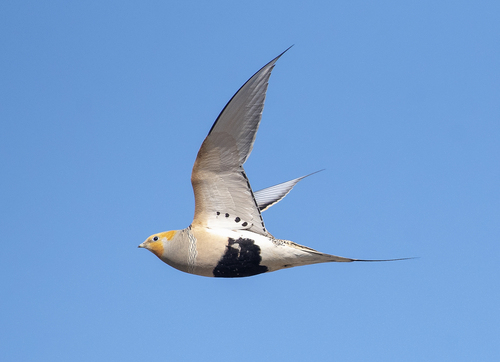
Pallas's Sandgrouse
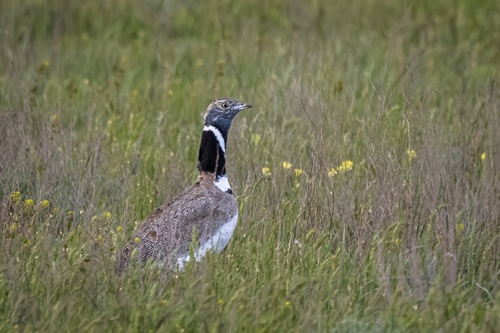
Little Bustard
In short
Pallas's Sandgrouse and Little Bustard are distinct in both appearance and behavior. The most reliable field mark is their size and shape: Pallas's Sandgrouse is smaller and more compact, while the Little Bustard is larger and more upright. These differences are complemented by their contrasting habitats and behaviors.
Identification tips
1. Size and Shape: Note the smaller, compact form of the Pallas's Sandgrouse compared to the larger, upright Little Bustard. 2. Plumage Patterns: Look for the black belly patch on Pallas's Sandgrouse and the more uniform brown with white belly on the Little Bustard. 3. Habitat: Consider the environment; sandgrouse in arid areas, bustards in grasslands. 4. Behavior: Observe flocking behavior in sandgrouse versus solitary or small group behavior in bustards. 5. Calls: Listen for the soft cooing of sandgrouse versus the rasping call of bustards.
Size
Pallas's Sandgrouse is smaller and more compact, with a length of about 30–41 cm. The Little Bustard is larger, more robust, and stands more upright, measuring around 40–45 cm.
Plumage
Pallas's Sandgrouse has a sandy-brown plumage with intricate patterns and a distinctive black belly patch. The Little Bustard has a more uniform brownish plumage with a white belly and, in males, striking black and white markings on the neck during the breeding season.
Behaviour
Pallas's Sandgrouse is often seen in flocks and is known for its swift, direct flight. The Little Bustard is more solitary or found in small groups, often walking or running through open fields.
Habitat
Pallas's Sandgrouse prefers arid, open steppes and deserts. In contrast, the Little Bustard is typically found in grasslands and agricultural fields.
Voice
Pallas's Sandgrouse has a soft, cooing call, while the Little Bustard's call is a distinctive, rasping sound, especially during the breeding season.