Birdr

Pallas's Warbler vs Willow Warbler

Phylloscopus proregulus versus Phylloscopus trochilus

Play a quiz with Pallas's Warbler and Willow Warbler
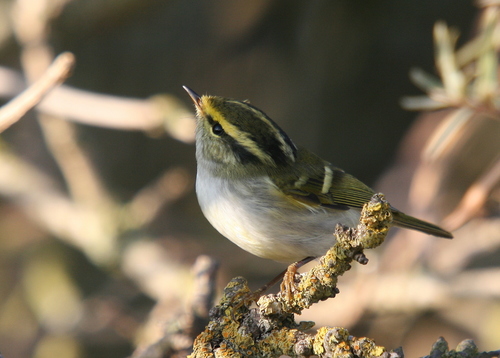
Pallas's Warbler (Phylloscopus proregulus) Pallas's Warbler
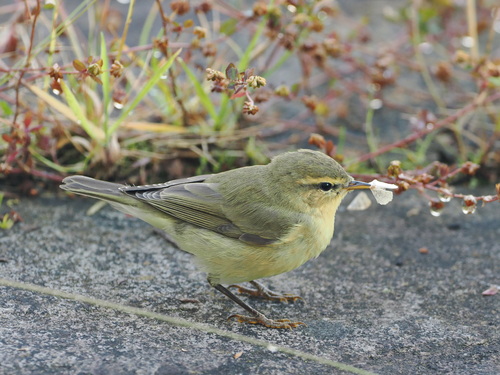
Willow Warbler (Phylloscopus trochilus) Willow Warbler

Media

Loading…

In short

Pallas's Warbler (Phylloscopus proregulus) and Willow Warbler (Phylloscopus trochilus acredula) are both small, insectivorous warblers, but they can be distinguished by their size, plumage coloration, vocalizations, and habitat preferences. Pallas's Warbler is generally smaller and has distinct yellow supercilial stripes and a more vibrant coloration, while the Willow Warbler has a more uniform olive-green appearance and a longer, more melodic song.

Identification tips

  1. Birds of the World Similar-Species Diagnostics:
  2. According to the Birds of the World, Pallas's Warbler can be distinguished from Willow Warbler by its more striking coloration and the presence of distinct yellow supercilia. The Willow Warbler is described as generally more uniform in color with less distinct markings.

  3. AI Field Diagnostics:

  4. Size and Shape: Pay attention to size; Pallas's Warbler is smaller and more compact, while the Willow Warbler is slightly larger and has a more elongated body.
  5. Plumage Patterns: Look for the bright yellow supercilia and the pronounced wing bars in Pallas’s Warbler. In contrast, Willow Warbler's plumage is more uniform without significant markings.
  6. Behavior: Observe their foraging behavior; Pallas's Warbler tends to be more acrobatic and active at higher levels in the trees, while Willow Warbler forages at lower levels.
  7. Vocalizations: Listen for their calls; Pallas's Warbler has a high-pitched, thin call, while Willow Warbler's song is melodic and fluid.
  8. Habitat Preferences: Consider where you find them; Pallas's Warbler favors mixed forests in mountainous areas, whereas Willow Warbler is more versatile and found in a variety of habitats, including more open spaces.

By focusing on these key differences, birdwatchers can more easily identify Pallas's Warbler and Willow Warbler in the field.

Size

Plumage

Behaviour

Habitat

Voice

Submit a better description

Use the same sections as the comparison. Your text is published immediately.

Pallas's Warbler (Phylloscopus proregulus) and Willow Warbler (Phylloscopus trochilus acredula) are both small, insectivorous warblers, but they can be distinguished by their size, plumage coloration, vocalizations, and habitat preferences. Pallas's Warbler is generally smaller and has distinct yellow supercilial stripes and a more vibrant coloration, while the Willow Warbler has a more uniform olive-green appearance and a longer, more melodic song.

  1. Birds of the World Similar-Species Diagnostics:
  2. According to the Birds of the World, Pallas's Warbler can be distinguished from Willow Warbler by its more striking coloration and the presence of distinct yellow supercilia. The Willow Warbler is described as generally more uniform in color with less distinct markings.

  3. AI Field Diagnostics:

  4. Size and Shape: Pay attention to size; Pallas's Warbler is smaller and more compact, while the Willow Warbler is slightly larger and has a more elongated body.
  5. Plumage Patterns: Look for the bright yellow supercilia and the pronounced wing bars in Pallas’s Warbler. In contrast, Willow Warbler's plumage is more uniform without significant markings.
  6. Behavior: Observe their foraging behavior; Pallas's Warbler tends to be more acrobatic and active at higher levels in the trees, while Willow Warbler forages at lower levels.
  7. Vocalizations: Listen for their calls; Pallas's Warbler has a high-pitched, thin call, while Willow Warbler's song is melodic and fluid.
  8. Habitat Preferences: Consider where you find them; Pallas's Warbler favors mixed forests in mountainous areas, whereas Willow Warbler is more versatile and found in a variety of habitats, including more open spaces.

By focusing on these key differences, birdwatchers can more easily identify Pallas's Warbler and Willow Warbler in the field.

  • Pallas's Warbler: Typically measures about 10-11 cm in length with a wingspan of approximately 15-18 cm. They have a compact body and shorter wings relative to their body size.
  • Willow Warbler: Slightly larger, measuring about 11-12.5 cm in length and a wingspan of 19-22 cm, giving them a more elongated appearance compared to Pallas's Warbler.
  • Pallas's Warbler: Characterized by bright yellow supercilia (eyebrows), yellow underparts, and olive-green upperparts. The wing bars are prominent, and they often have a yellowish-green tail with white edges, which can be helpful in identification.
  • Willow Warbler: Exhibits a more subdued olive-green and yellow coloration overall. The underparts are pale yellow, but less vibrant than that of the Pallas's Warbler. The wings are less distinctly marked, lacking the prominent wing bars seen in Pallas's Warbler.
  • Pallas's Warbler: Often seen flitting actively through trees and shrubs, displaying a more acrobatic behavior. They tend to forage on the outer leaves and branches, searching for insects.
  • Willow Warbler: Typically forages at lower levels, often within dense vegetation. They have a more methodical foraging style compared to the more frenetic activity of Pallas's Warbler.
  • Pallas's Warbler: Prefers mixed coniferous and deciduous forests, particularly in mountainous regions. This species is often found in areas with plenty of understory vegetation, especially where birches and other broadleaved trees are present.
  • Willow Warbler: Commonly found in a variety of habitats, including scrub, hedgerows, and open woodlands. They are more adaptable to different habitats, including wetlands and meadows, often near water sources.
  • Pallas's Warbler: Vocalizations consist of a series of high-pitched, thin notes that are often described as "tse-tse-tse". They have a distinctive call that can help in identification, especially when they are hidden in foliage.
  • Willow Warbler: Known for a melodic song that consists of a series of clear and fluid notes, often described as "wee-wee-wee". Their song is more prolonged and can carry for longer distances compared to Pallas's Warbler.

Discard your changes?

You have unsaved edits. If you leave now, those changes will be lost.

Pallas's Warbler · Willow Warbler · My Tricky Birds