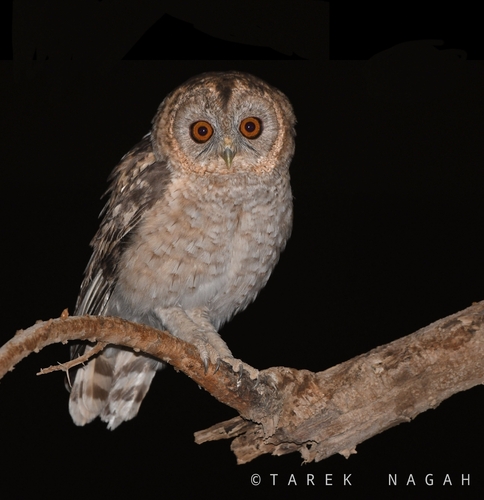
Pallid Scops Owl vs Desert Owl
Otus brucei versus Strix hadorami
Play a quiz with Pallid Scops Owl and Desert Owl
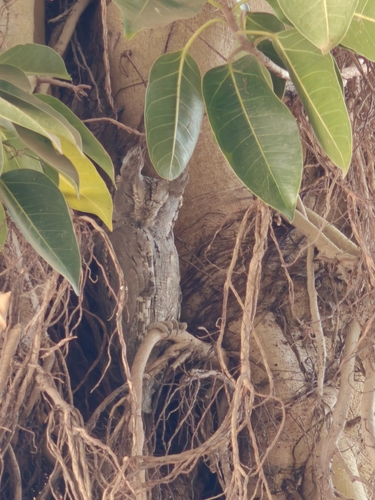
Pallid Scops Owl
Desert Owl
In short
The Pallid Scops Owl (Otus brucei) and the Desert Owl (Strix hadorami) can be distinguished primarily by their size and structure. The Pallid Scops Owl is smaller with prominent ear tufts, while the Desert Owl is larger and lacks ear tufts. Both species inhabit arid regions, but their vocalizations differ significantly.
Identification tips
Look for the presence of ear tufts on the Pallid Scops Owl. Note the size difference, with the Desert Owl being larger. Listen for vocalizations at night; the Pallid Scops Owl has softer hoots compared to the Desert Owl's deeper calls. Observe the habitat; Desert Owls are more likely in rocky areas.
Size
The Pallid Scops Owl is smaller, typically around 19–21 cm in length, whereas the Desert Owl is larger, measuring about 29–33 cm.
Plumage
Pallid Scops Owl has a pale, sandy-grey plumage with fine streaks and prominent ear tufts. The Desert Owl has a more uniform sandy-brown plumage without ear tufts, and its facial disk is more pronounced.
Behaviour
Both species are nocturnal and elusive, but the Pallid Scops Owl may be more likely to be seen perched in open areas during the day.
Habitat
Both species inhabit arid and semi-arid regions, but the Pallid Scops Owl is more often found in open woodlands and scrub, while the Desert Owl prefers rocky deserts and wadis.
Voice
The Pallid Scops Owl has a series of soft, repetitive hoots, while the Desert Owl's call is a deeper, more resonant hoot. These vocal differences can be a reliable way to distinguish them at night.