Birdr

Pallid Swift vs Little Swift

Apus pallidus versus Apus affinis

Play a quiz with Pallid Swift and Little Swift
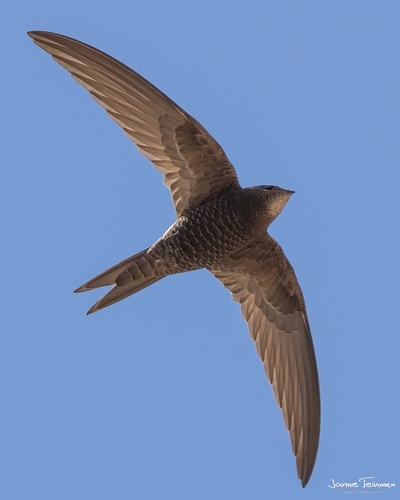
Pallid Swift (Apus pallidus) Pallid Swift
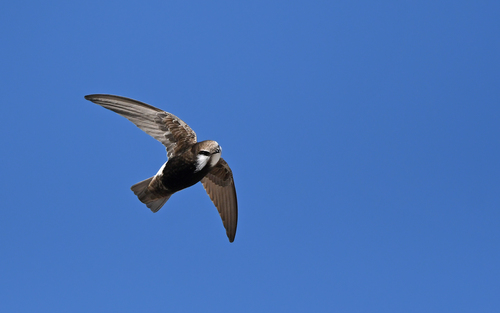
Little Swift (Apus affinis) Little Swift

Media

Loading…

In short

The most reliable field mark to separate Pallid Swift from Little Swift is the tail and rump pattern in flight: Pallid Swift shows a long, deeply forked tail and lacks a white rump, while Little Swift has a short, square tail and a conspicuous white rump patch extending onto the flanks. Both species have a white throat, but Pallid Swift is overall browner and shows more contrast between paler flight feathers and underparts, with a scaly belly, while Little Swift is more uniformly blackish with a sharp white rump. Size and flight style also help: Pallid Swift is larger and sleeker with crescent-shaped wings, while Little Swift is distinctly smaller, chunkier, and flutters more like a house martin. These marks are consistent across ages, as there are no age-specific upperwing patterns described for either species.

Identification tips

  1. Tail shape is key: Pallid Swift always shows a long, deeply forked tail in flight, while Little Swift has a short, square tail with round-tipped feathers. This is visible at all ages and in most flight views.
  2. White rump patch: Little Swift has a bold white rump patch that wraps onto the flanks, visible from above and below. Pallid Swift never shows a white rump; its rump is only slightly paler than the rest of the body and lacks any sharp contrast.
  3. White throat patch: Both species have a white throat, but on Pallid Swift it is larger and often more obvious at a distance. However, this mark alone is not diagnostic.
  4. Overall coloration: Pallid Swift is browner, with paler flight feathers, underparts, and rump, giving a more contrasted and scaly appearance, especially on the belly. Little Swift is more uniformly blackish except for the throat and rump.
  5. Size and jizz: Pallid Swift is larger, longer-winged, and more streamlined. Little Swift is distinctly smaller, chunkier, and compact, with a proportionally shorter tail and wings.
  6. Flight style: Pallid Swift flies with long, sweeping glides and powerful wingbeats, often appearing boomerang-shaped. Little Swift has a fluttery, rapid flight, more reminiscent of a house martin, and rarely glides for long.
  7. Wing shape: Pallid Swift's wings are long, narrow, and crescent-shaped. Little Swift's wings are shorter and broader, contributing to its fluttery flight.
  8. Underpart pattern: Pallid Swift shows a scaly or mottled belly due to paler feather edges; Little Swift's underparts are plain blackish except for the white throat.
  9. Tail feather tips: Little Swift's tail feathers are all round-tipped, which can be seen well in photos or close views; Pallid Swift's tail feathers are more pointed and the tail is forked.
  10. Voice: If heard, Pallid Swift gives a loud, dry, disyllabic scream, while Little Swift produces a high twittering call. Use this only if you are confident in distinguishing swift calls.
  11. Habitat context: In southern Europe, Little Swift is much less common and usually found near urban areas or cliffs with established colonies. Pallid Swift is more widespread and less tied to buildings.
  12. No age-specific wing patterns: There are no described juvenile or immature-specific upperwing patterns for either species, so all ages can be separated by tail shape and rump patch.
  13. Perched birds: Both species rarely perch in view, but if seen, Little Swift will look more compact and stubby, with a short tail and obvious white rump; Pallid Swift will appear longer and more streamlined.
  14. Pitfalls: Do not rely solely on throat patch size or general darkness, as lighting can affect these impressions. Always check tail shape and rump pattern first.
  15. Direct comparison: If both species are present, the size, tail, and rump differences are striking. If only one is present, focus on the combination of tail shape and rump pattern for a confident ID.

Size

Pallid Swift is noticeably larger and heavier (body mass ~41.3g) than Little Swift (no direct mass given, but described as much smaller). Pallid Swift measures 16–17 cm in length with a proportionally longer wingspan and tail, while Little Swift is significantly smaller with a wingspan of only 33 cm (compared to 42 cm for Common Swift, and less than Pallid Swift). In the field, Little Swift looks compact and stubby, especially due to its short, square tail.

Plumage

There are no described age-specific upperwing or flight patterns for either species, so focus on adult and general plumage. Pallid Swift is overall dark brown with a large white throat patch, but shows a paler contrast on the flight feathers, underparts, and rump, giving a slightly mottled or scaly look to the belly. The tail is long and deeply forked. Little Swift is blackish overall with a white throat and a very prominent white rump patch that wraps onto the flanks; the tail is short, square, and all tail feathers are round-tipped. The white rump is diagnostic for Little Swift at all ages. Both species have short legs used only for clinging, but this is not a field mark.

Behaviour

Both species are highly aerial, rarely perching except on vertical surfaces. In flight, Pallid Swift appears sleeker with long, crescent-shaped wings and a more powerful, gliding flight. Little Swift is more fluttery, with a flight style reminiscent of a house martin, and appears chunkier and more compact. These differences are most apparent when both species are seen together or in direct comparison.

Habitat

Both species can be found in urban areas and at cliffs, but Little Swift is more likely to be encountered in cities and towns, especially near buildings where it nests. Pallid Swift is also found in similar habitats but is less tied to urban environments. In southern Europe, Little Swift is a local breeder or vagrant, while Pallid Swift is more widespread.

Voice

Pallid Swift gives a loud, dry scream, possibly more disyllabic than Common Swift, but similar in tone. Little Swift has a high, twittering call, quite different from the harsh scream of Pallid Swift. Voice can be helpful if birds are calling, but is less reliable than visual marks unless you are familiar with both species' sounds.

Submit a better description

Use the same sections as the comparison. Your text is published immediately.

The most reliable field mark to separate Pallid Swift from Little Swift is the tail and rump pattern in flight: Pallid Swift shows a long, deeply forked tail and lacks a white rump, while Little Swift has a short, square tail and a conspicuous white rump patch extending onto the flanks. Both species have a white throat, but Pallid Swift is overall browner and shows more contrast between paler flight feathers and underparts, with a scaly belly, while Little Swift is more uniformly blackish with a sharp white rump. Size and flight style also help: Pallid Swift is larger and sleeker with crescent-shaped wings, while Little Swift is distinctly smaller, chunkier, and flutters more like a house martin. These marks are consistent across ages, as there are no age-specific upperwing patterns described for either species.

  1. Tail shape is key: Pallid Swift always shows a long, deeply forked tail in flight, while Little Swift has a short, square tail with round-tipped feathers. This is visible at all ages and in most flight views.
  2. White rump patch: Little Swift has a bold white rump patch that wraps onto the flanks, visible from above and below. Pallid Swift never shows a white rump; its rump is only slightly paler than the rest of the body and lacks any sharp contrast.
  3. White throat patch: Both species have a white throat, but on Pallid Swift it is larger and often more obvious at a distance. However, this mark alone is not diagnostic.
  4. Overall coloration: Pallid Swift is browner, with paler flight feathers, underparts, and rump, giving a more contrasted and scaly appearance, especially on the belly. Little Swift is more uniformly blackish except for the throat and rump.
  5. Size and jizz: Pallid Swift is larger, longer-winged, and more streamlined. Little Swift is distinctly smaller, chunkier, and compact, with a proportionally shorter tail and wings.
  6. Flight style: Pallid Swift flies with long, sweeping glides and powerful wingbeats, often appearing boomerang-shaped. Little Swift has a fluttery, rapid flight, more reminiscent of a house martin, and rarely glides for long.
  7. Wing shape: Pallid Swift's wings are long, narrow, and crescent-shaped. Little Swift's wings are shorter and broader, contributing to its fluttery flight.
  8. Underpart pattern: Pallid Swift shows a scaly or mottled belly due to paler feather edges; Little Swift's underparts are plain blackish except for the white throat.
  9. Tail feather tips: Little Swift's tail feathers are all round-tipped, which can be seen well in photos or close views; Pallid Swift's tail feathers are more pointed and the tail is forked.
  10. Voice: If heard, Pallid Swift gives a loud, dry, disyllabic scream, while Little Swift produces a high twittering call. Use this only if you are confident in distinguishing swift calls.
  11. Habitat context: In southern Europe, Little Swift is much less common and usually found near urban areas or cliffs with established colonies. Pallid Swift is more widespread and less tied to buildings.
  12. No age-specific wing patterns: There are no described juvenile or immature-specific upperwing patterns for either species, so all ages can be separated by tail shape and rump patch.
  13. Perched birds: Both species rarely perch in view, but if seen, Little Swift will look more compact and stubby, with a short tail and obvious white rump; Pallid Swift will appear longer and more streamlined.
  14. Pitfalls: Do not rely solely on throat patch size or general darkness, as lighting can affect these impressions. Always check tail shape and rump pattern first.
  15. Direct comparison: If both species are present, the size, tail, and rump differences are striking. If only one is present, focus on the combination of tail shape and rump pattern for a confident ID.

Pallid Swift is noticeably larger and heavier (body mass ~41.3g) than Little Swift (no direct mass given, but described as much smaller). Pallid Swift measures 16–17 cm in length with a proportionally longer wingspan and tail, while Little Swift is significantly smaller with a wingspan of only 33 cm (compared to 42 cm for Common Swift, and less than Pallid Swift). In the field, Little Swift looks compact and stubby, especially due to its short, square tail.

There are no described age-specific upperwing or flight patterns for either species, so focus on adult and general plumage. Pallid Swift is overall dark brown with a large white throat patch, but shows a paler contrast on the flight feathers, underparts, and rump, giving a slightly mottled or scaly look to the belly. The tail is long and deeply forked. Little Swift is blackish overall with a white throat and a very prominent white rump patch that wraps onto the flanks; the tail is short, square, and all tail feathers are round-tipped. The white rump is diagnostic for Little Swift at all ages. Both species have short legs used only for clinging, but this is not a field mark.

Both species are highly aerial, rarely perching except on vertical surfaces. In flight, Pallid Swift appears sleeker with long, crescent-shaped wings and a more powerful, gliding flight. Little Swift is more fluttery, with a flight style reminiscent of a house martin, and appears chunkier and more compact. These differences are most apparent when both species are seen together or in direct comparison.

Both species can be found in urban areas and at cliffs, but Little Swift is more likely to be encountered in cities and towns, especially near buildings where it nests. Pallid Swift is also found in similar habitats but is less tied to urban environments. In southern Europe, Little Swift is a local breeder or vagrant, while Pallid Swift is more widespread.

Pallid Swift gives a loud, dry scream, possibly more disyllabic than Common Swift, but similar in tone. Little Swift has a high, twittering call, quite different from the harsh scream of Pallid Swift. Voice can be helpful if birds are calling, but is less reliable than visual marks unless you are familiar with both species' sounds.

Discard your changes?

You have unsaved edits. If you leave now, those changes will be lost.

Pallid Swift · Little Swift · My Tricky Birds