Birdr

Palm Tanager vs Chestnut-backed Tanager

Thraupis palmarum versus Stilpnia preciosa

Play a quiz with Palm Tanager and Chestnut-backed Tanager
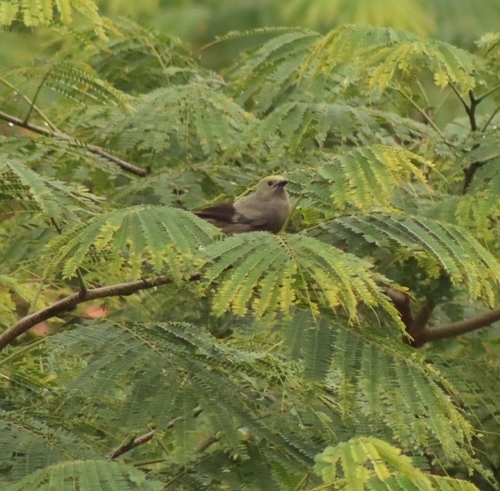
Palm Tanager (Thraupis palmarum) Palm Tanager
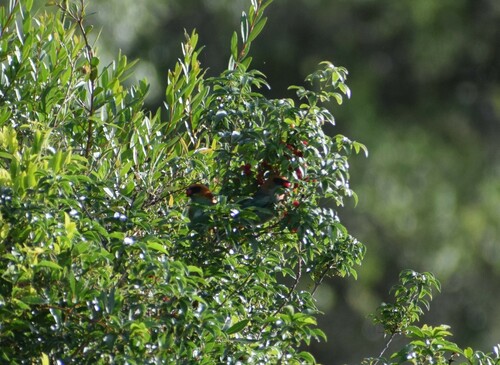
Chestnut-backed Tanager (Stilpnia preciosa) Chestnut-backed Tanager

Media

Loading…

In short

The Palm Tanager and Chestnut-backed Tanager can be distinguished by their plumage and habitat preferences. The Palm Tanager is more uniform in color, while the Chestnut-backed Tanager has a distinctive coppery rufous back. Both species are often seen in pairs, but their preferred environments differ.

Identification tips

  1. Look for the coppery rufous back of the Chestnut-backed Tanager. 2. Observe the habitat: Palm Tanagers are more likely in open areas, Chestnut-backed in mature forests. 3. Note the company: Chestnut-backed Tanagers often join insectivore flocks.

Size

Both species are similar in size, typical of tanagers, with no significant differences in structure.

Plumage

The Palm Tanager is mostly olive with subtle yellowish tones, lacking strong contrasts. In contrast, the Chestnut-backed Tanager has a coppery rufous back that stands out against its otherwise greenish body.

Behaviour

Both species are often seen in pairs and may join mixed-species flocks. The Palm Tanager frequently forages on palm fronds and large leaves, while the Chestnut-backed Tanager is more often found with insectivores.

Habitat

Palm Tanagers are adaptable, often seen in open areas and gardens, while Chestnut-backed Tanagers prefer mature forests, especially near the borders with an abundance of monkey-puzzle trees.

Submit a better description

Use the same sections as the comparison. Your text is published immediately.

The Palm Tanager and Chestnut-backed Tanager can be distinguished by their plumage and habitat preferences. The Palm Tanager is more uniform in color, while the Chestnut-backed Tanager has a distinctive coppery rufous back. Both species are often seen in pairs, but their preferred environments differ.

  1. Look for the coppery rufous back of the Chestnut-backed Tanager. 2. Observe the habitat: Palm Tanagers are more likely in open areas, Chestnut-backed in mature forests. 3. Note the company: Chestnut-backed Tanagers often join insectivore flocks.

Both species are similar in size, typical of tanagers, with no significant differences in structure.

The Palm Tanager is mostly olive with subtle yellowish tones, lacking strong contrasts. In contrast, the Chestnut-backed Tanager has a coppery rufous back that stands out against its otherwise greenish body.

Both species are often seen in pairs and may join mixed-species flocks. The Palm Tanager frequently forages on palm fronds and large leaves, while the Chestnut-backed Tanager is more often found with insectivores.

Palm Tanagers are adaptable, often seen in open areas and gardens, while Chestnut-backed Tanagers prefer mature forests, especially near the borders with an abundance of monkey-puzzle trees.

Discard your changes?

You have unsaved edits. If you leave now, those changes will be lost.

Palm Tanager · Chestnut-backed Tanager · My Tricky Birds