
Palm Warbler vs Pine Warbler
Setophaga palmarum versus Setophaga pinus
Play a quiz with Palm Warbler and Pine Warbler
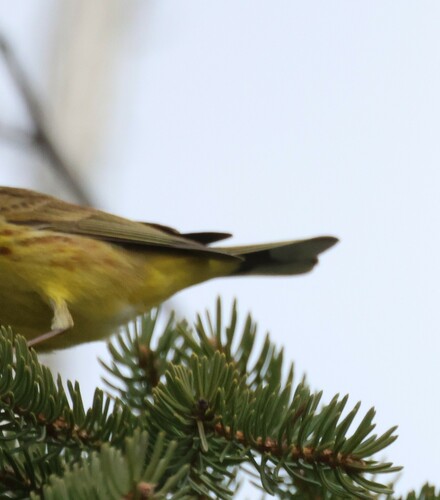 Palm Warbler
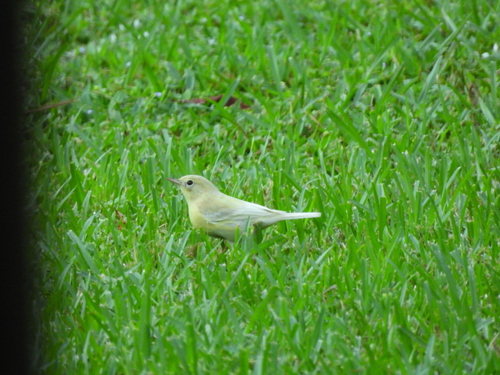 Pine Warbler
In short
The most reliable field mark to separate Palm Warbler from Pine Warbler is the Palm Warbler’s constant tail bobbing, which is nearly unique among warblers and absent in Pine Warbler. In plumage, Palm Warblers (especially the eastern 'yellow' subspecies) show much more yellow below and often have rufous streaks on the breast and flanks, while Pine Warblers have a white belly, two bold white wing bars, and a more even yellow throat and breast. Structurally, Pine Warblers have a longer, more pointed bill and often appear bulkier. Both species can be found foraging on the ground, but Palm Warblers do so much more frequently and are often seen in open, weedy areas, while Pine Warblers are closely tied to pine trees. If you see a warbler in a pine with a white belly and no tail bobbing, it's likely a Pine Warbler; if it's on the ground, wagging its tail, and looks yellowish with rufous streaking, it's almost certainly a Palm Warbler.
Identification tips
- Tail bobbing: Palm Warbler constantly bobs its tail up and down, both when perched and foraging; Pine Warbler never does. This is the single most reliable behavioral field mark for all ages and seasons.
- Belly color: Pine Warbler always has a clean white belly, sharply contrasting with the yellow throat and breast; Palm Warbler is yellowish below throughout, sometimes with rufous streaks, and never shows a clear white belly.
- Wing bars: Pine Warbler shows two strong white wing bars on a dark wing in all plumages; Palm Warbler’s wing bars are weak or absent, especially in western birds.
- Breast and flank streaking: Palm Warbler (especially eastern birds) shows bold rufous streaks on the breast and flanks; Pine Warbler is unstreaked below.
- Eye area: Pine Warbler has yellowish 'spectacles' (a broken ring or arc around the eye); Palm Warbler lacks this feature, though it may show a pale supercilium.
- Bill shape: Pine Warbler has a longer, thinner, and more pointed bill than Palm Warbler, which has a shorter, blunter bill. This is subtle but can help with good views.
- Overall jizz: Pine Warbler appears bulkier and more robust, while Palm Warbler is slimmer and more active, especially with its tail wagging.
- Foraging behavior: Palm Warbler is often seen on the ground in open areas, actively moving and tail-bobbing; Pine Warbler is usually in pine trees, moving slowly and probing pine cones, but may also come to the ground, especially in winter.
- Habitat: Pine Warbler is almost always in or near pine trees; Palm Warbler is found in a wider variety of open habitats, including grass, weedy fields, and bogs, often far from pines.
- Subspecies variation: Western Palm Warblers are duller overall, with less yellow and less streaking, but still show tail bobbing and lack Pine Warbler’s white belly and wing bars.
- Voice: If heard, Palm Warbler’s song is a buzzy monotone trill, while Pine Warbler’s is a sweeter, more musical trill. Palm’s call is a sharp 'chek.'
- Seasonal context: Palm Warbler is an early migrant, often appearing before most other warblers in spring. Pine Warbler may be resident in the Southeast and can appear earlier than most migrants but is less likely to be found in open, non-pine habitats.
- Sex and age: Female and immature Pine Warblers are duller but retain the white belly and wing bars; Palm Warbler of all ages and sexes shows tail bobbing and lacks the strong wing bars and white belly.
- Pitfalls: In dull light or at a distance, Pine Warbler’s yellow throat and breast can appear more extensive, but the white belly and lack of tail bobbing are still reliable. Western Palm Warblers can look drab, but their behavior and lack of Pine’s structure/plumage marks are key.
- Flight views: No distinctive upperwing or flight pattern marks are described for either species in the notes, so rely on overall color, wing bars, and behavior.
Size
Pine Warbler is slightly heavier on average (about 11.9 g) than Palm Warbler (8.5–14.2 g), but both are similar in length (Palm: 12–14 cm). In the field, Pine Warbler may look a bit bulkier and longer-billed, but size overlap is substantial and not a reliable separator on its own.
Plumage
Juvenile and immature plumages are not described in detail for either species in the notes, and no age-specific upperwing patterns are highlighted as diagnostic. For adults, Palm Warbler (especially the eastern 'yellow' subspecies) is bright yellow below with bold rufous streaking on the breast and flanks, and brownish-olive upperparts. Western birds are duller, with gray-brown upperparts and less yellow below. Pine Warbler adults (especially males) have olive upperparts, bright yellow throats and breasts, and always a white belly and two white wing bars. Females and immatures are duller olive-brown above and paler below, but still show the white belly and wing bars. Pine Warbler has yellowish 'spectacles' around the eye, while Palm Warbler lacks this feature. Palm Warbler never shows the clear white belly or strong wing bars of Pine Warbler.
Behaviour
Palm Warbler is almost always seen bobbing its tail, both when perched and while foraging, a behavior shared only with a couple of other Setophaga warblers and never shown by Pine Warbler. Palm Warbler forages on the ground much more frequently, often in open or weedy areas. Pine Warbler forages slowly on pine branches and trunks, probing pine cones, but will also come to the ground, especially in winter. Both may eat berries, but Pine Warbler is unique among warblers in regularly eating seeds.
Habitat
Palm Warbler breeds in open coniferous bogs and edges, and winters in a wide variety of open habitats, including weedy fields, coastal thickets, and even grassy lawns, often far from trees. Pine Warbler is strongly associated with pine forests year-round, rarely straying far from pines even in migration or winter. If you find a warbler in a pine-dominated habitat, especially high in the canopy, Pine Warbler is much more likely; a warbler in open, non-forested ground or weedy patches is likely a Palm Warbler.
Voice
Palm Warbler gives a monotonous buzzy trill for its song and a sharp 'chek' call. Pine Warbler’s voice is not described in the notes, but is generally a musical trill, less buzzy than Palm Warbler. In the field, Palm Warbler’s call is sharper and more abrupt, while Pine Warbler’s song is sweeter and more musical.