
Palm Warbler vs Yellow-rumped Warbler
Setophaga palmarum versus Setophaga coronata
Play a quiz with Palm Warbler and Yellow-rumped Warbler
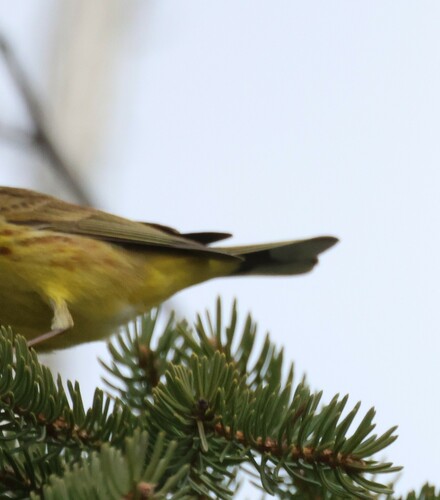 Palm Warbler
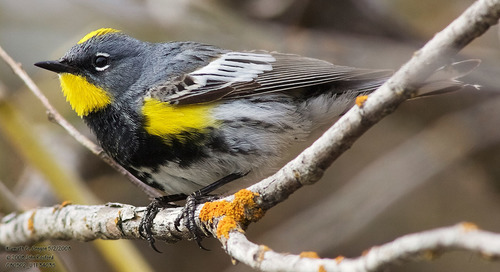 Yellow-rumped Warbler
In short
The most reliable field mark to separate Palm Warbler from Yellow-rumped Warbler is the Palm Warbler's constant tail bobbing, which is nearly unique among warblers and absent in Yellow-rumped. In plumage, Yellow-rumped Warbler always shows a bright yellow rump patch (the 'butter butt'), while Palm Warbler lacks this but often shows yellow under the tail and on the undertail coverts. Both species can be streaky and brownish in non-breeding or immature plumage, but Palm Warbler is more likely to be seen foraging on the ground and has a more uniform, unstreaked back. Yellow-rumped Warbler is bulkier, with a chunkier body and longer wings, and is much more likely to be seen in trees or flycatching from perches. Vocalizations differ, but are less reliable than behavior and plumage in quick field views.
Identification tips
- Tail bobbing: Palm Warbler bobs its tail constantly, both when perched and foraging; Yellow-rumped Warbler does not. This is the single most reliable behavioral mark in all plumages and seasons.
- Yellow rump patch: Yellow-rumped Warbler always shows a bright yellow rump, visible in flight and often when perched. Palm Warbler lacks this feature entirely. Works for all ages and sexes.
- Yellow undertail coverts: Palm Warbler shows yellow undertail coverts and often yellow on the lower belly and vent, especially in the eastern subspecies. Yellow-rumped Warbler has white undertail coverts.
- Foraging behavior: Palm Warbler is usually seen walking or hopping on the ground, often in open areas. Yellow-rumped Warbler is more arboreal, typically foraging in trees or shrubs and less often on the ground.
- Cap and face: In breeding plumage, Palm Warbler has a rufous cap and a plain face with a pale eyebrow; Yellow-rumped Warbler has a gray (male) or brown (female) head, with a white throat and dark cheek (Myrtle) or yellow throat (Audubon's).
- Streaking and back color: Yellow-rumped Warbler (especially males) has a gray or slate-blue back with black streaks in breeding plumage; Palm Warbler is more uniformly brownish-olive above, with less contrast. Females and immatures of both are duller, but Yellow-rumped still shows some streaking and the yellow rump.
- Flank and crown patches: Yellow-rumped Warbler shows yellow patches on the flanks and crown (though these may be faint in immatures/females); Palm Warbler may show yellow on the underparts but not in these discrete patches.
- Seasonal variation: In fall and winter, both species become drabber, but the behavioral and rump/undertail marks remain reliable. Western Palm Warblers are especially dull, but still lack the yellow rump and show tail bobbing.
- Size and structure: Yellow-rumped Warbler is slightly larger and bulkier, with a chunkier body and longer wings. Palm Warbler is slimmer and more delicate, but size overlap is considerable.
- Voice: Palm Warbler's song is a buzzy trill; Yellow-rumped's is a clearer, musical trill. Calls are similar and not always reliable for separation.
- Habitat context: Palm Warbler is more likely in open, grassy, or shrubby areas, especially on the ground. Yellow-rumped is more often in trees, especially during migration and winter.
- Flight style: Palm Warbler often flies low over the ground between foraging spots; Yellow-rumped Warbler is more likely to fly up into trees or sally out from higher perches.
- Subspecies confusion: Eastern (yellow) Palm Warbler is brighter below, western (brown) is duller and can be confused with drab Yellow-rumped, but tail bobbing and lack of yellow rump still separate them.
- Mixed flocks: Both species may join mixed warbler flocks, but their behavior and foraging height will usually give them away.
- Pitfalls: Beware of dull, first-year Yellow-rumped Warblers lacking strong face pattern; always check for the yellow rump and tail bobbing before making the call.
Size
Yellow-rumped Warbler is slightly larger on average: 12–15 cm in length and 11–14 g in weight, with a wingspan of 19–24 cm. Palm Warbler is a bit smaller and lighter: 12–14 cm long, 8.5–14.2 g, and a wingspan of 20–21 cm. In the field, Yellow-rumped often appears bulkier and more robust, while Palm Warbler looks slimmer and more delicate. However, size overlap is considerable, so this is only a secondary clue.
Plumage
Juvenile and non-breeding Yellow-rumped Warblers can appear quite drab and brown, sometimes resembling Palm Warblers in overall tone. However, Yellow-rumped always shows a distinct yellow rump patch (visible in flight and often when perched), and in all plumages has some yellow on the flanks and crown (though this can be faint in immatures and females). Palm Warbler lacks the yellow rump but usually shows yellow undertail coverts and, in the eastern subspecies, bright yellow underparts with rufous streaking. Western Palm Warblers are duller below but still lack the yellow rump. In breeding plumage, male Yellow-rumped Warblers have a gray or slate-blue back with black streaks and a white throat (Myrtle) or yellow throat (Audubon's), while Palm Warbler has a rufous cap and more uniform brownish-olive upperparts. Females and immatures of both species are duller, but the rump and tail marks remain reliable. No distinctive age-specific upperwing pattern is noted for either species in these sources.
Behaviour
Palm Warbler is unique among warblers for its constant tail bobbing, both when perched and while foraging. It also spends much more time on the ground, walking or hopping as it searches for insects, and may occasionally sally out to catch flying prey. Yellow-rumped Warbler is more arboreal and versatile, often seen flitting through foliage, flycatching from perches, or foraging in a variety of habitats, but it does not bob its tail. Both species may join mixed flocks, but their foraging style and posture are quite different.
Habitat
Palm Warbler prefers open areas, especially bogs, edges, and shrubby fields, and is often found on or near the ground. During migration and winter, it can be found in a range of open habitats, including grassy fields, weedy lots, and coastal areas. Yellow-rumped Warbler is much more versatile in habitat, breeding in coniferous or mixed forests and wintering in a wide array of environments, from woodlands and parks to coastal scrub and even urban settings. In migration, Yellow-rumped is much more likely to be found in trees or higher vegetation, while Palm Warbler sticks closer to the ground.
Voice
Palm Warbler's song is a monotonous, buzzy trill, and its call is a sharp 'chek.' Yellow-rumped Warbler has a trill-like song of 4–7 syllables (tyew-tyew-tyew-tyew, tew-tew-tew) and a check or chip call note. Both have fairly simple calls, but the Palm Warbler's song is more mechanical and less musical than the Yellow-rumped's. Calls are similar and can be confusing in the field.